
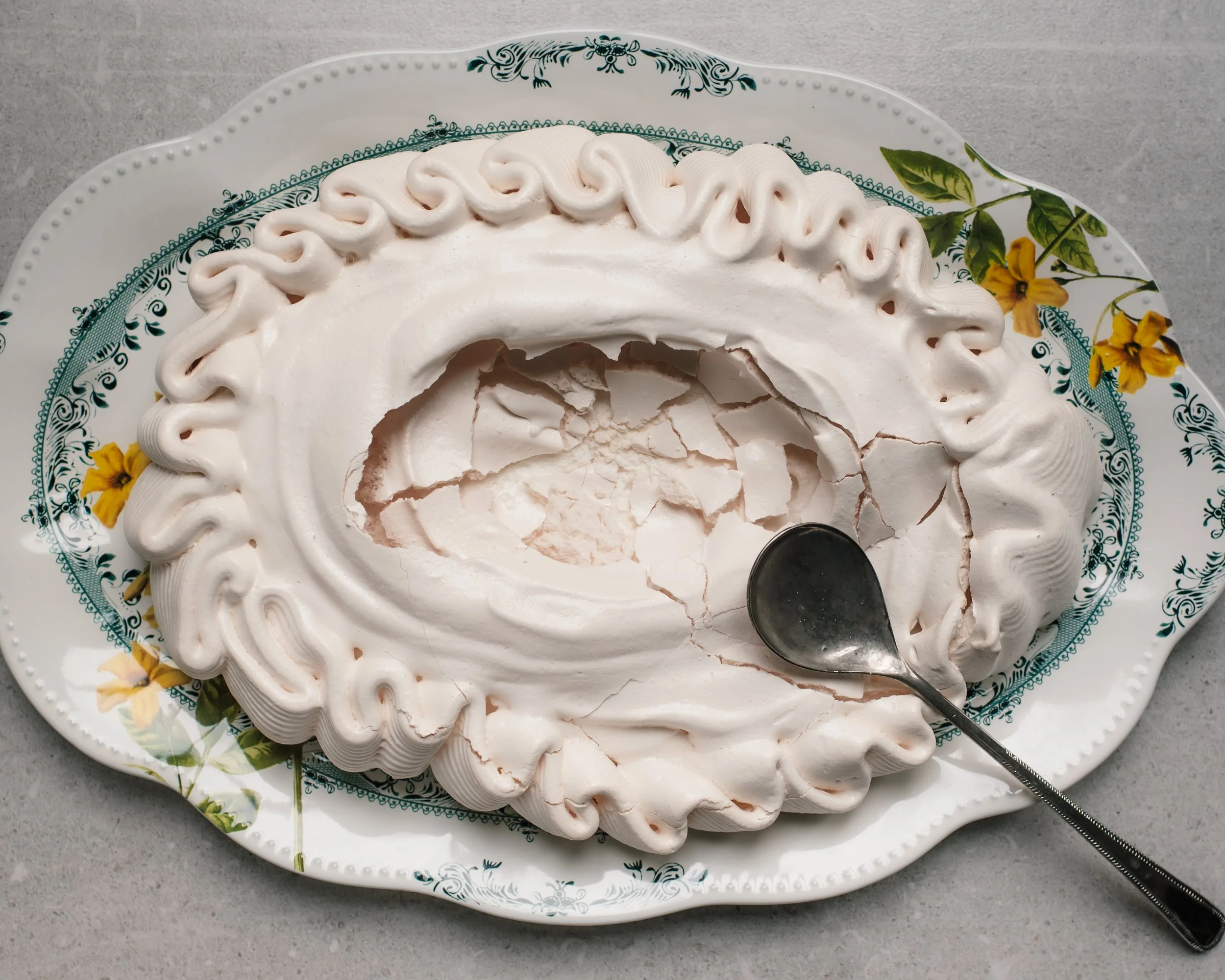
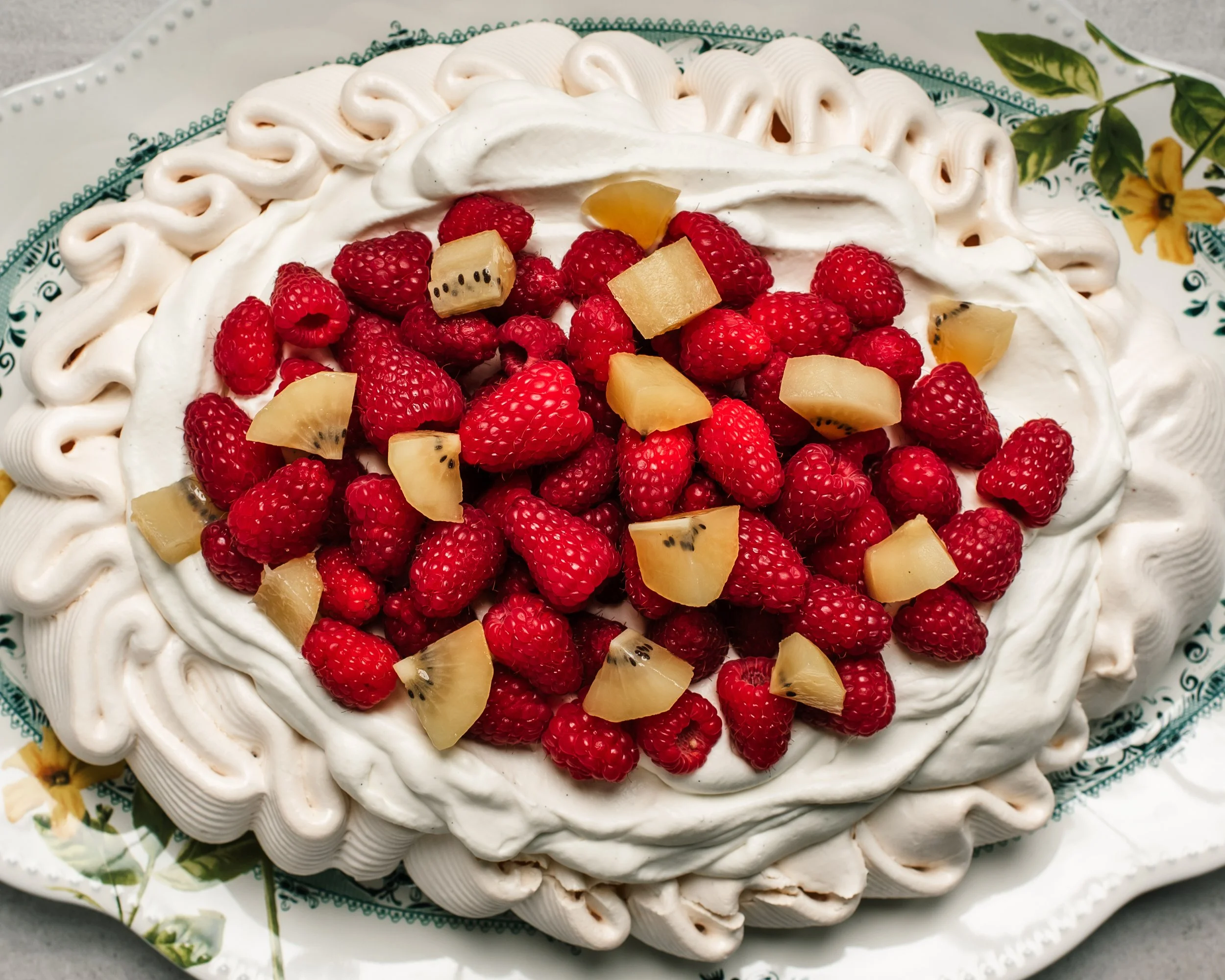
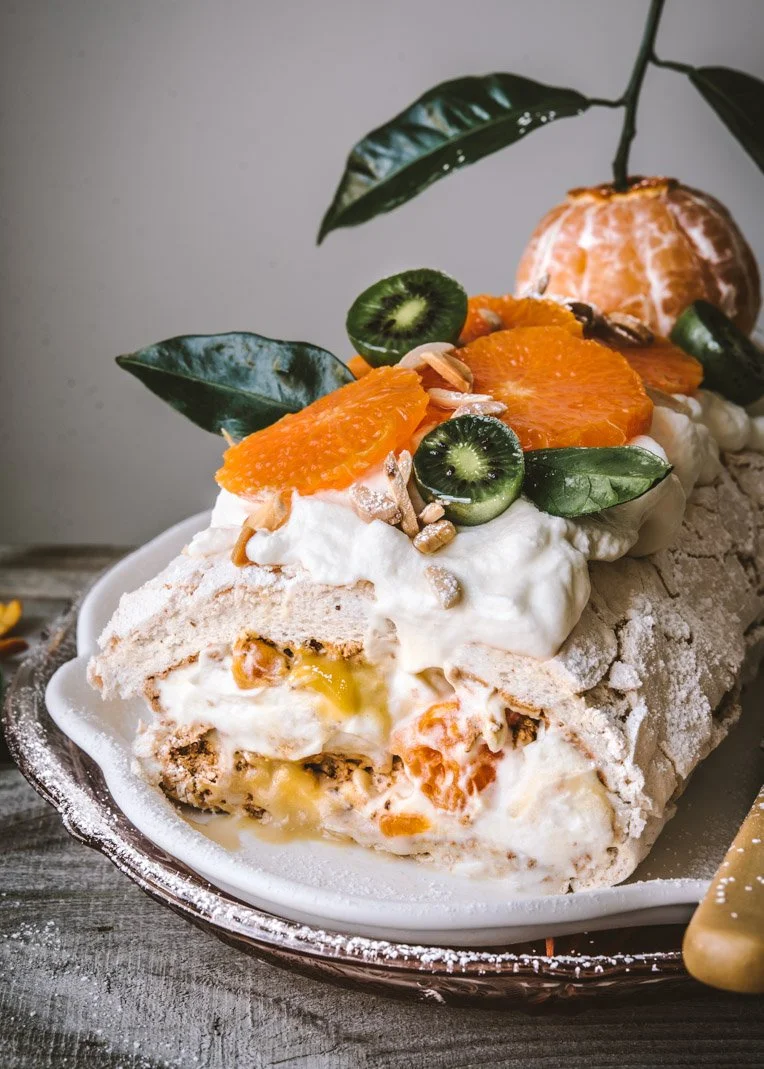
Crackly on the outside and marshmallowy within, topped with cream and fresh fruit, this ribbon edge oval pavlova is a true showstopper for any party! This post has everything you need from detailed recipe instructions, to step-by-step photos, to my “10 Tips for Meringue Success”! Save this post.
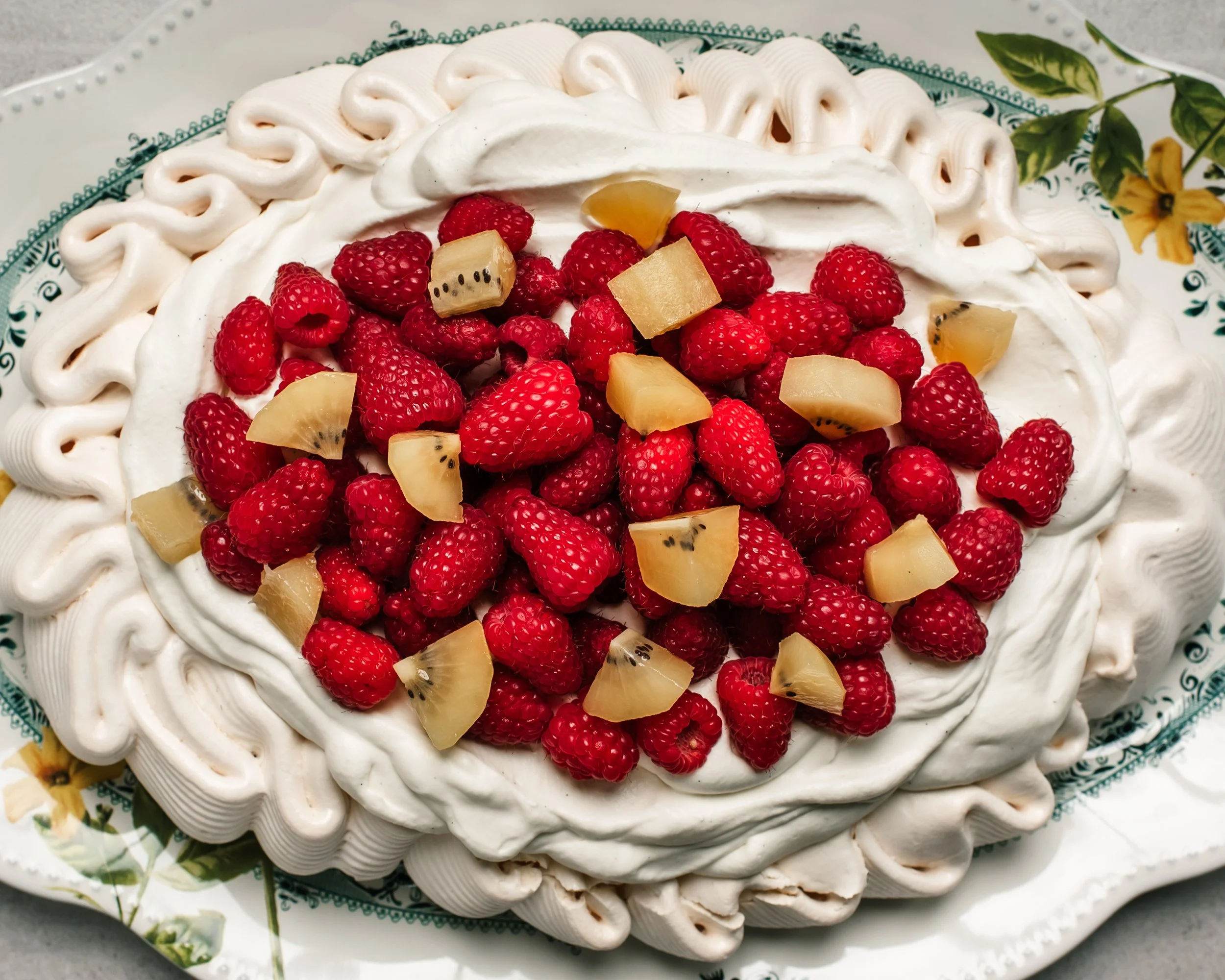
Standard pavlova recipes serve 8 to 10 people, and for gatherings that size, my Strawberries and Cream Pavlova recipe is my ride-or-die. I’ve made it more times than I can count! But when we gather with more friends or family (we very often do), I make it bigger and even more majestic. This Large 8 Egg Pavlova for a Crowd serves 12 to 14, making it perfect for larger parties and holiday tables.
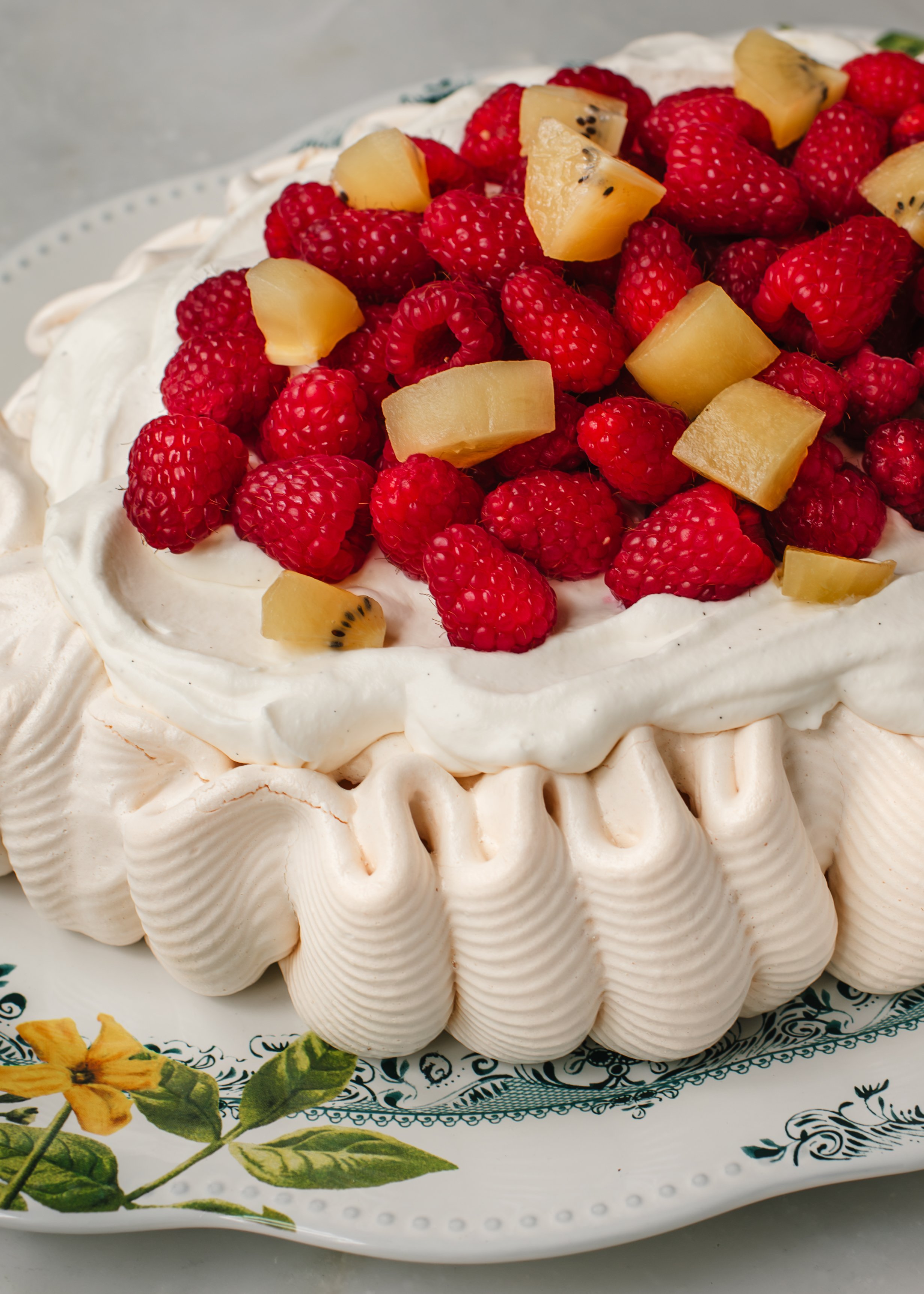
I once read that a pavlova made with more than six eggs is risky and prone to collapse. I'm happy to say that isn't true! As long as the meringue is made properly, an 8-egg pavlova is just as sturdy as a smaller one, and this recipe is the proof. I've assembled it and kept it in the fridge for a full 6 hours before serving, and it was perfect. The key to storage is avoiding moisture, which softens meringue. Don't wrap it tightly in cling wrap, because that traps moisture. Leave it uncovered, or drape the wrap loosely on top.
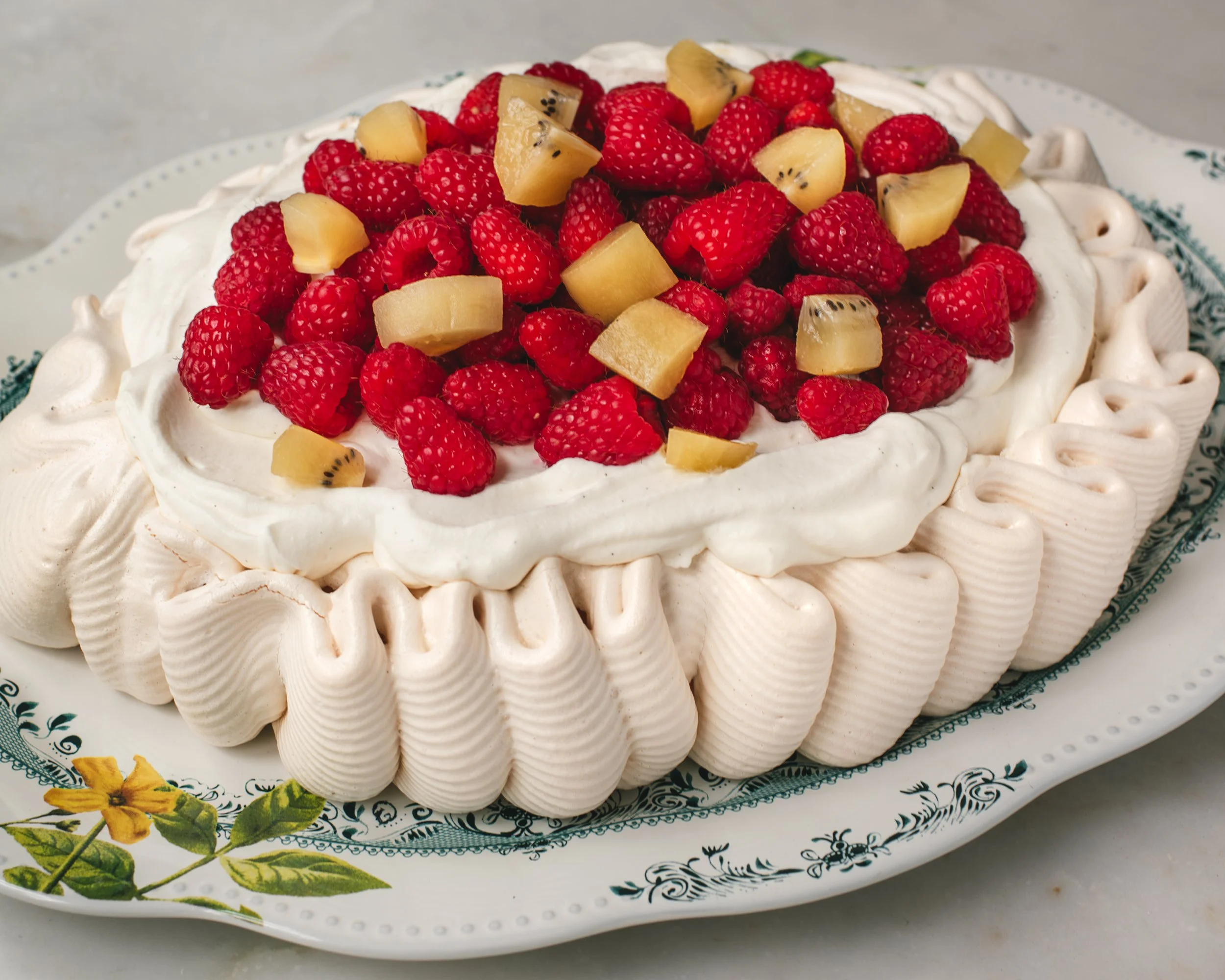
If you’re new to making meringue, read my “10 Tips for Meringue Success” section before you start and then follow my detailed recipe instructions. Whenever you need a visual guide, come back to look at the photos in my “Steps at a Glance” section or watch my social video.
🎥 Watch video for Large 8 Egg Pavlova for a Crowd
Eight egg whites yield a generous amount of meringue — enough to create a gloriously sized pavlova with serious WOW FACTOR. If you don’t have a large oval platter like mine, use a rectangular platter, wooden board or even straight from the baking sheet.
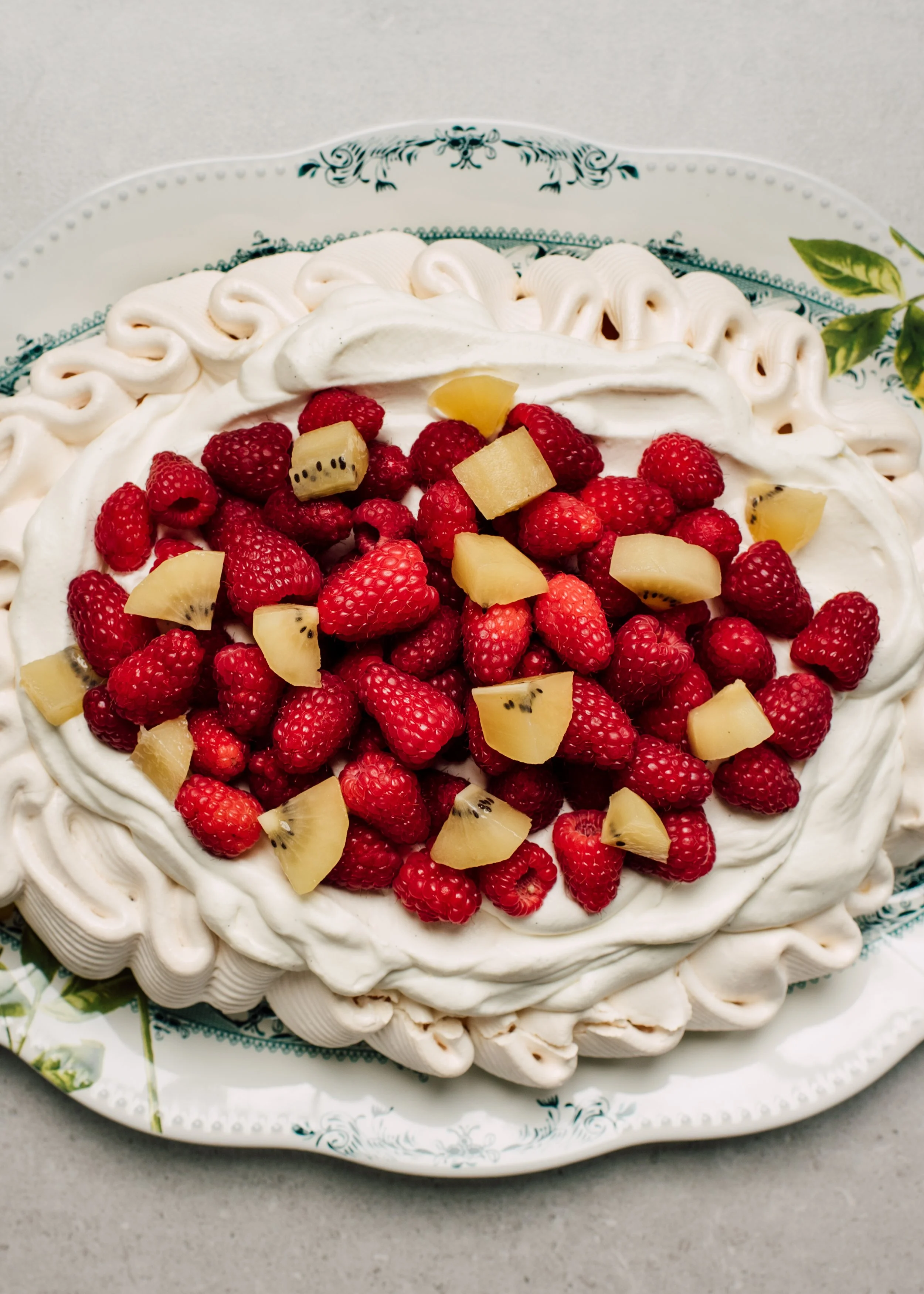
I love making pavlovas and I love eating them. And if I’m honest, I especially love being showered with praise when I make it for people 😆 If you thrive on compliments too, this Large 8 Egg Pavlova for a Crowd is the dessert to master!
Eat well and be well,
Sonia x
10 Tips for Meringue Success:
1.Squeaky clean mixing bowl and whisk
Make sure mixing bowl, whisk, spatula, your hands, etc. are all clean and free of oil or water, which can interfere with the egg whites whisking up properly.
2.Separate eggs while still cold from the fridge
Separate your eggs straight from the fridge. Cold yolks hold together better, so it’s easier to get a clean separation. This matters because even a trace of yolk can keep the whites from whipping properly: yolks contain fat, and fat interferes with how egg whites whip up. Once separated, let the whites sit at room temperature for a bit, since they whip up slightly better when they’re not cold.
3.Use kitchen scale to weigh egg whites and sugar
The ratio of egg whites to sugar is an important factor in what gives meringue its structure. On average, egg white from a Canadian grade A large egg is 30g and equivalent USDA is 33g. But in my experience, they can often be more. If your eggs are larger than average, you may end up with more than 240g total egg whites from the 8 eggs. I have used up to 280g of egg whites in this recipe with no issues. You can make meringue without a scale, but weighing the whites (and the sugar) is the surest way to get the ratio right. I always say a kitchen scale is a worthwhile investment.
4.Use superfine sugar
Sugar gives meringue its structure, so it needs to dissolve well for a glossy, stiff result. Superfine sugar, also called caster sugar, is simply granulated sugar ground finer. You can use regular granulated sugar (many recipes do and I have used it) but superfine dissolves more easily therefore safe-guards against over-whipping. To check, rub a little meringue between your fingers. It should feel smooth and look glossy, with minimal grit but a little is totally fine! In my experience, a little undissolved sugar is better than over-whipping, which can cause the meringue to deflate. I think this is one of the most common reasons meringues fail. If you only have granulated sugar, weigh out the same amount and grind it down by pulsing it in a food processor until the texture is tinier visible crystals but before it turns into powder.
5.Use an acid to stabilize meringue
Cream of tartar is an acid (in powder form) that helps stabilize the egg whites, so the meringue holds its shape and is less likely to collapse or weep. It is inexpensive to buy and can be found in supermarket baking or spice aisles and bulk food stores. No cream of tartar? Use 2 teaspoons of white vinegar or lemon juice to sub ¼ teaspoon of cream of tartar.
6.Forming meringue for maximum stability
Shaping the meringue is the most fun and artistic part of the process. If done properly, the baked meringue will be dry and sturdy. For a marshmallowy center, you must pile the meringue thickly and then create a crater that will accommodate the toppings later.
7.Bake low and slow
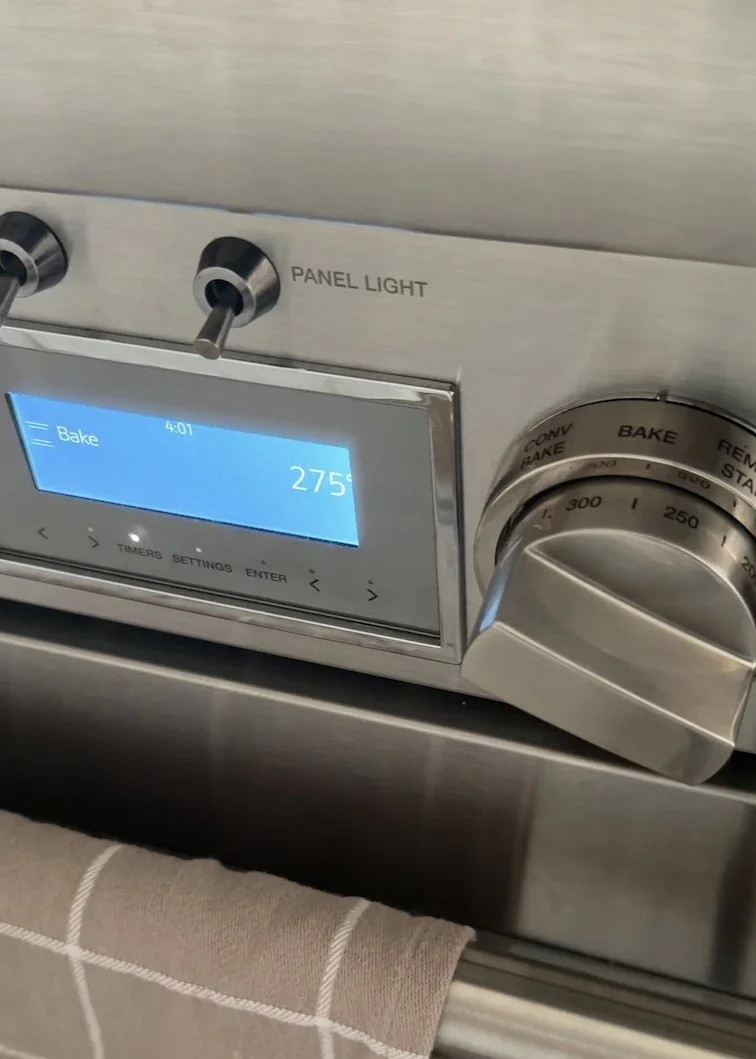
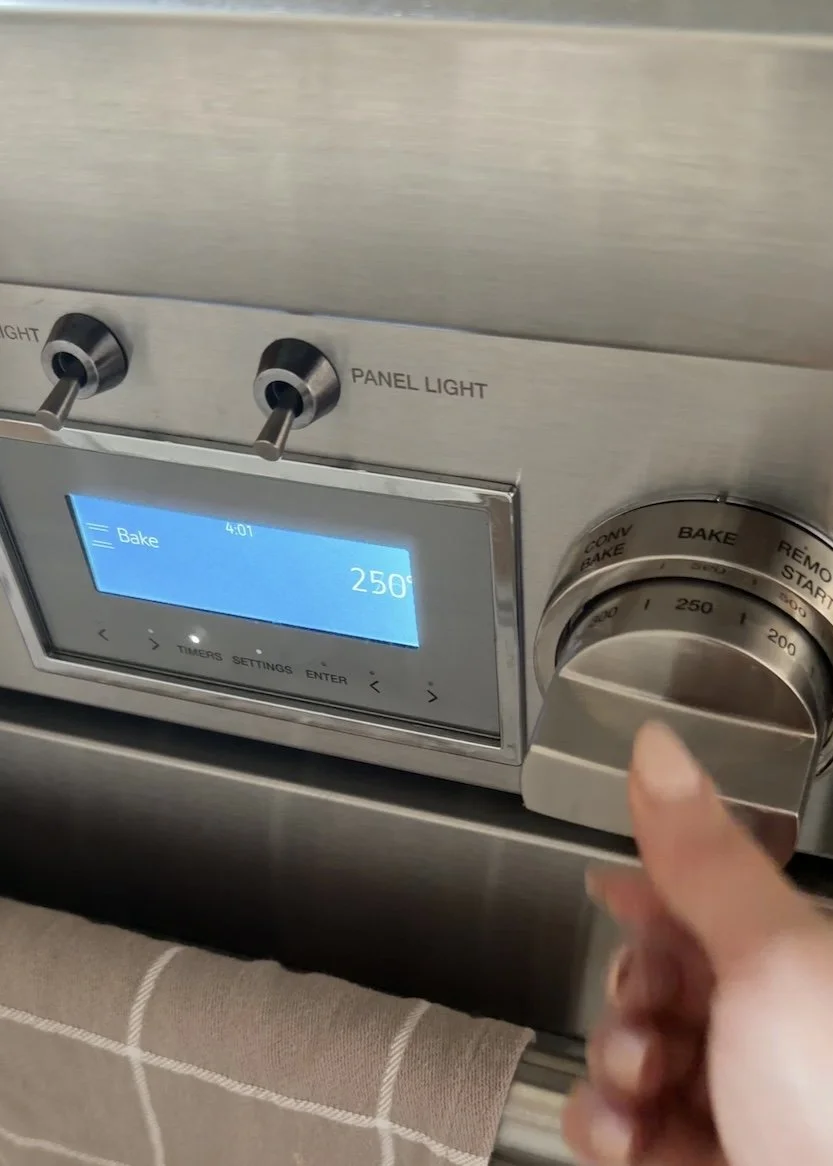
To minimize cracking during baking, the meringue is baked at a low temperature. I preheat the oven to 275°F (135°C) and TURN IT DOWN TO 250°F (120°C) immediately after placing meringue in the oven for baking. The point is to avoid too-rapid expansion (and cooling — see point below) of the meringue which can cause cracking.
8.Cool slowly and gradually
To prevent cracking, the baked meringue should also cool gradually. For this reason, I always bake my meringues the night before, turn off the oven and cool slowly overnight in the turned-off oven. If you don’t have the time to cool overnight, allow a minimum of 3 hours (but ideally at least 6 hours for one of this size). I often leave it in there for 24 hours until I’m ready to top it. In the event the meringue cracks or collapses, it will still taste amazing. You can also turn it into a Eton’s mess or trifle to hide broken meringue, which I think is not so bad.
9.Place toppings close to serving
Baked meringue absorbs moisture from the cream and fruit, even in the fridge, so it gets softer over time. To keep it crisp, keep the whipped cream and fruit separate until as close to serving as possible. The weight of the toppings can also make the meringue collapse after a while. That said, I’ve assembled and chilled full-size pavlovas for 5 to 6 hours with no collapse.
If I’m assembling many hours ahead, I’ve taken to the habit of gently tapping the top of the meringue with the back of a spoon to evenly crack it where the toppings will go. It seems counterintuitive, but it creates a more stable and uniform surface to carry the weight, so collapse is less likely to happen in random spots.
10.Avoid exposing meringue to moisture and high humidity
Humidity is the enemy of meringues! They absorb moisture from the toppings and from the air. Once, I had dozens of mini pavlovas weep into soggy puddles because I brought them to a non air-conditioned party during a downpour. I’ll never forget that lesson. If you’re making this on a very humid/wet day, make sure the environment is well air-conditioned! You can also freeze naked baked meringues to keep dry, if making ahead. They are delicate so make sure to use a hard container to protect them from getting crushed or banged around by other things in the freezer.
Now that you’re armed with all my tips, go forth and make yourself a glorious pavlova!
What you’ll need:
Ingredients for Large 8 Egg Pavlova for a Crowd
Scroll down to recipe card for full printable recipe with measurements.
Egg whites — Whipped into a glossy meringue which forms the structure of the pavlova.
Superfine sugar — Although fine to use granulated sugar in meringues, I recommend superfine sugar simply because it dissolves quicker and lowers the risk of over-whipping the meringue.
Cream of tartar — A powder with an acidic pH that stabilizes whipped egg whites so the meringue holds its volume. If you don’t have it, substitute with another acid such as lemon juice or white vinegar (see recipe).
Cornstarch — Contributes to a chewier, less brittle meringue.
Heavy cream 35% — Base of the chantilly cream. It must be 35% fat to whip up properly.
Vanilla paste or extract — I love using vanilla paste so you see the lovely vanilla flecks in the cream.
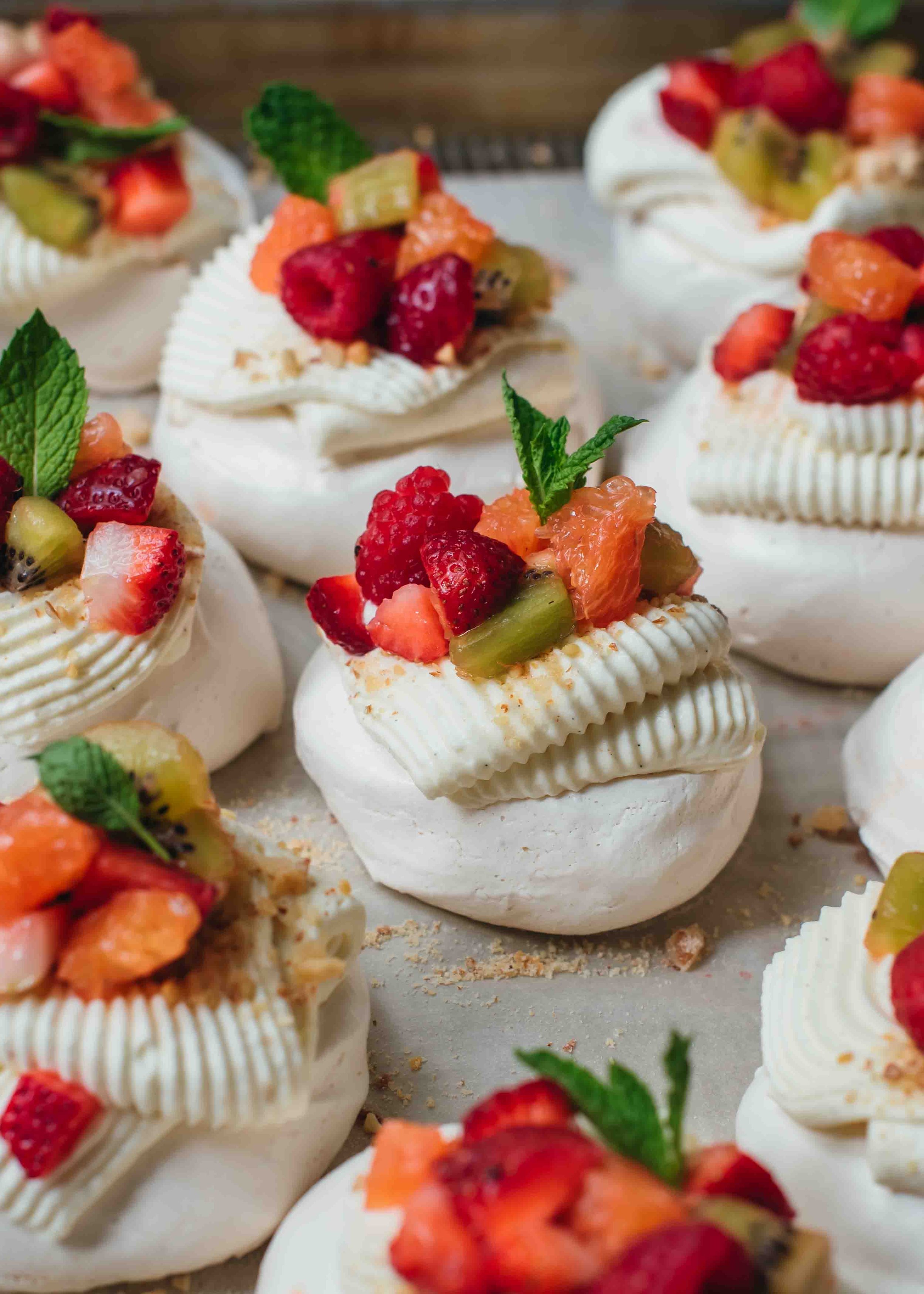
Topping / fresh fruit — To me, the best topping for a pavlova is fresh fruit especially those with a bit of acidity such as strawberries, raspberries, kiwis, peaches/nectarines, passionfruit, etc. because they balance the sweet meringue and airy whipped cream. Feel free to have fun with whatever you fancy!
Steps at a Glance:
How to make Large 8 Egg Pavlova for a Crowd (with Step-by-Step Photos)
Scroll down to recipe card for full printable recipe with measurements.
Make meringue:
Carefully separate egg whites one at a time into a small bowl first, ensuring there are no traces of yolk before placing each uncontaminated egg white into stand mixer bowl.
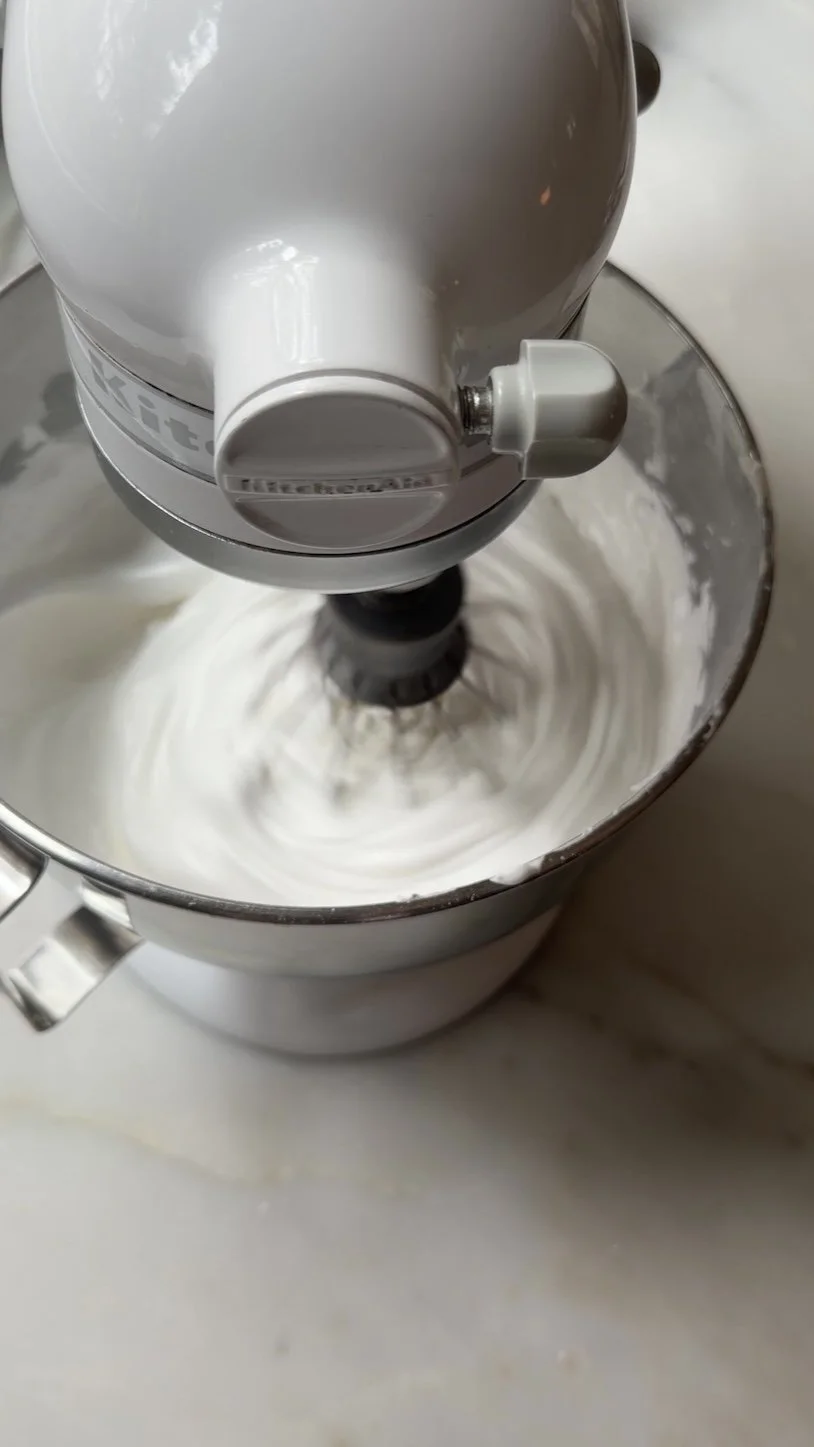
Whip egg whites on medium-high past foamy stage
Until “soft peak” stage, meaning it has a soft and droopy peak on the whisk held upside down.
Add sugar by the tablespoon while running the mixer.
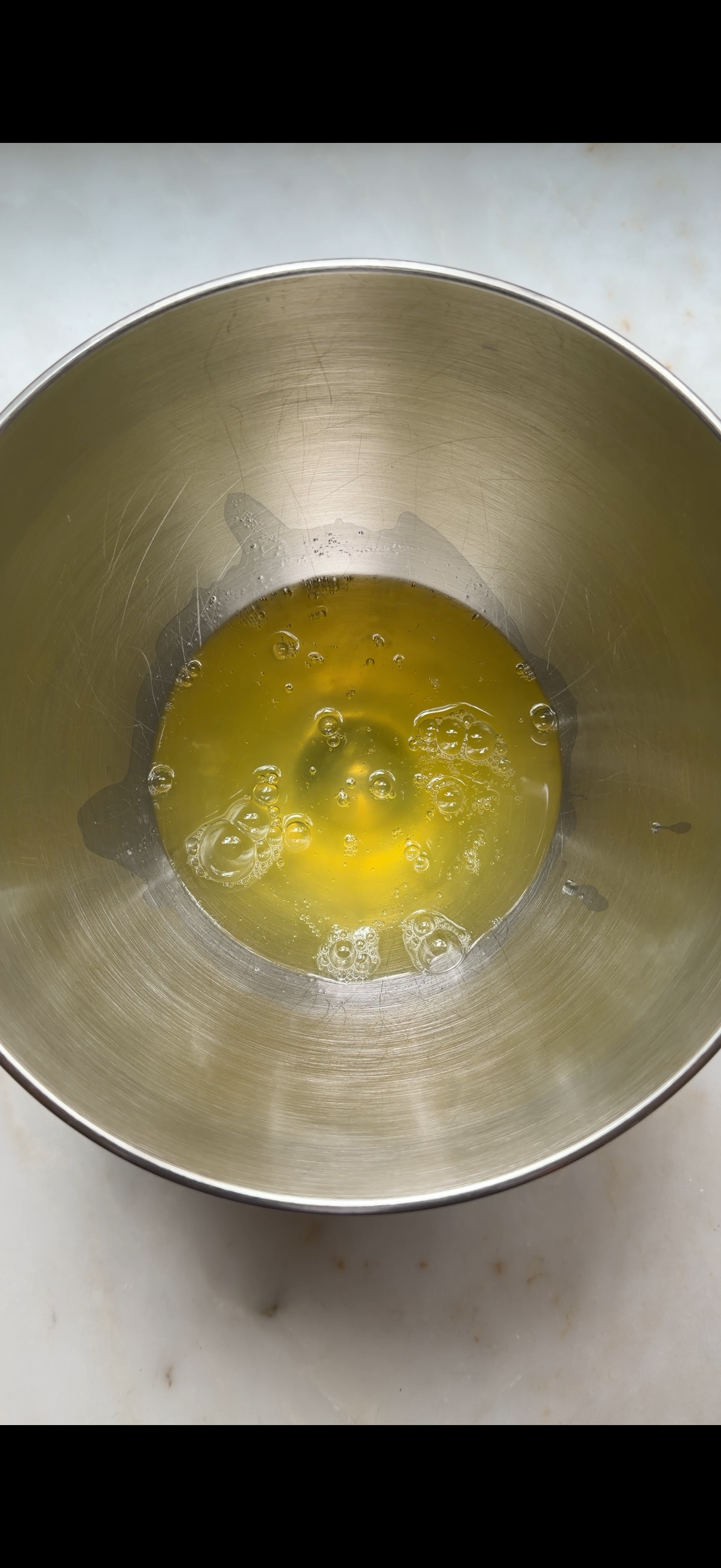
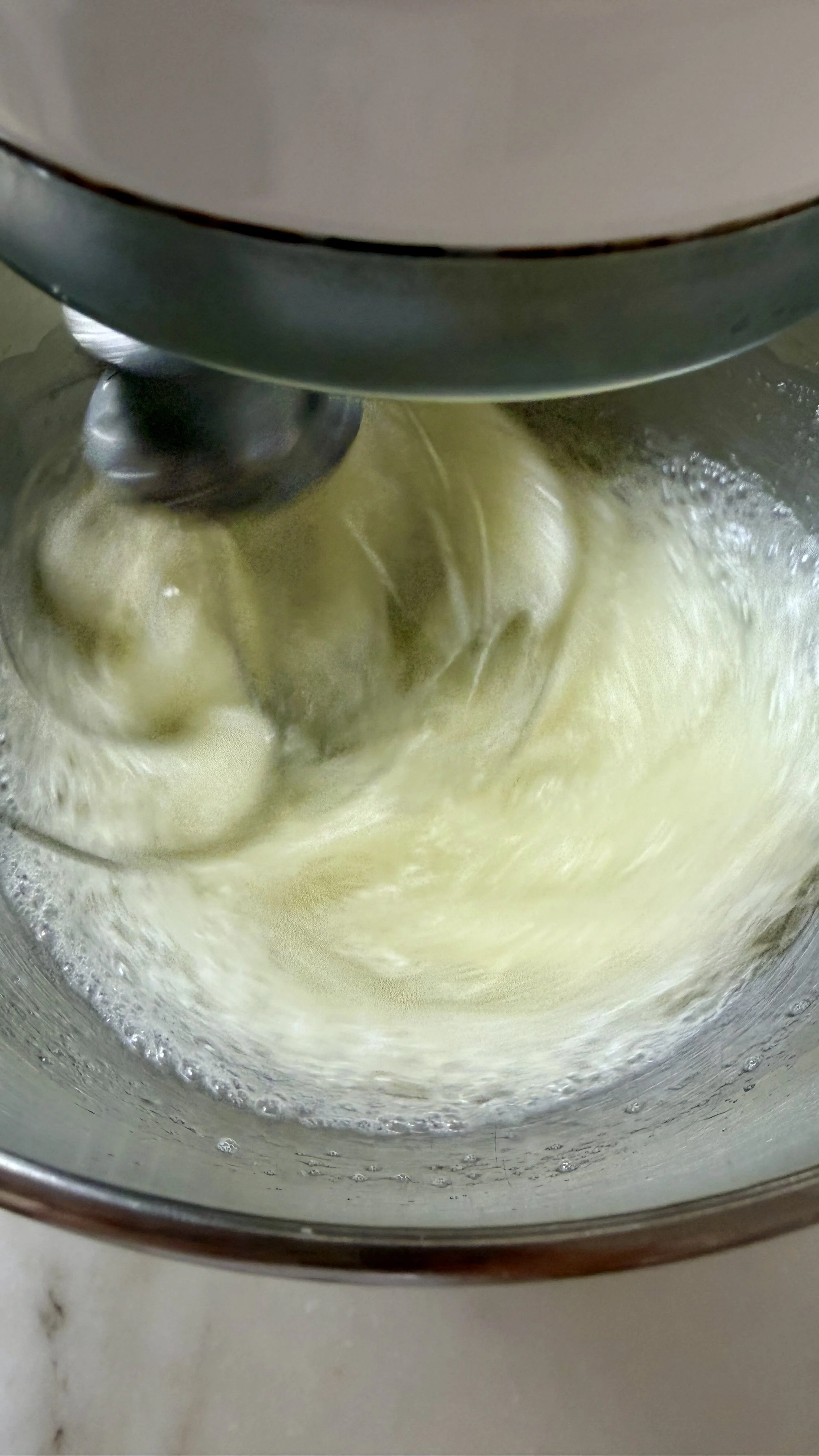
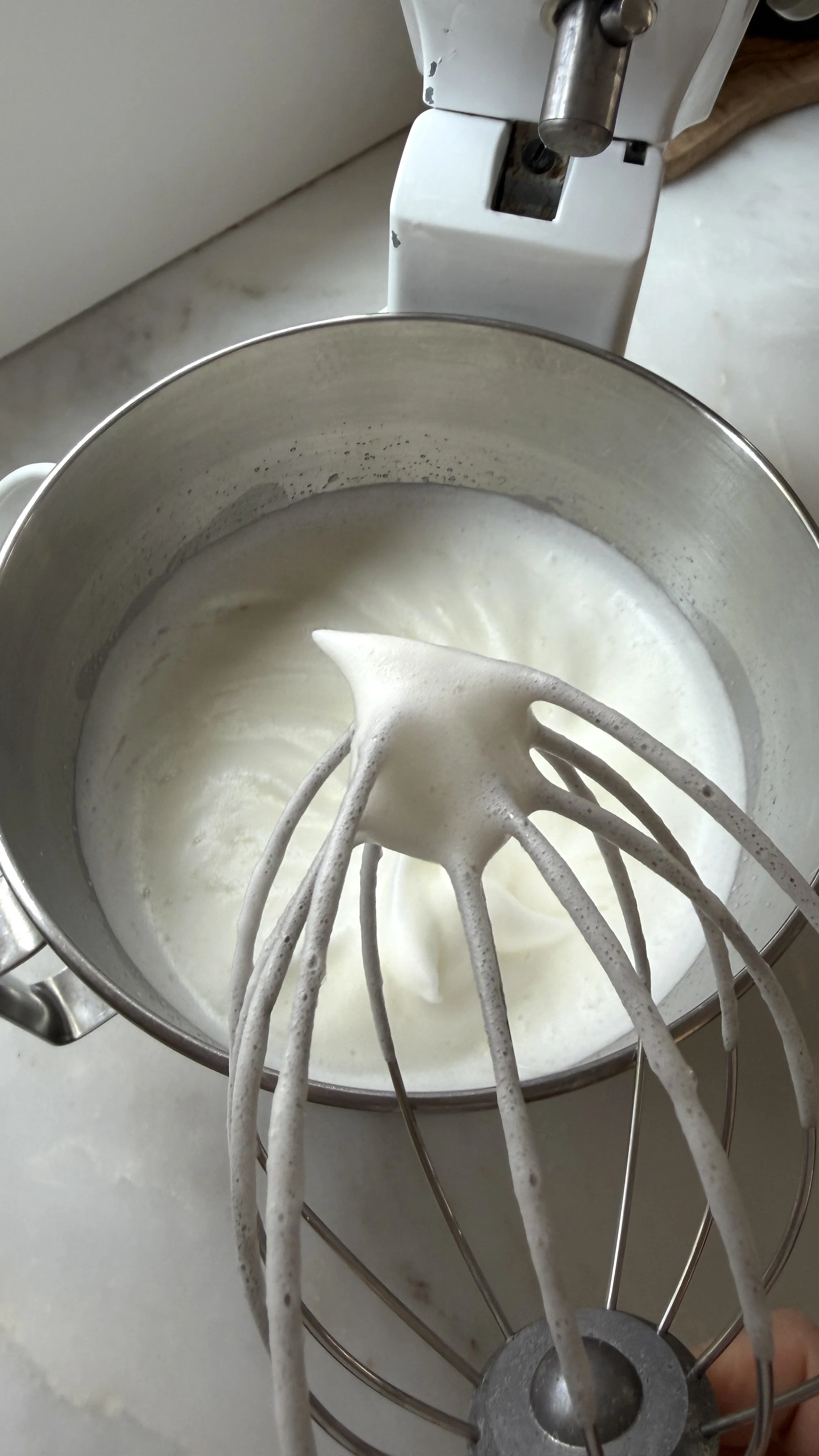
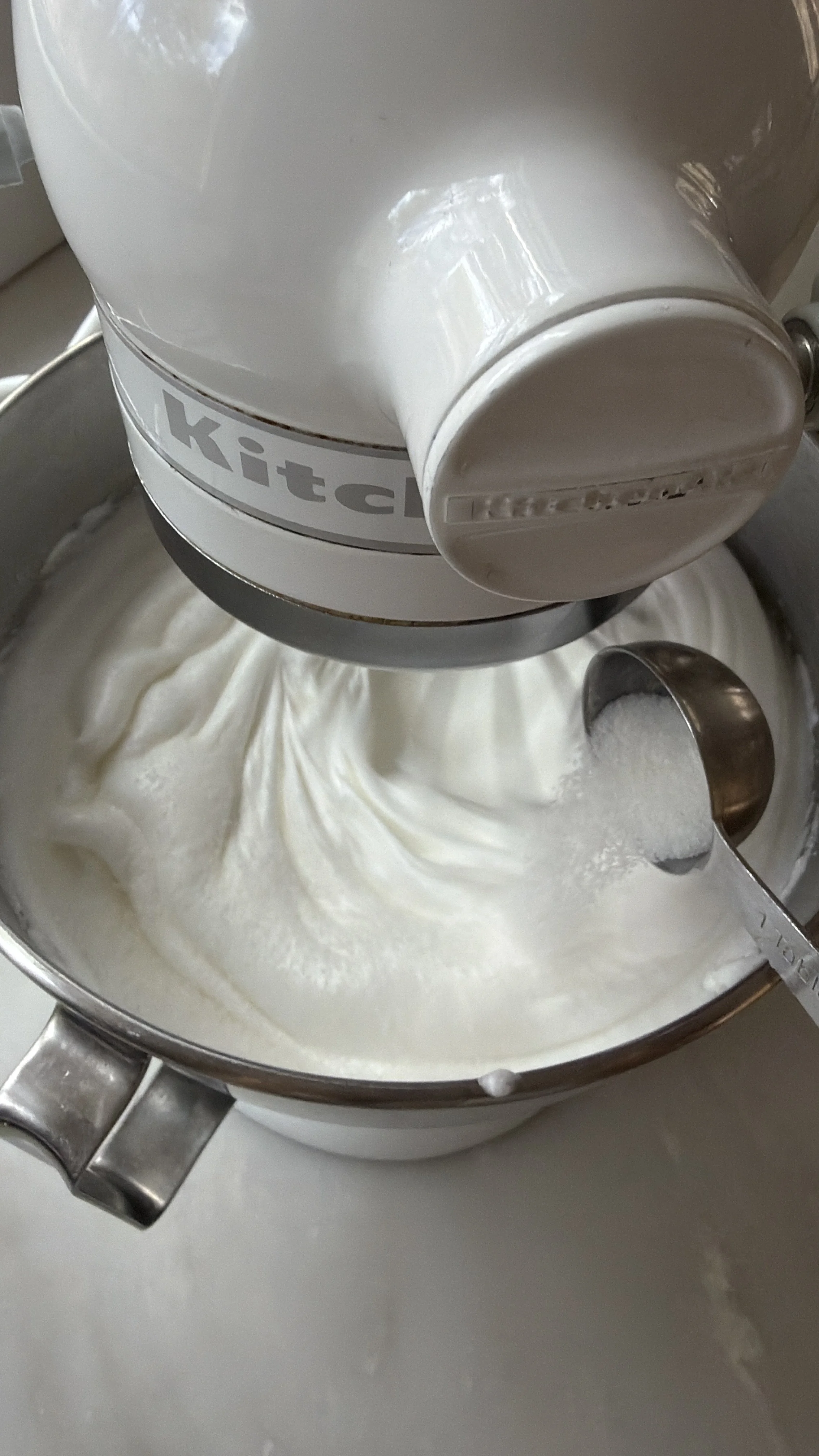
After all sugar has been added, scrape the sides of the bowl well.
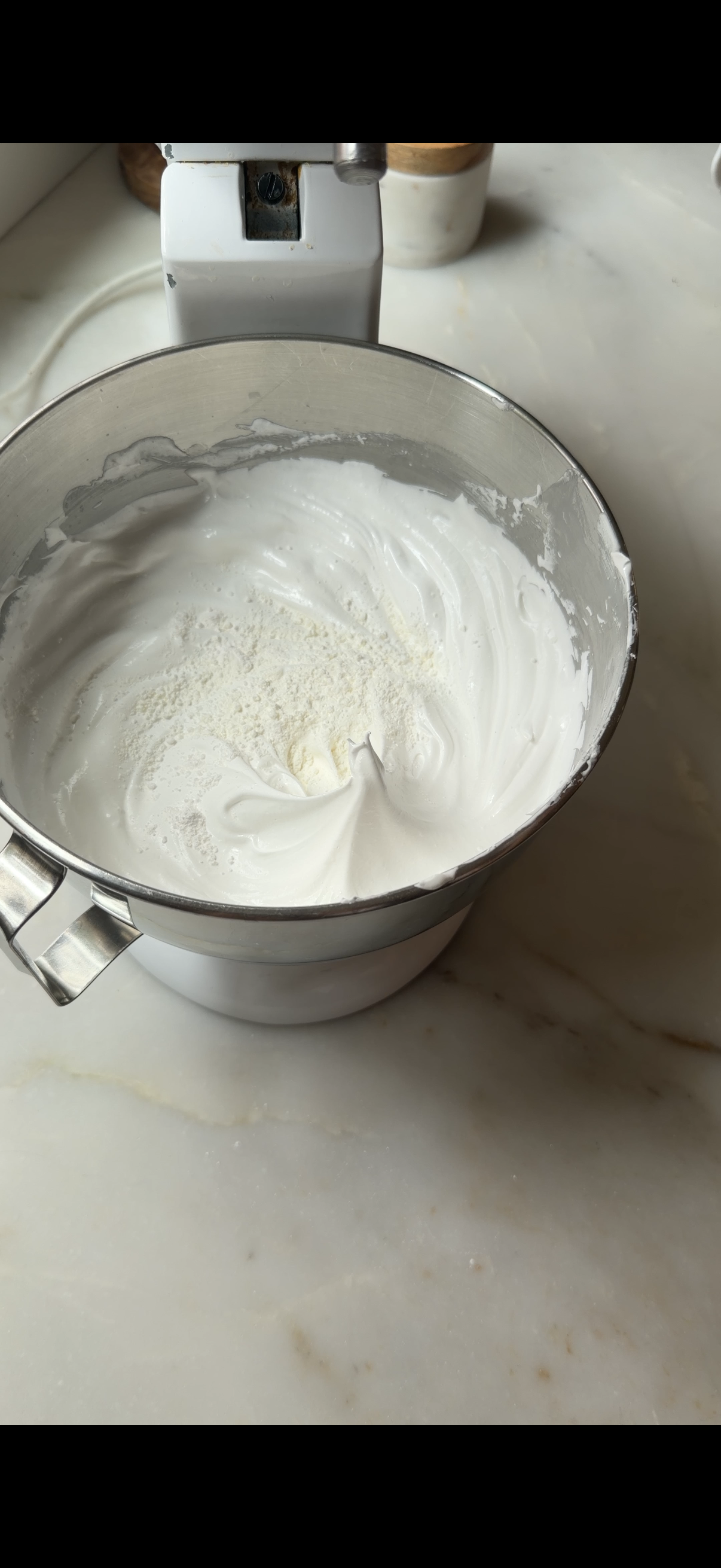
Whip on high into a glossy meringue and holds a stiff peak on the whisk held upside down.
Rub a bit of meringue between your fingers to confirm there is minimal grit from undissolved sugar. A little is fine!
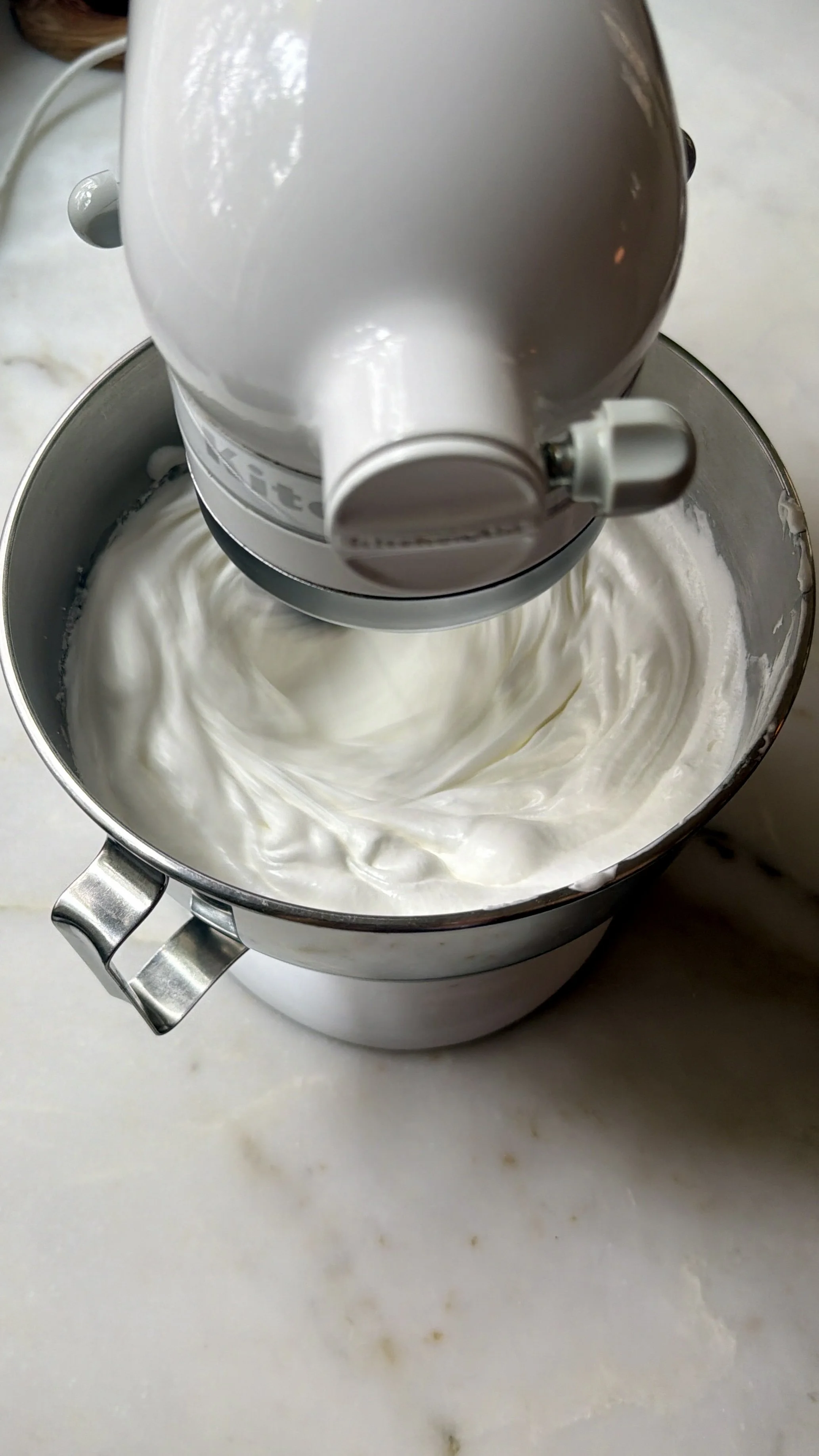
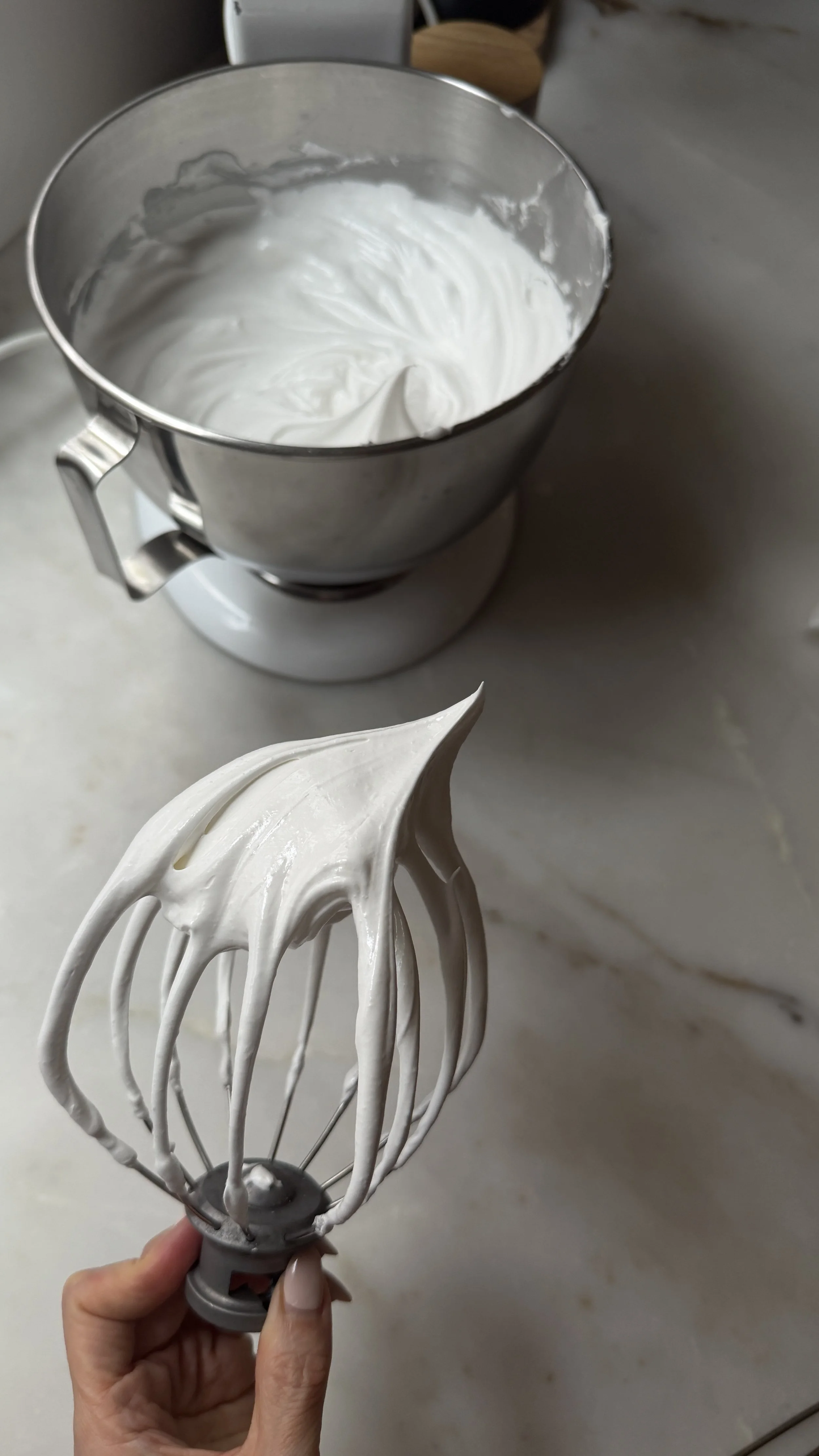
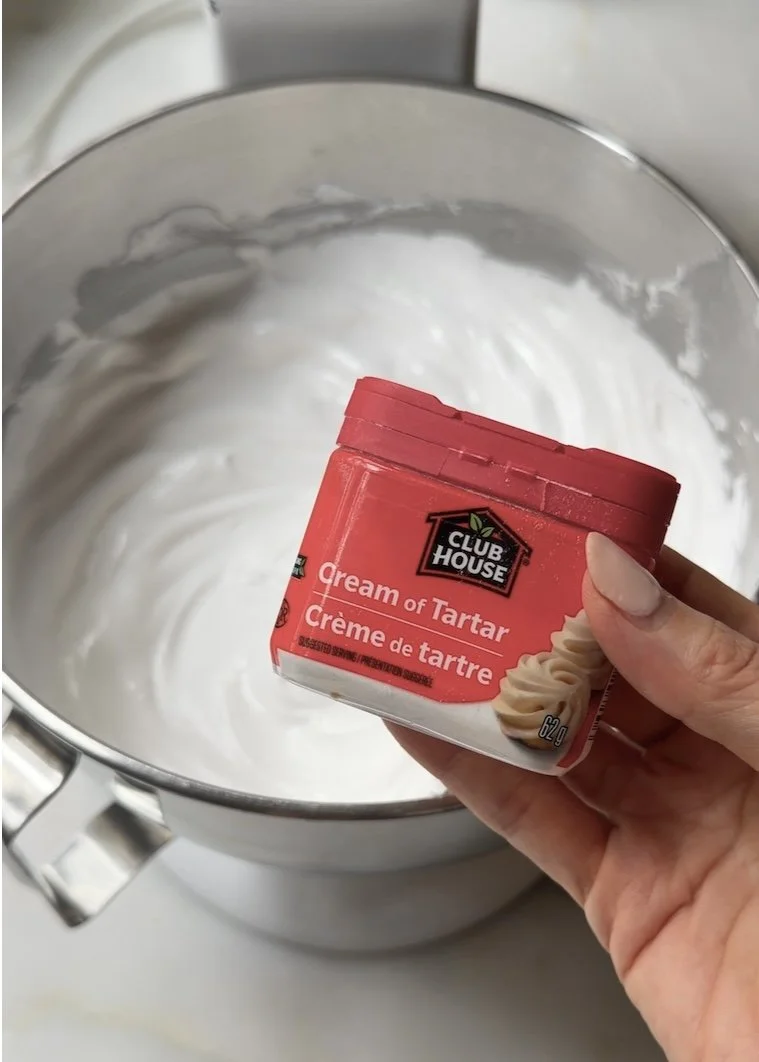
Add cream of tartar (or white vinegar or lemon juice, if using those substitutes)
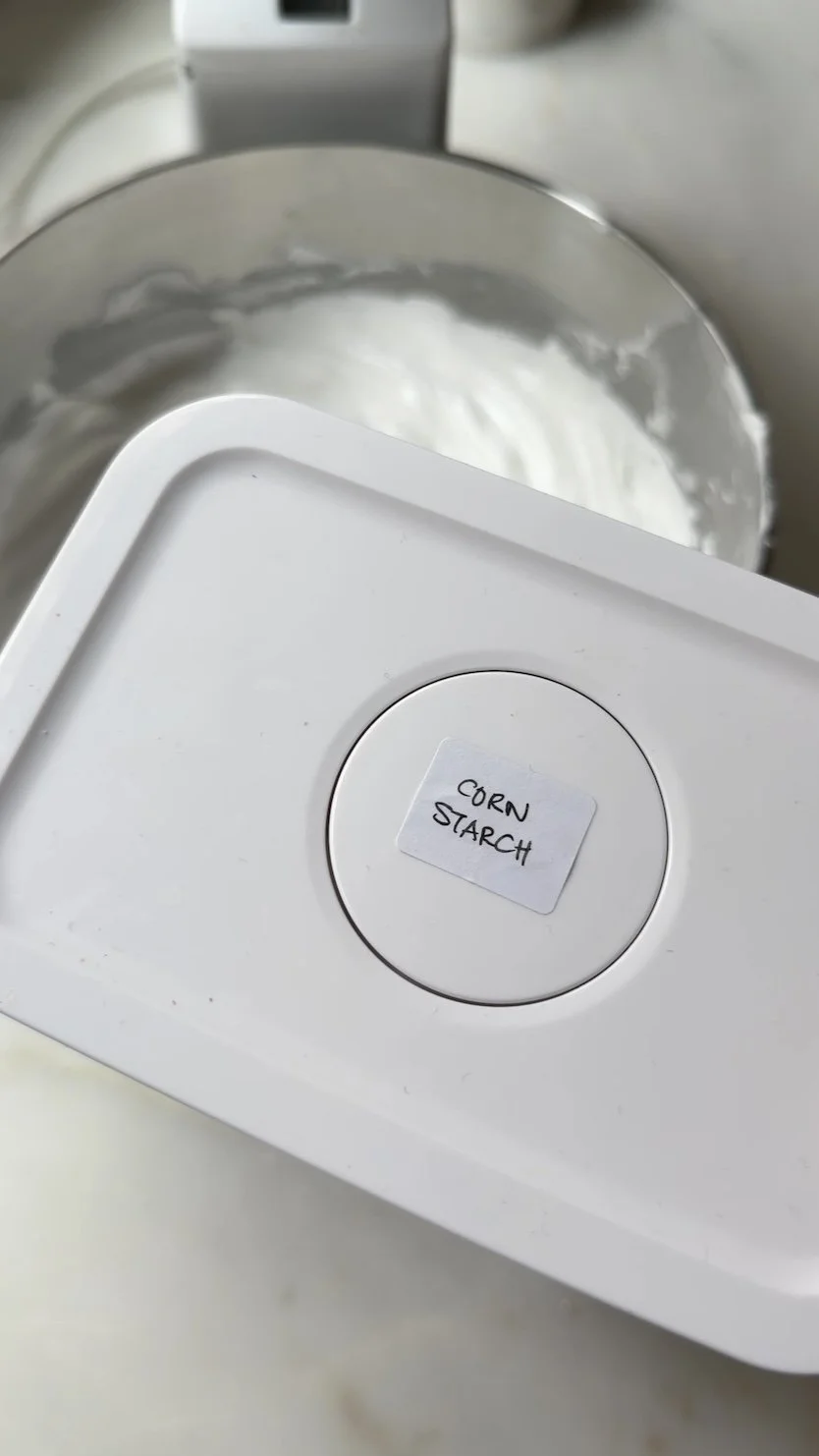
Add cornstarch
Mix on medium or by hand with a spatula until incorporated evenly. Make sure not to over-whip.
Form meringue on parchment-lined baking sheet:
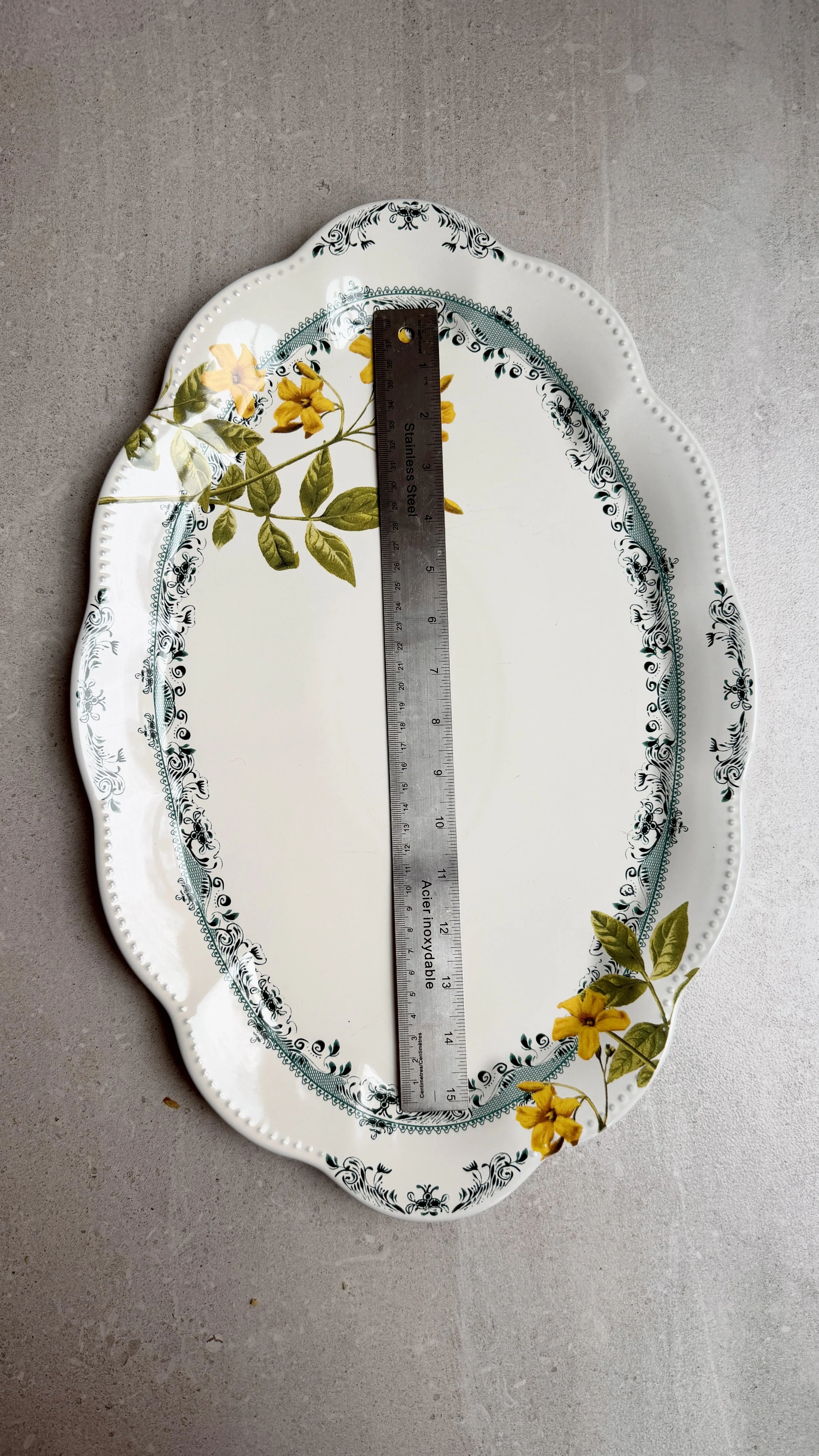
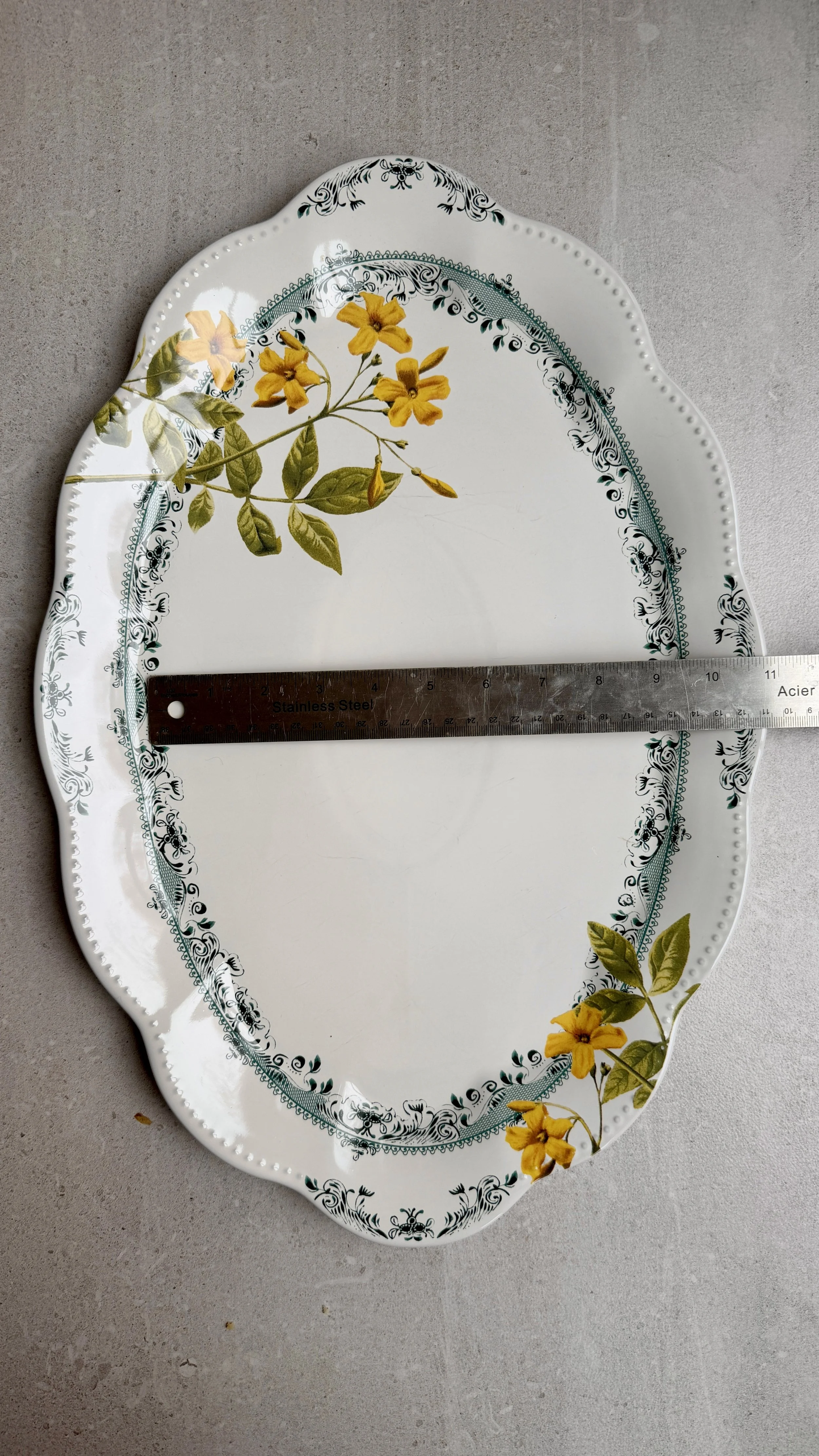
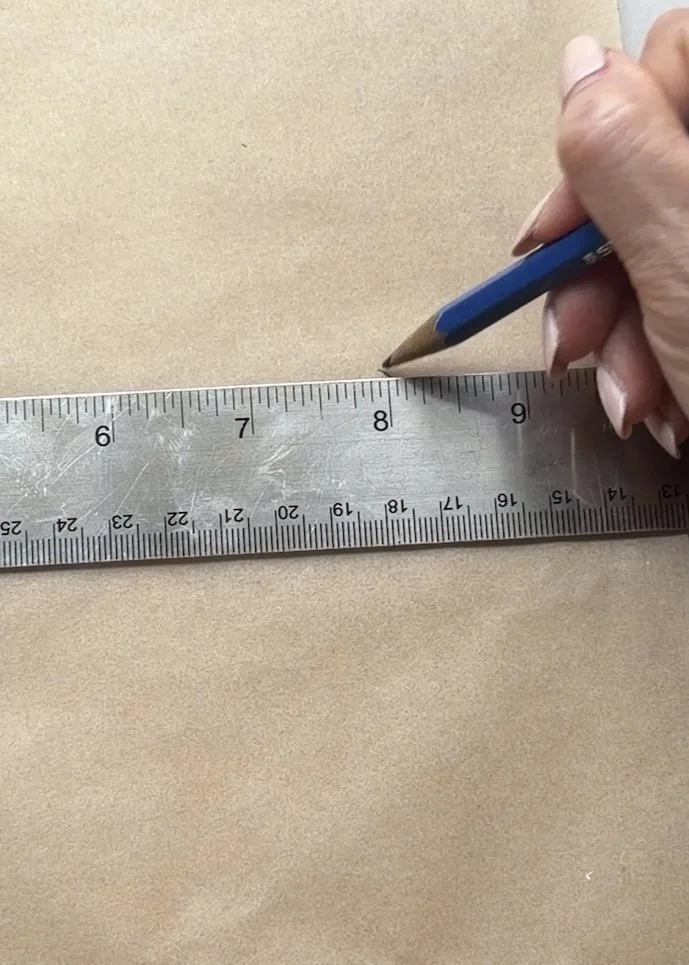
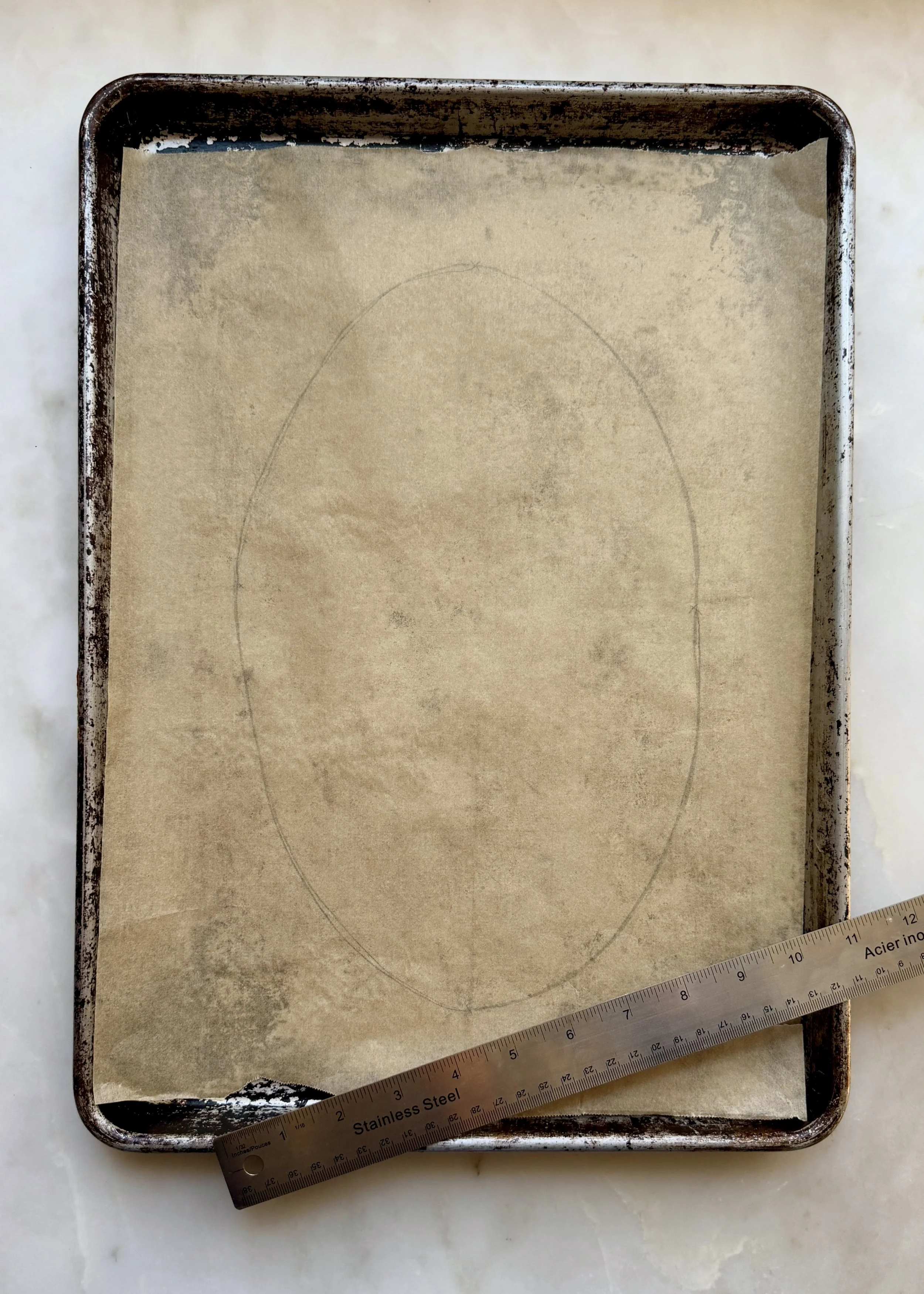
Draw a large oval pencil outline on the underside of the parchment paper. My oval measures 8” x 13” to fit my platter. You may also serve it on a rectangular platter, wooden board or right on the baking sheet. Alternatively if you want to create a rectangular “slab” pavlova, draw a rectangle about 8” x 12”.
Flip parchment over and place on baking sheet. You should be able to see the outline through the parchment.
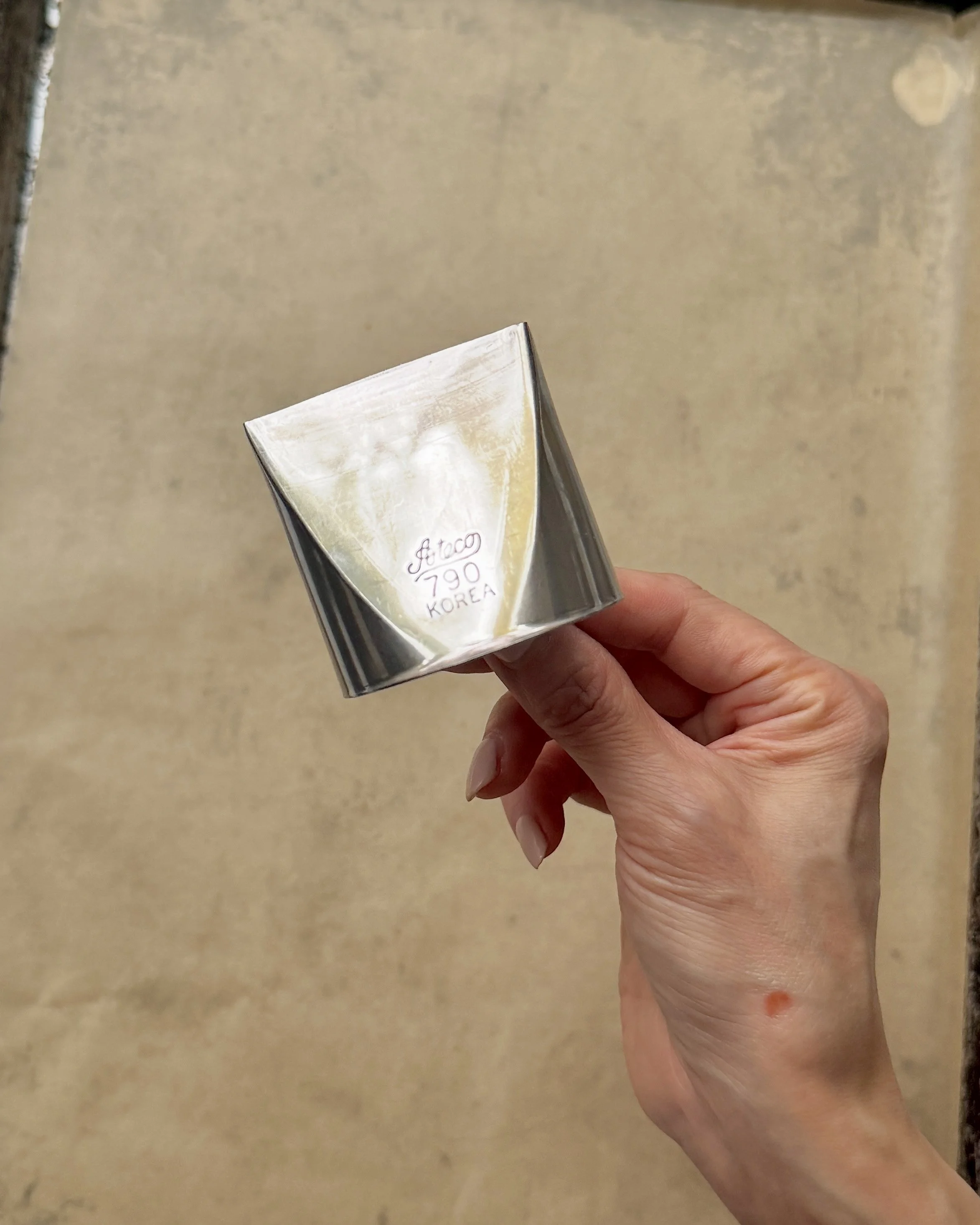
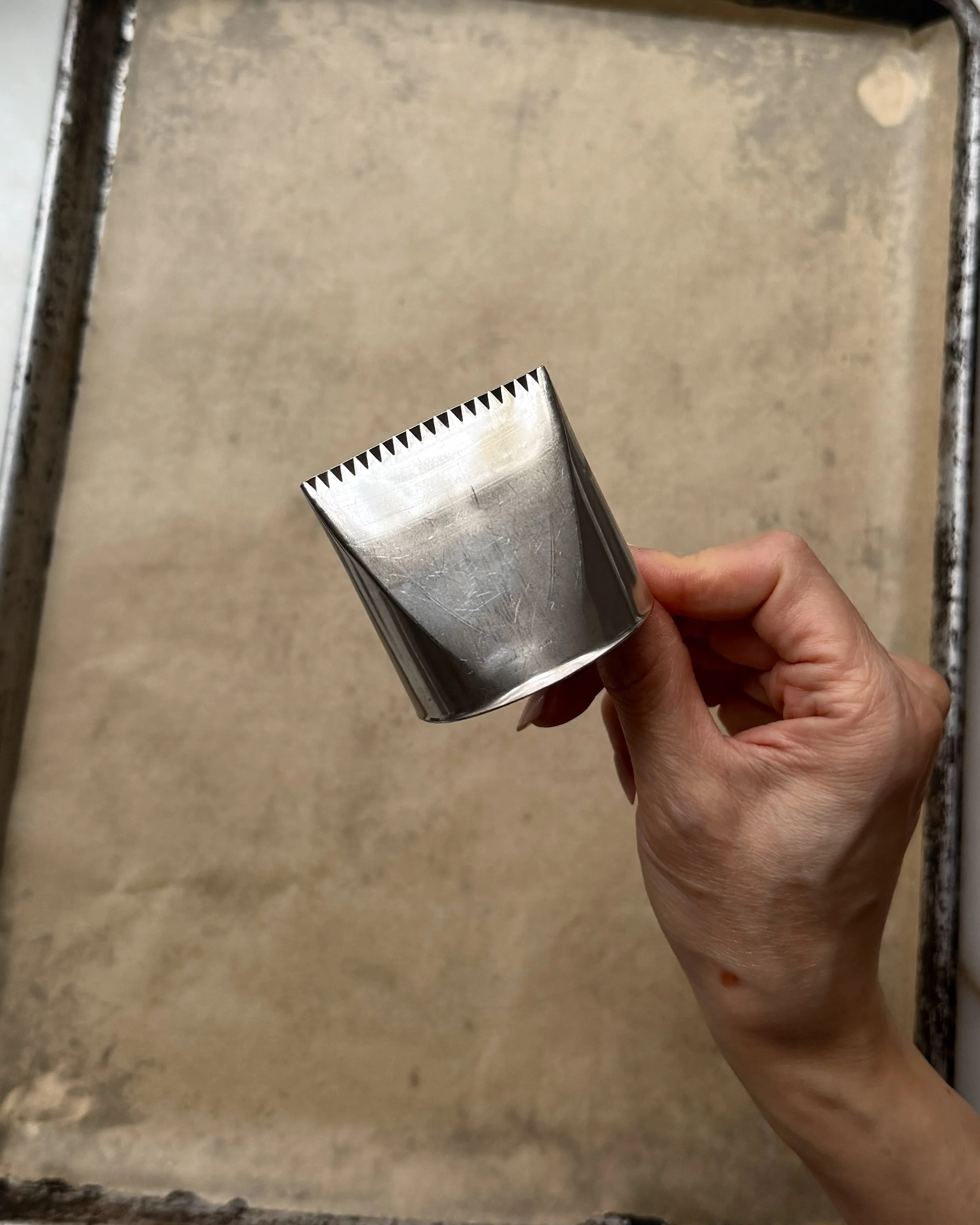
Place Ateco #790 tip (or similar large, flat tip with one serrated side) into a large piping bag.
Transfer about half the meringue into the bag.
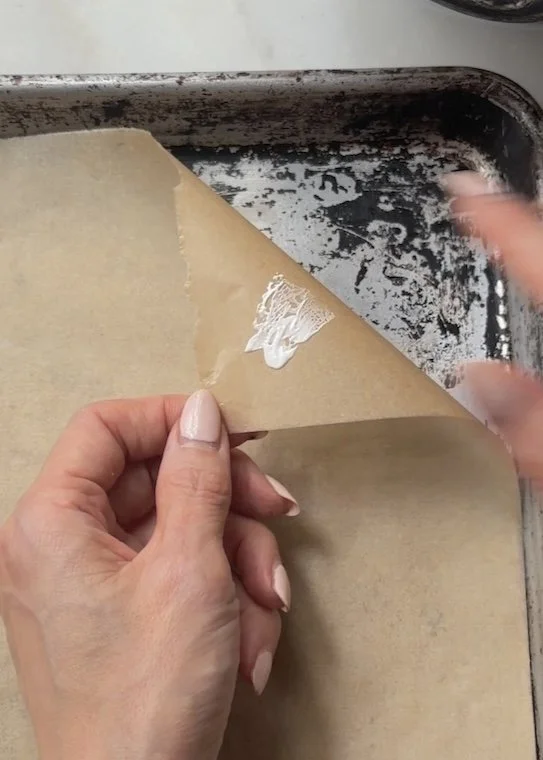
“Glue” down the parchment paper corners with a little dab of meringue so it doesn’t shift around.
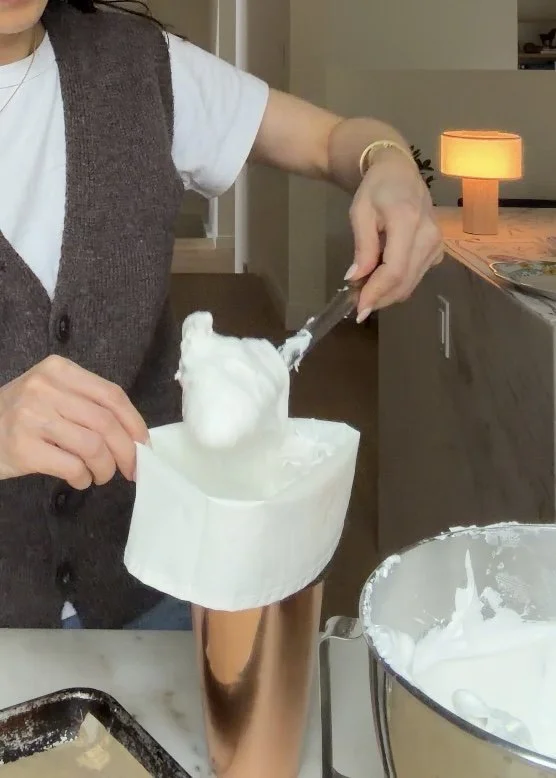
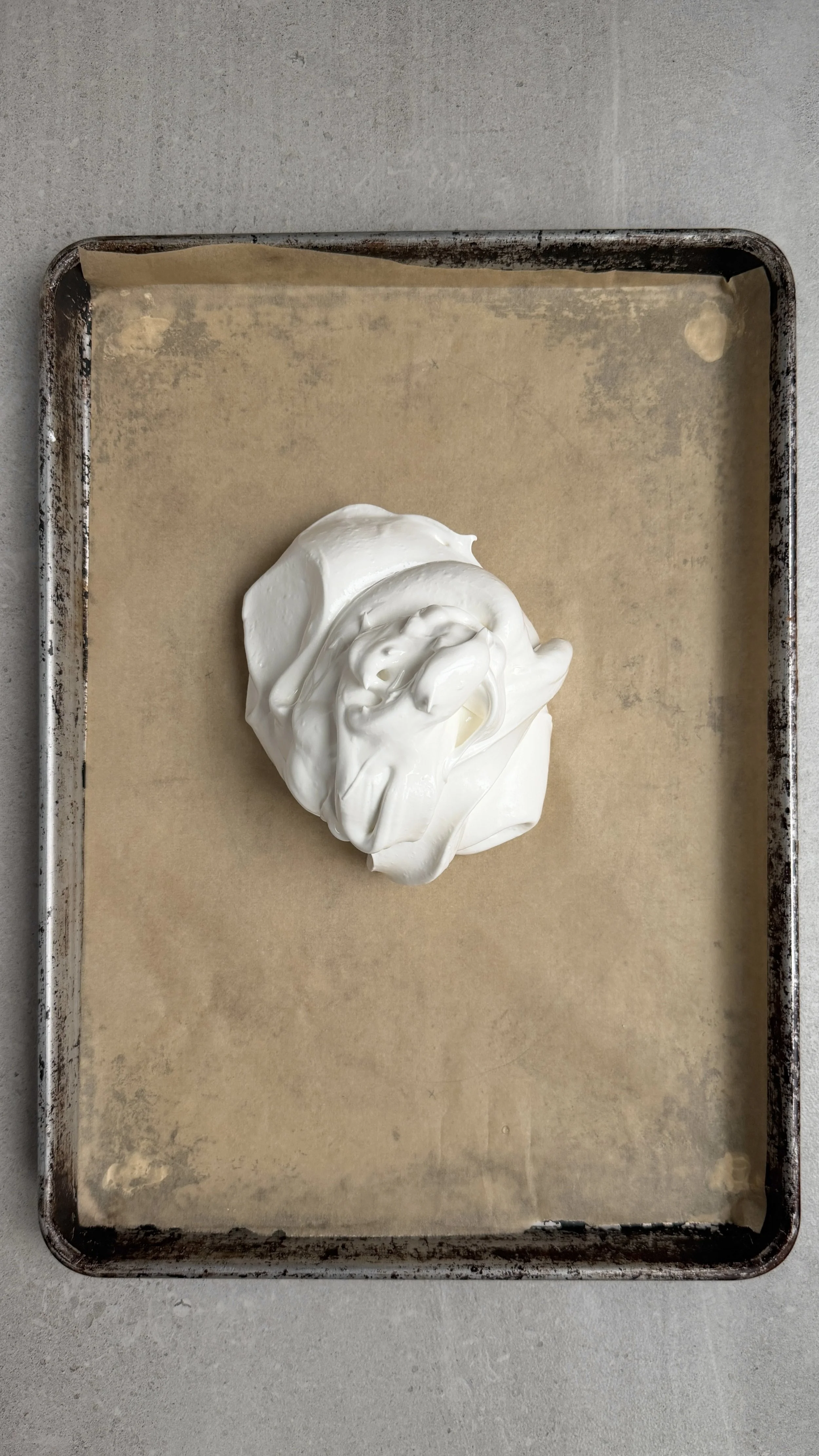
Scoop remaining half of the meringue mixture onto the center of the oval outline.
Shape mound into a flattened oval disc, leaving about 1” inside the outline. Smooth the sides so it is fairly straight. It should be about 1¼“ tall.
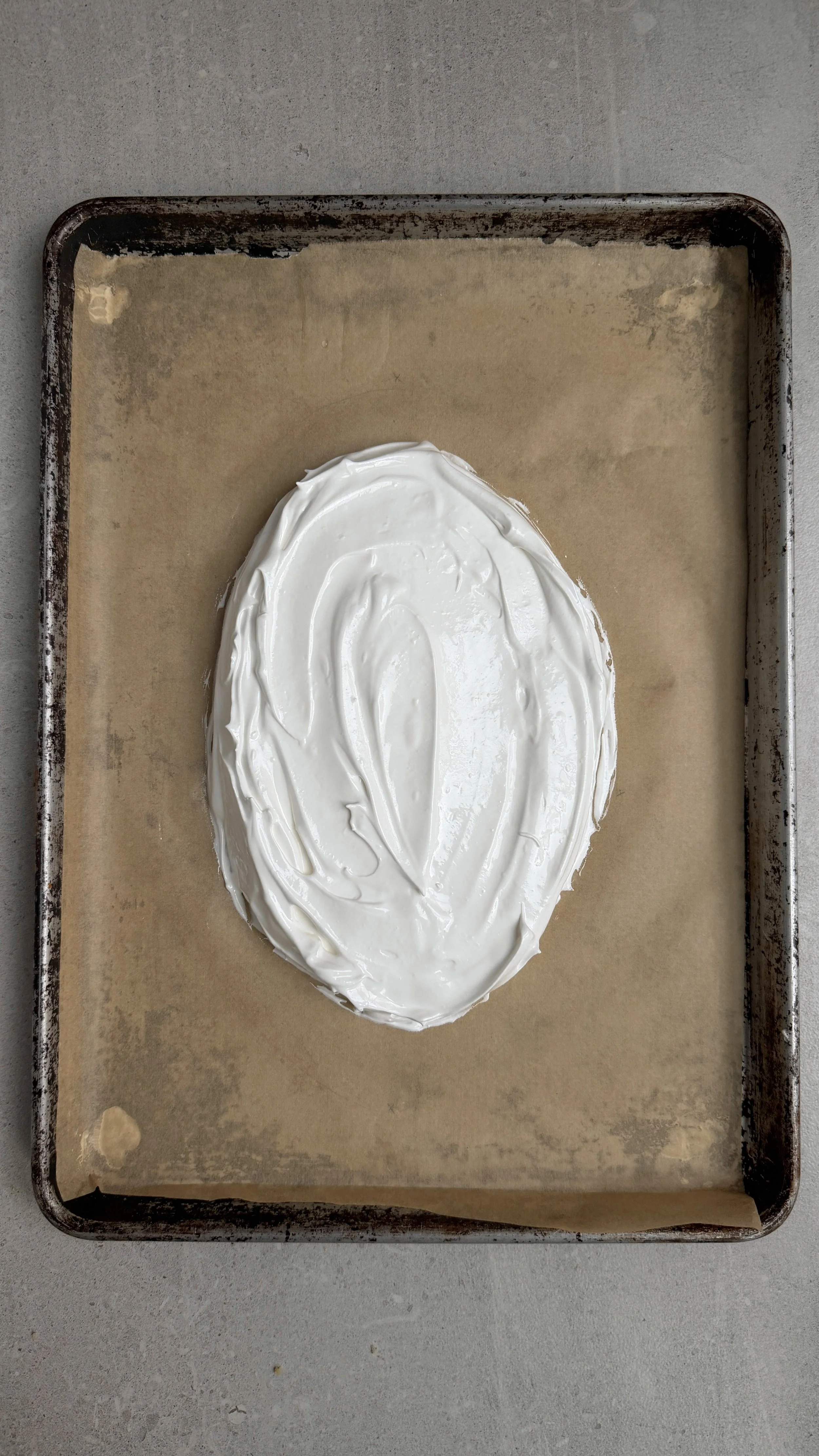
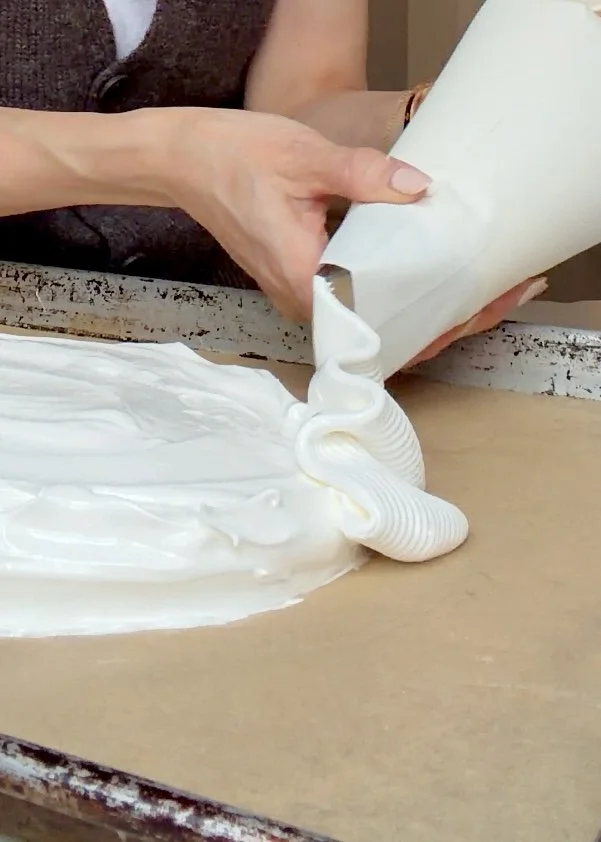
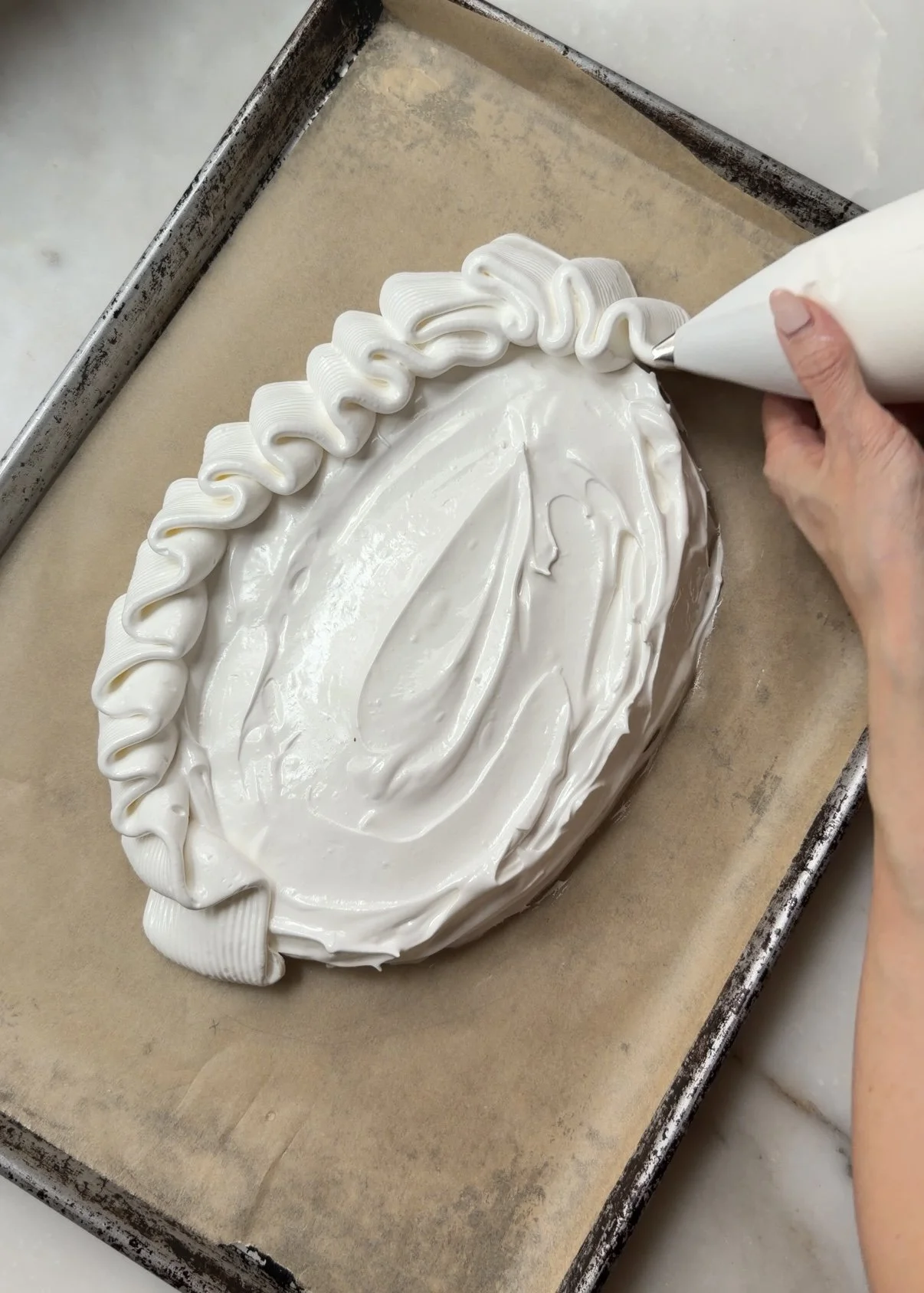
To pipe the sides, hold piping bag with the tip perpendicular to the baking sheet and serrated side facing outward.
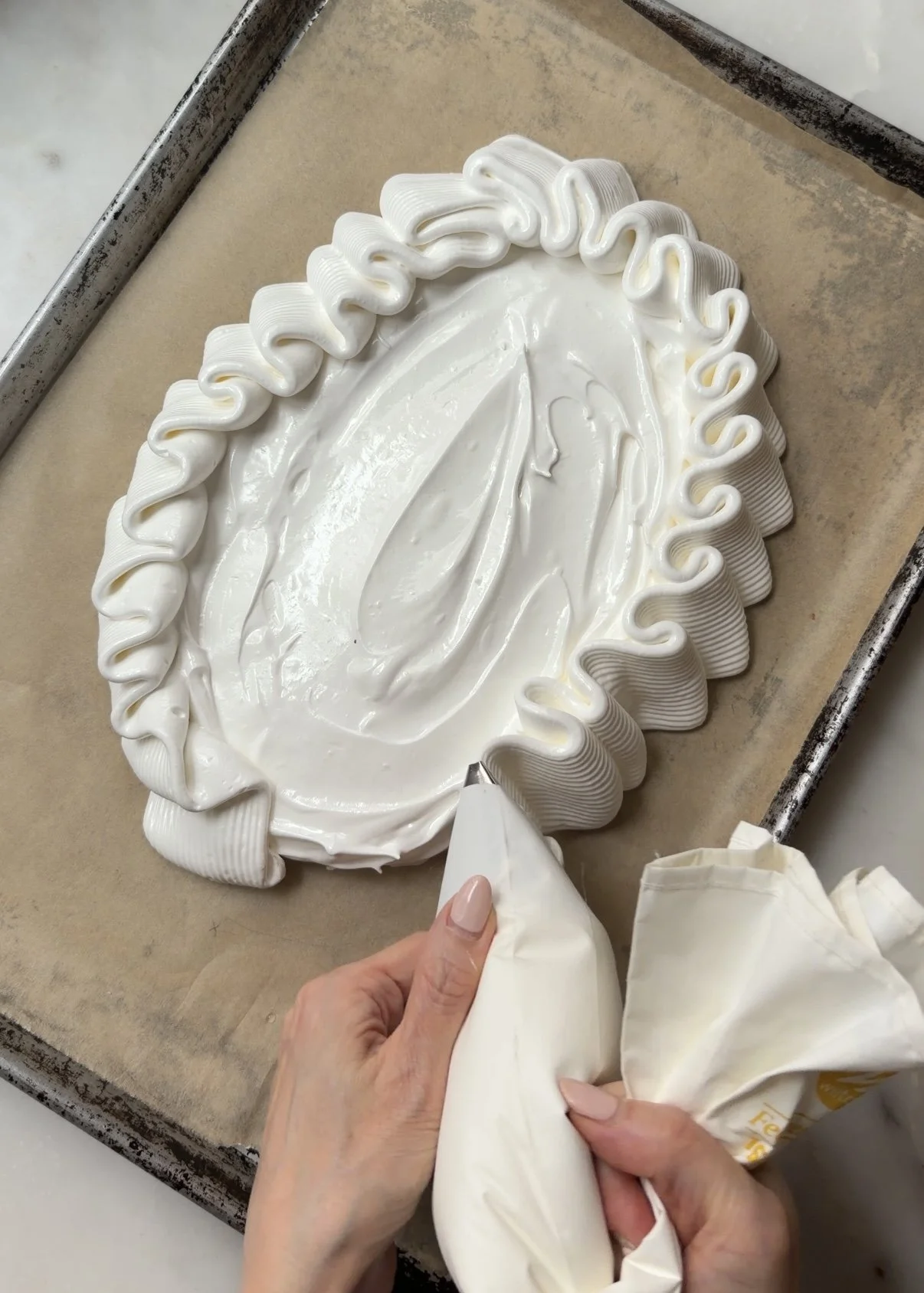
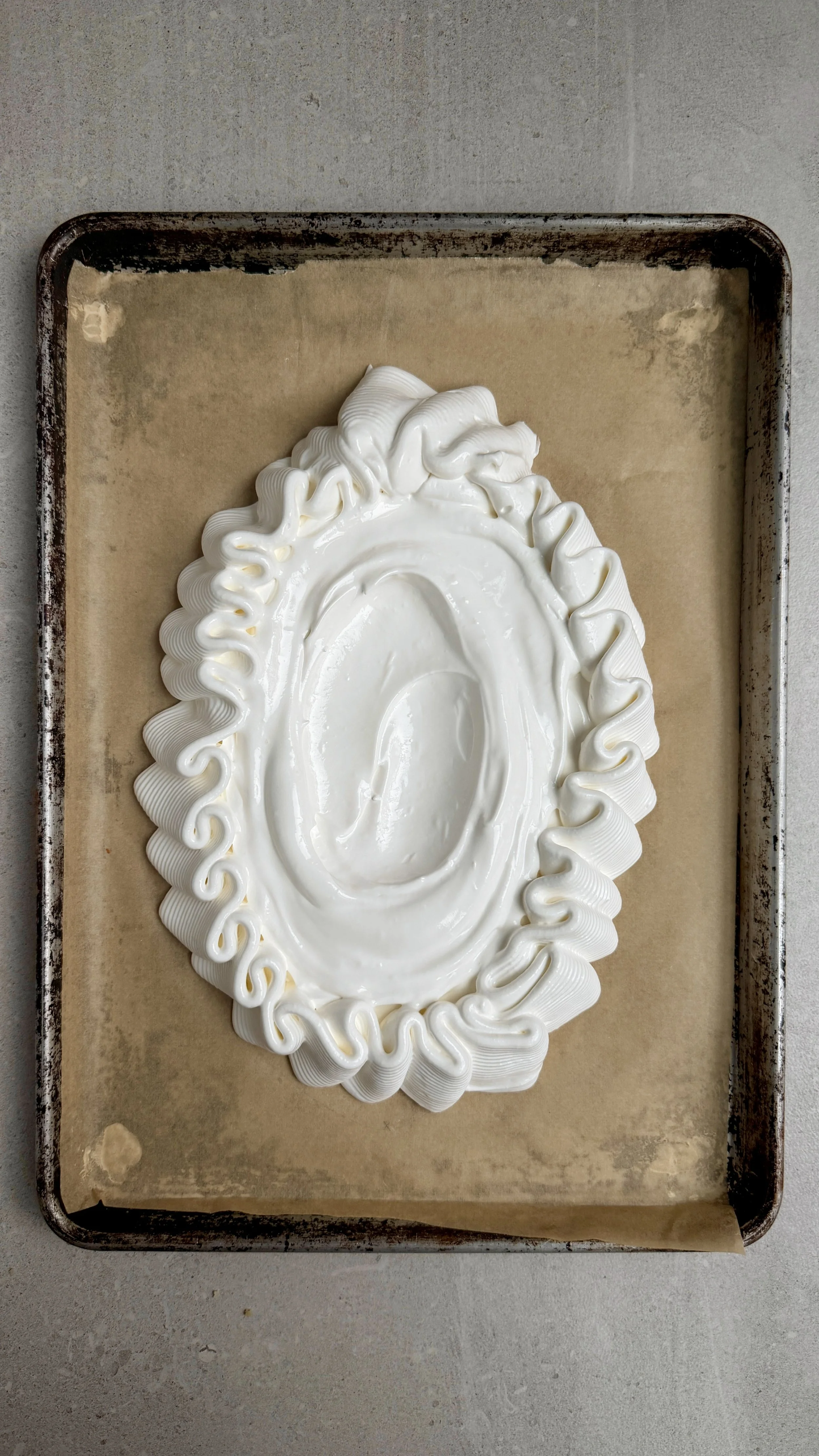
Pipe meringue onto the side of the oval, rippling it into a ribbon, all the way around.
Using the back of a large spoon, form a crater in the middle to accommodate toppings later.
Bake meringue, and let it cool gradually inside off-oven:
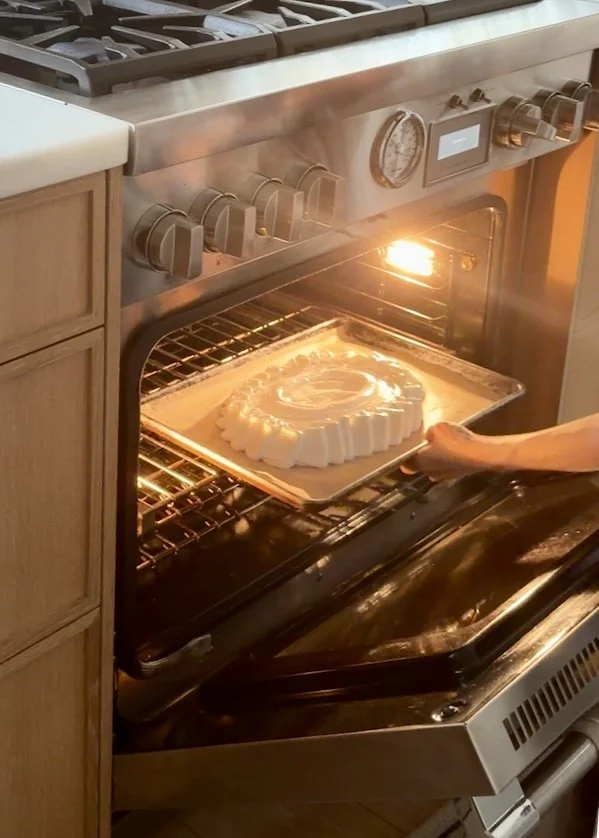
Place baking sheet into preheated oven.
Immediately turn it from 275°F (135°C) down to 250°F (120°C).
Bake for 90 minutes. Turn OFF oven but do not open the oven door. Leave meringue inside to cool gradually, at least 3 hours preferably longer, up to overnight. I often leave it in there for 24 hours until whenever I’m ready for it!
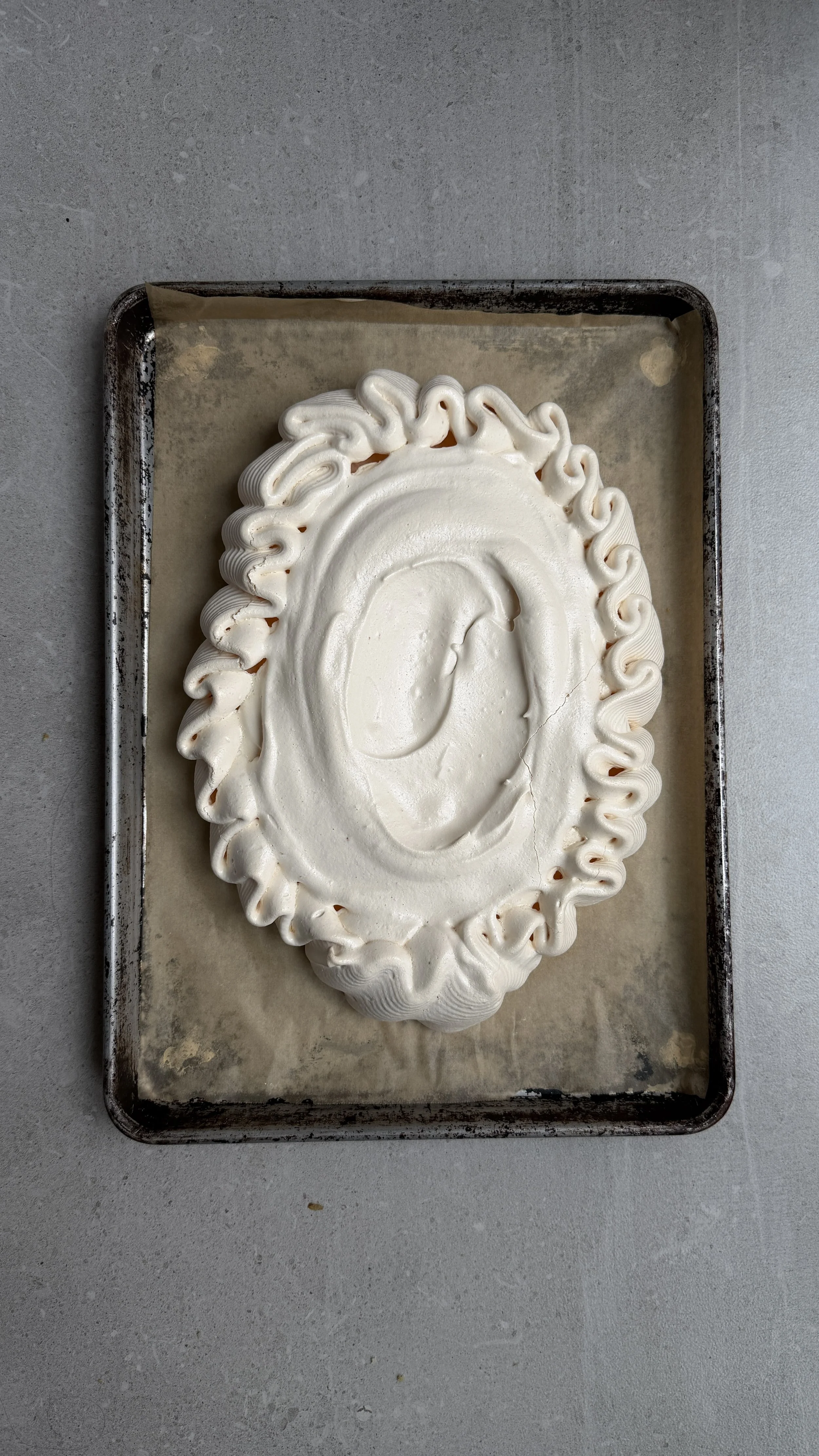
Optional: Gently tap the top with the back of a spoon to lightly crack the area to be topped. This creates a sturdy base that is less likely to collapse unevenly later under the weight of the toppings. I do this if I’m assembling many hours in advance. You can skip this if assembling close to serving.
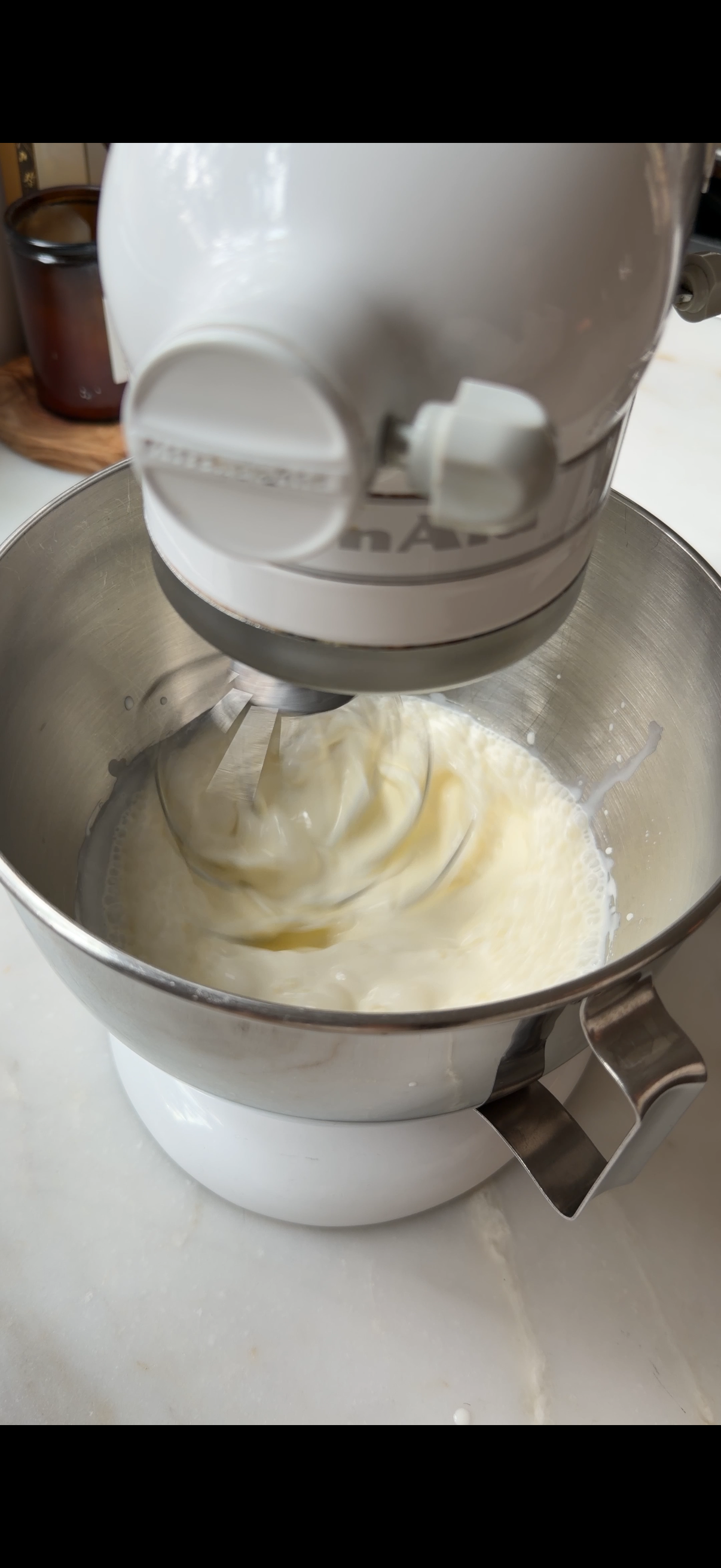
Make Chantilly cream:
Whisk the 35% cream starting on low (to avoid splashing) gradually increasing to medium-high, until noticeably thickened.
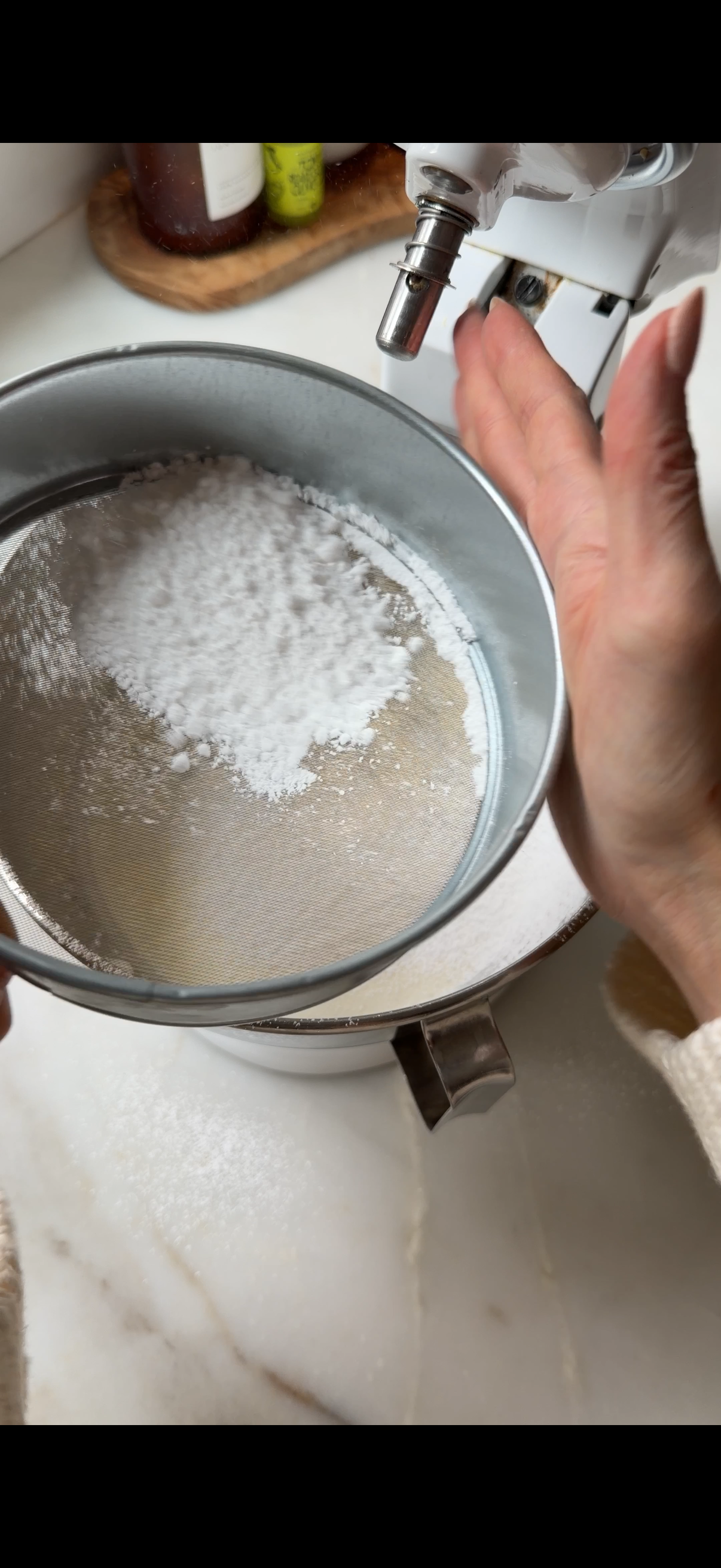
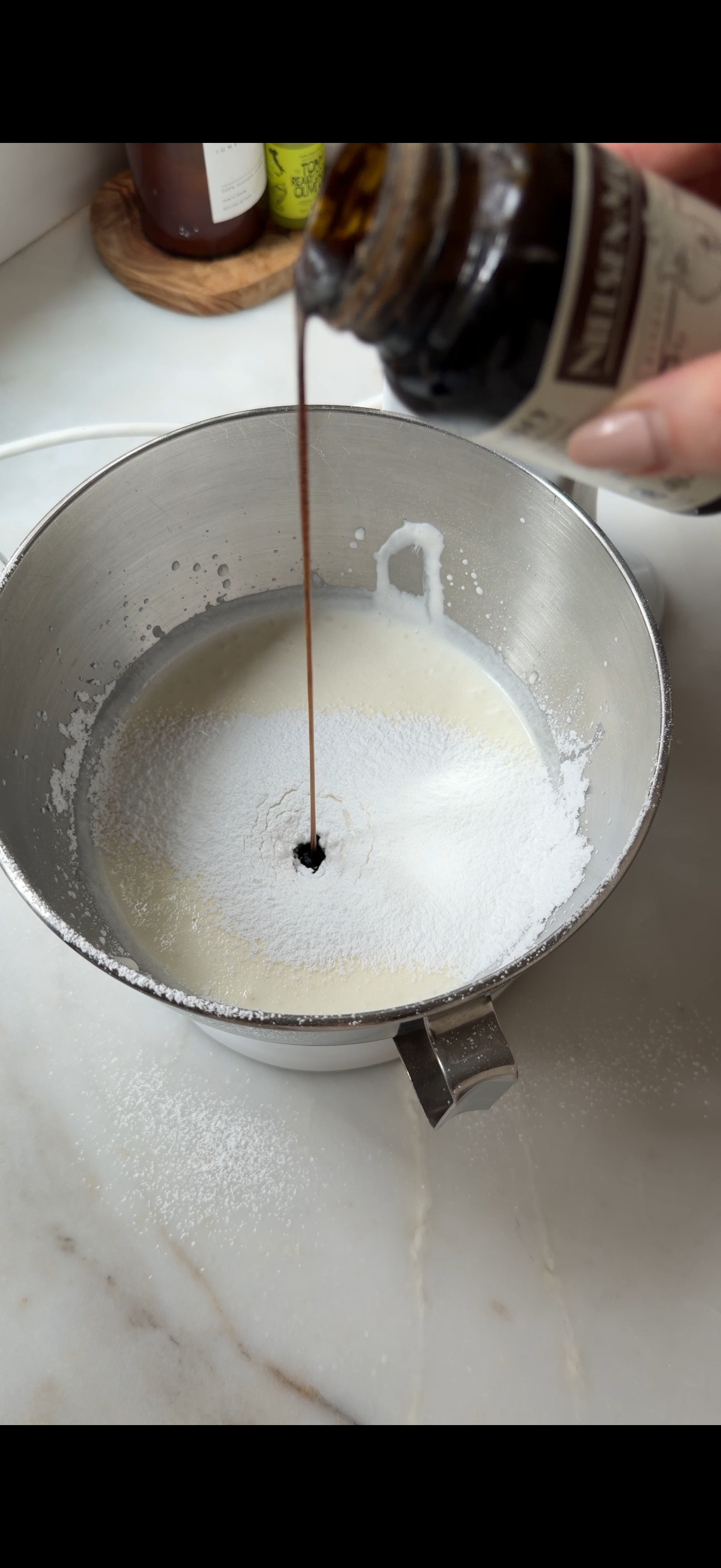
Add powdered sugar and vanilla.
Whisk again until light and billowy. Take care not to over whip.
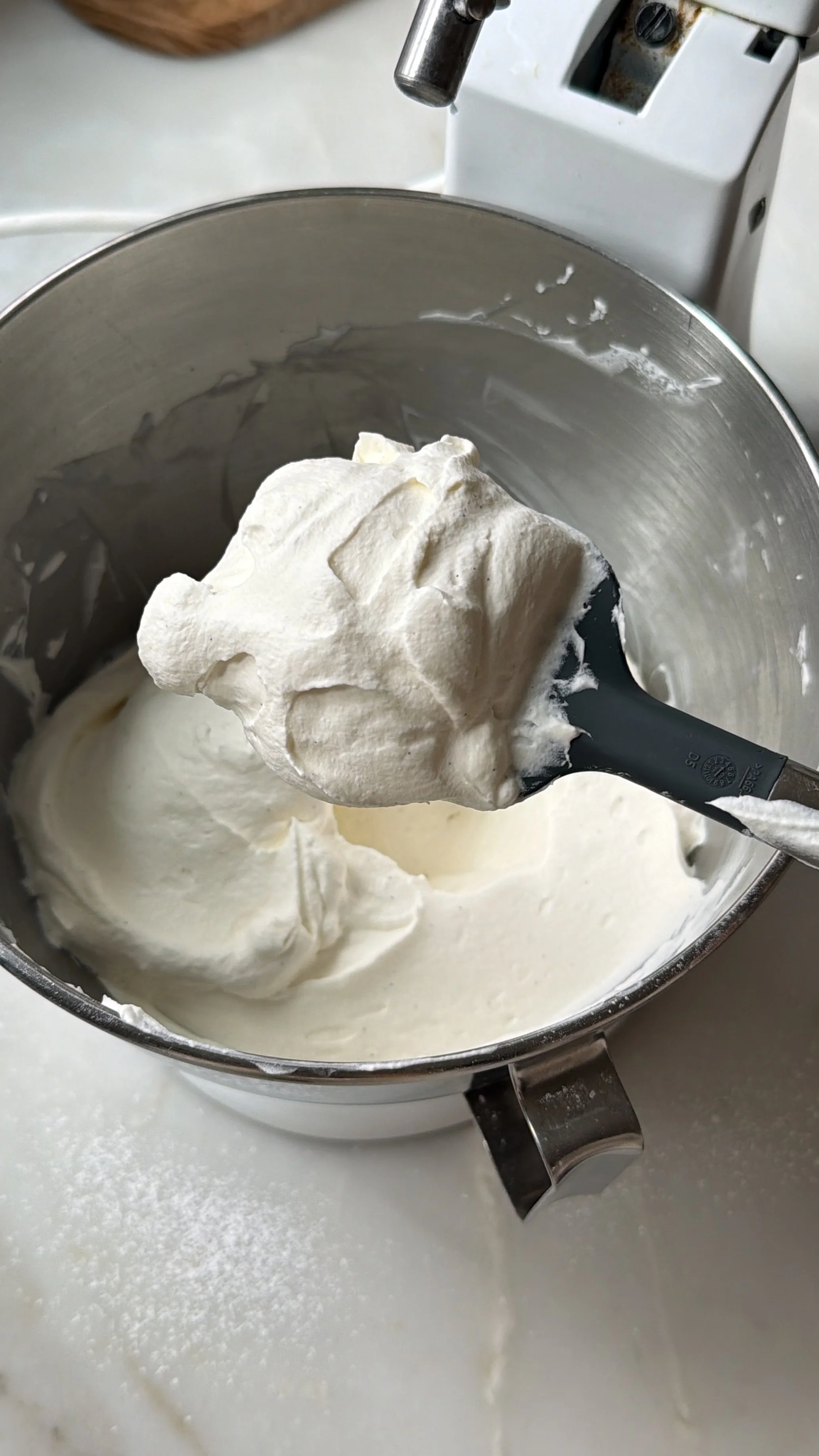
Top meringue with Chantilly cream and fresh fruit of choice. Enjoy!
FAQs
Can I omit cornstarch?
Yes you can. The cornstarch creates a chewier, less brittle texture in the baked meringue. I used to omit this out of practicality because I stopped buying cornstarch during our Paleo grain-free days. Without it, the pavlova is more crisp and brittle but is still absolutely wonderful under a pile of whipped cream and fruit. Now I buy organic non-gmo corn starch.
What to do with orphaned egg yolks
For sweet options:
Any citrus curd like lemon curd.
Custards like crème brulée, flan, creme anglaise or base for ice cream.
Ina Garten’s famous chocolate cake recipe adds a raw yolk in the chocolate buttercream
For savoury options:
Mix with whole eggs for a breakfast scramble or fried rice. Chinese Golden Fried Rice mixes extra raw yolks with the rice before frying for the signature “golden” colour.
Pasta dishes like classic carbonara or the viral nori pasta.
Add raw to mashed potatoes for a luxurious finish!
You may also like these recipes:
Large 8 Egg Pavlova for a Crowd
Party Pavlova (8 egg)
Ingredients
Instructions


Nutrition Facts
Calories
300Fat
15 gSat. Fat
10 gCarbs
39 gFiber
0 gNet carbs
39 gSugar
37 gProtein
4 gSodium
51 mgCholesterol
47 mgDisclaimer: nutritional information is auto-generated and should be used as an approximation.
Did you make this recipe? Let me and other readers know how it went by leaving a comment below!