
Shanghai Pork and Bok Choy Wontons
An authentic recipe from my Shanghainese grandmother, these ground pork and bok choy filled dumplings are the most delicious, and the ultimate comfort meal!
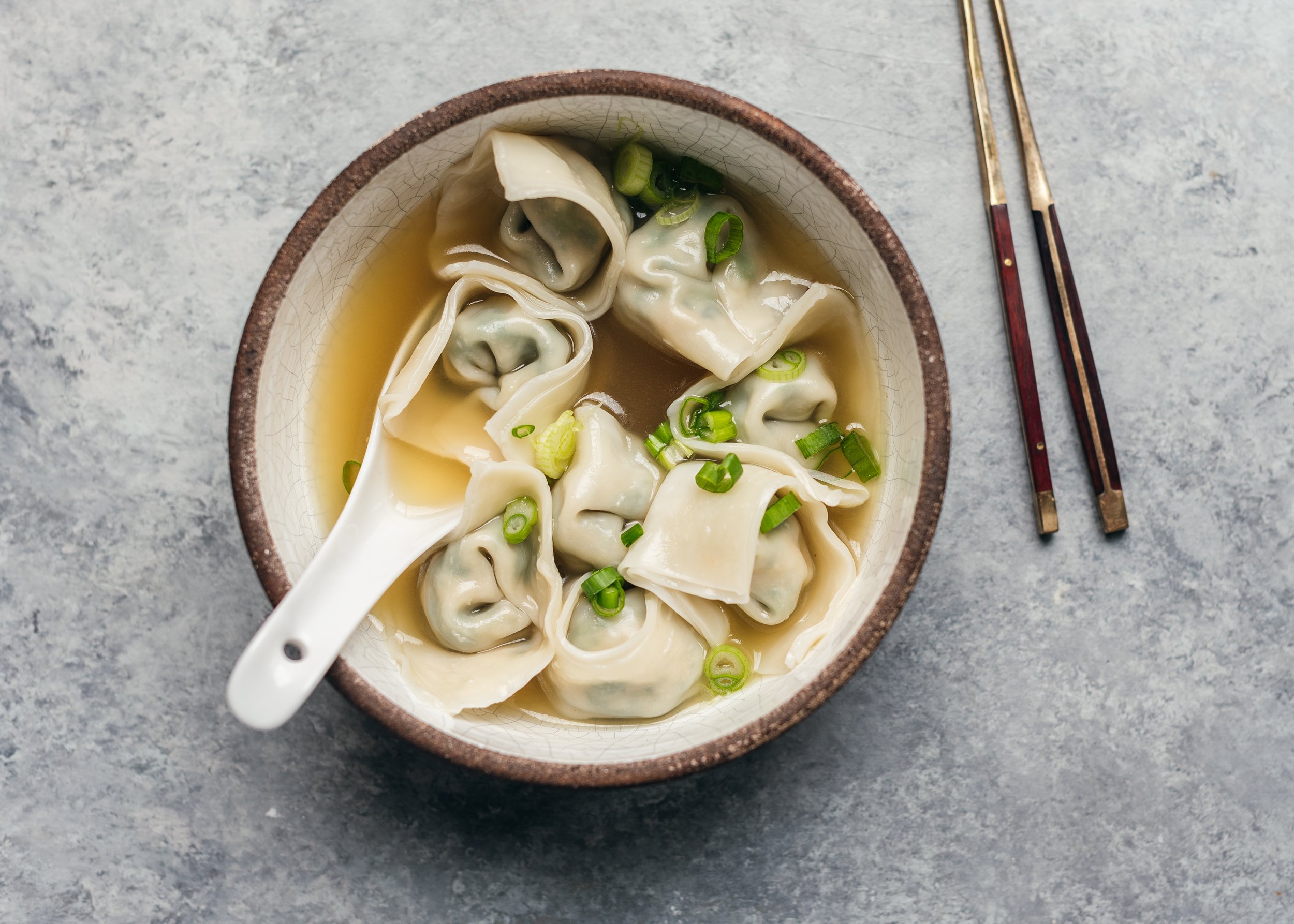
Shanghai cuisine includes several well-known types of dumplings — xiaolongbao (steamed soup dumplings with a thin, pleated wrapper and a savoury broth inside), sheng jian bao (pan-fried yeasted buns with a pork filling and a crisp bottom) and these Shanghai Pork and Bok Choy dumplings, a staple of Shanghainese home cooking.
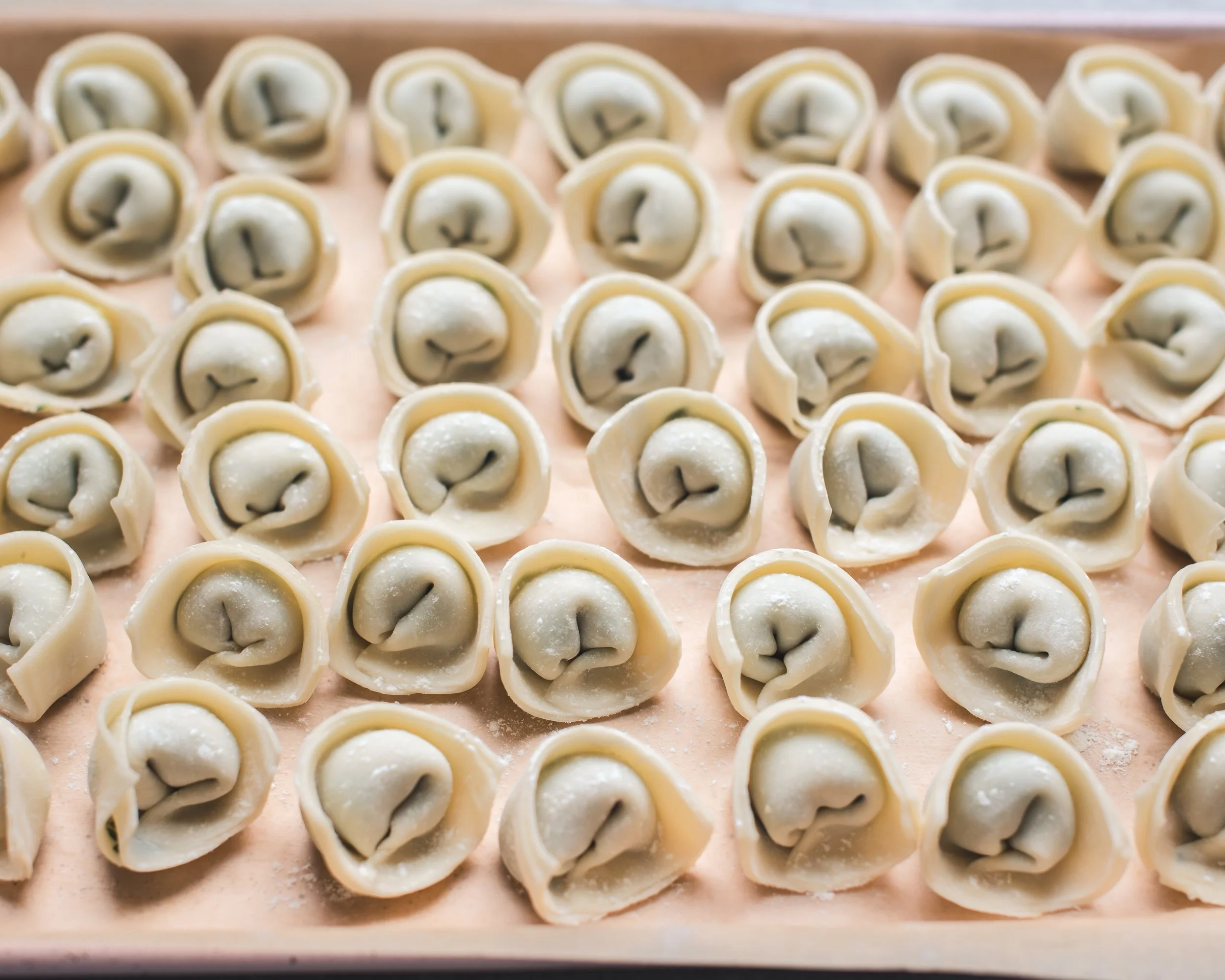
For a decadent touch, we sometimes tuck a tiny piece of raw shrimp into the filling, just like my grandma always did. The bok choy takes a bit more effort. Because it releases a lot of liquid when cooked, squeezing it before mixing into the filling is essential. This step is what separates truly great Shanghai dumplings from mediocre ones. If not done, the filling turns loose and doesn’t yield the perfect bite.
Usually we cook Shanghai Pork and Bok Choy Wontons very simply boiled in water, often served in a light chicken broth for an incredibly cozy meal. Other times we pan-fry a batch because who doesn’t love a crispy dumpling. Both methods are in the recipe card below. Best enjoyed with a simple dipping sauce that takes seconds to make (recipe below) or with The Best Dumpling Sauce if you have 3 extra minutes to make it. Homemade dumplings are a labor of love but so worth it.
Che vey!
Sonia x

🎥 Watch video for Shanghai Pork and Bok Choy Wontons
steps at a glance:
How to make Shanghai Pork and Bok Choy Wontons:
(scroll down for full printable recipe card)
Saute Bok Choy briefly to wilt the leaves and soften the stems slightly. It doesn’t need to be fully cooked at this point.
Place in food processor, but don’t overload or results will be uneven
Depending on size of your wok/pan and size of food processor, you’ll likely need to do this step in 3-4 batches

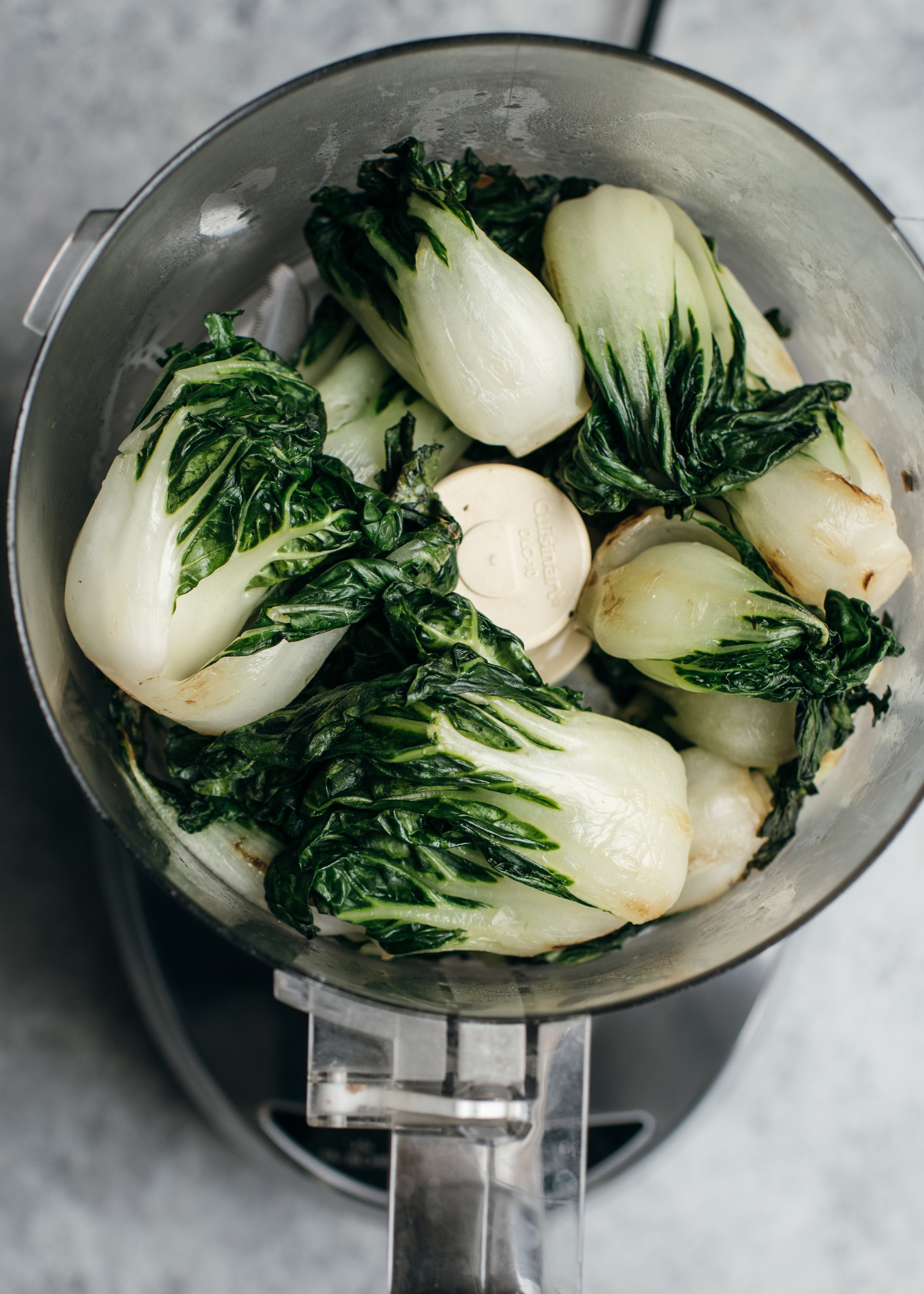
Pulse Bok Choy until pieces are quite small but not all the way to a puree! See image below for size reference
Transfer processed bok choy into a nutmilk bag (or similar such as cheesecloths). Do this over a shallow dish to catch the liquid because mixture is gonna be quite wet even before squeezing!


Squeeze firmly to rid excess liquid. Aim to squeeze out 80-85% of the moisture (not ALL!) being mindful not to squeeze until it is bone-dry because we still want some moisture for a juicy filling
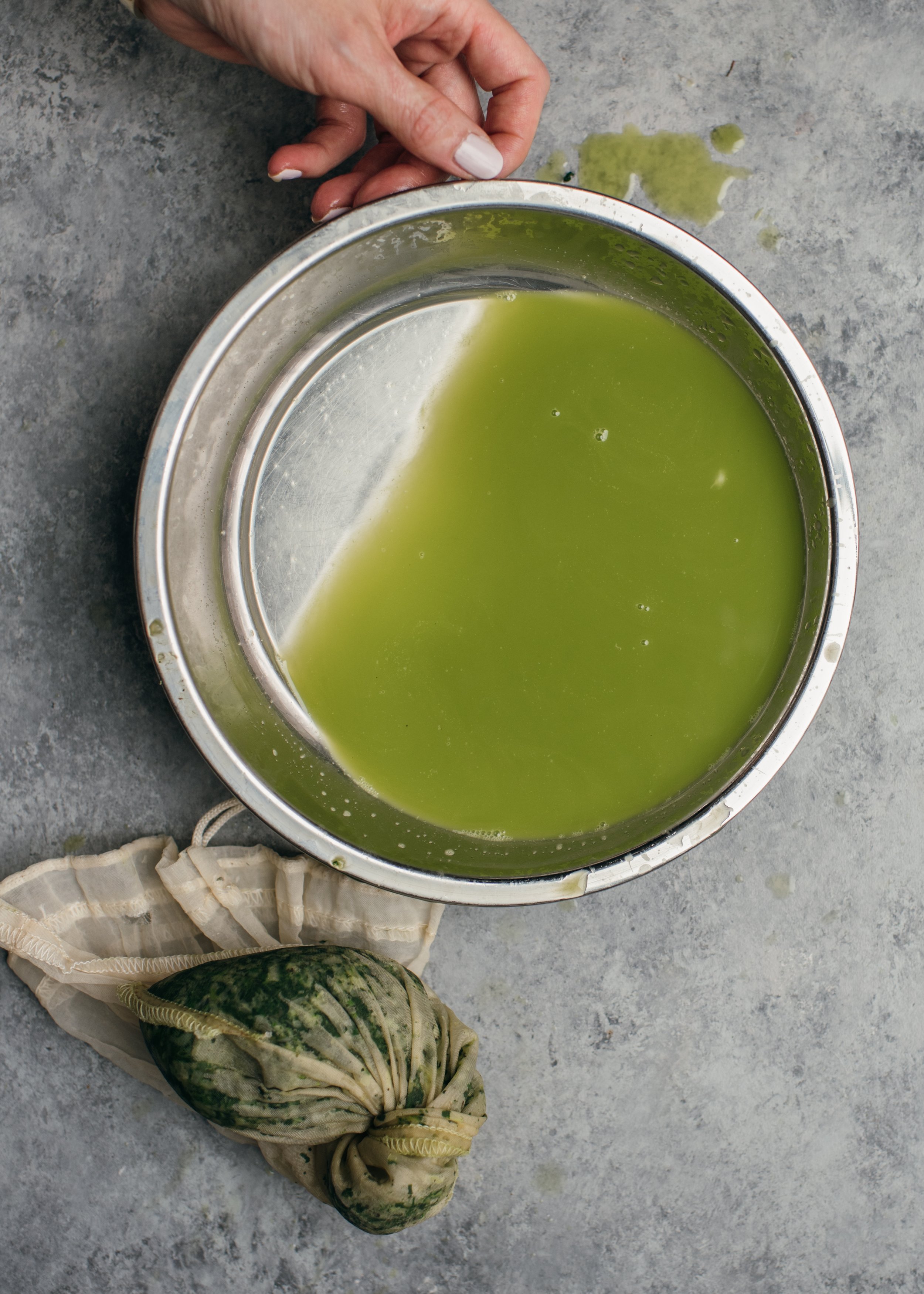
You can expect to squeeze out quite a lot of liquid - that’s about 1/2 cup of liquid in one batch! Discard the liquid

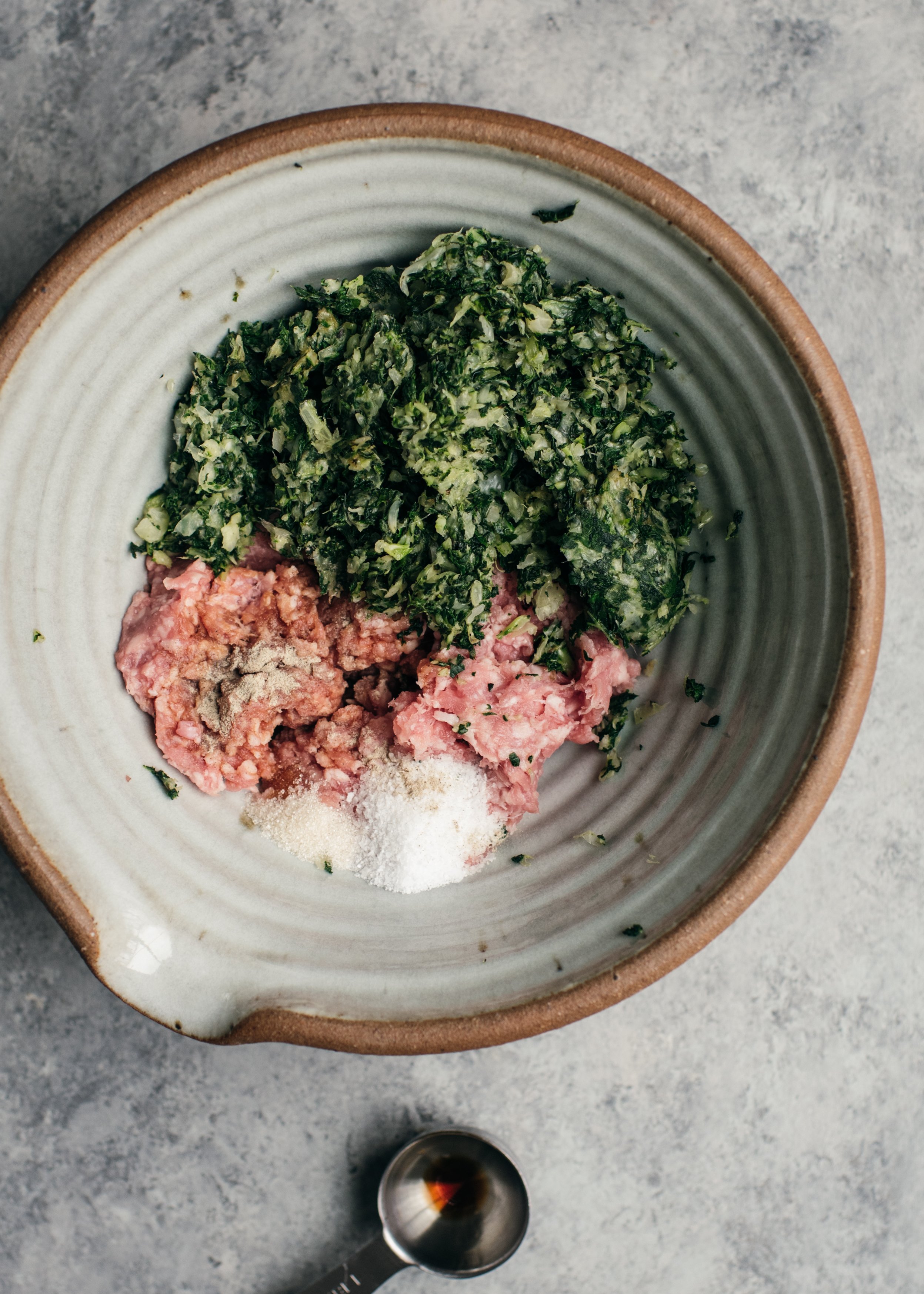
Add squeezed bok choy into a mixing bowl along with remaining filling ingredients and seasoning - ground pork, soy sauce, salt, sugar and white pepper
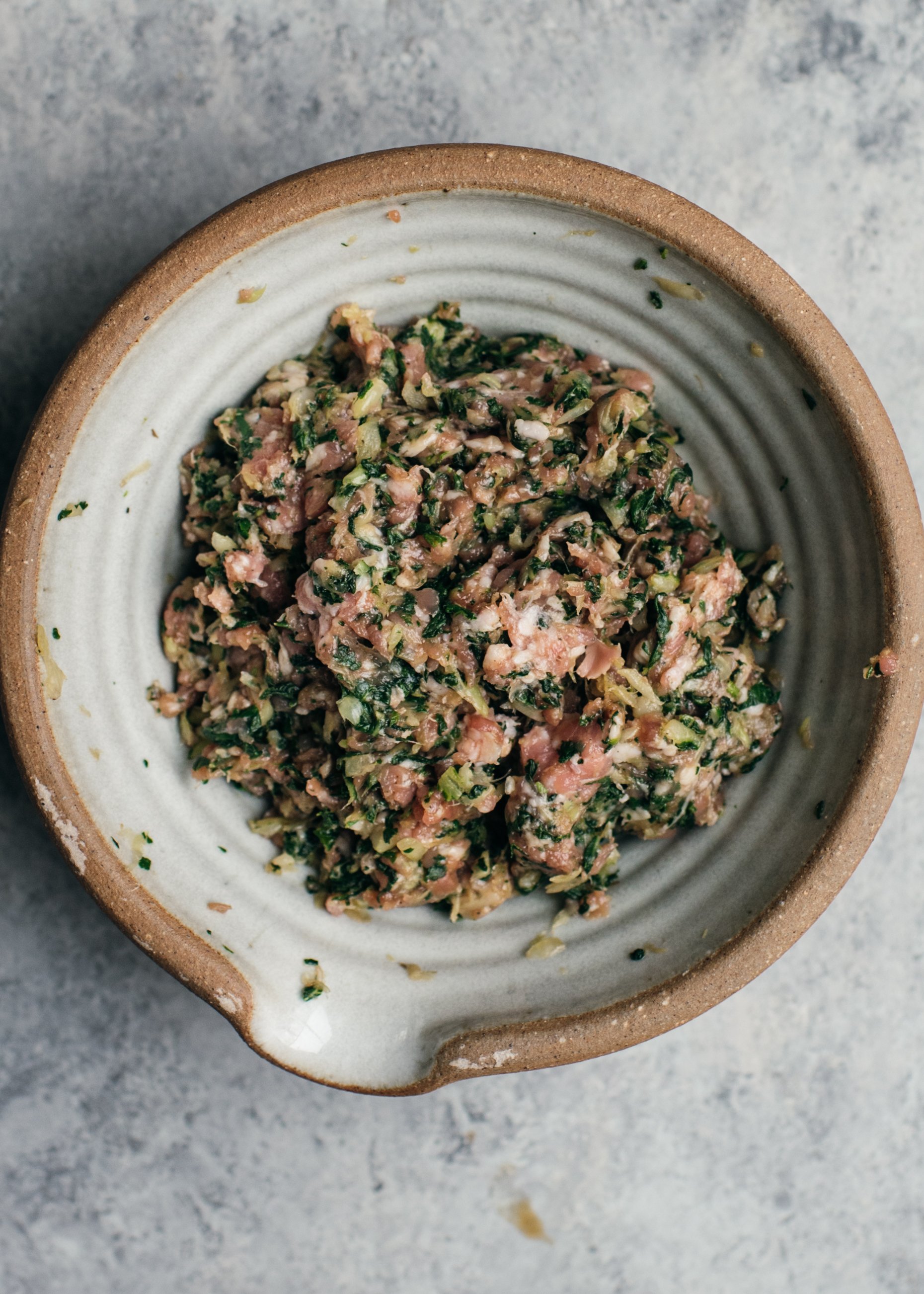
Mix vigorously until filling pulls together into a paste-y consistency
Use filling to wrap wontons with square wrappers (or dumplings with round wrappers)
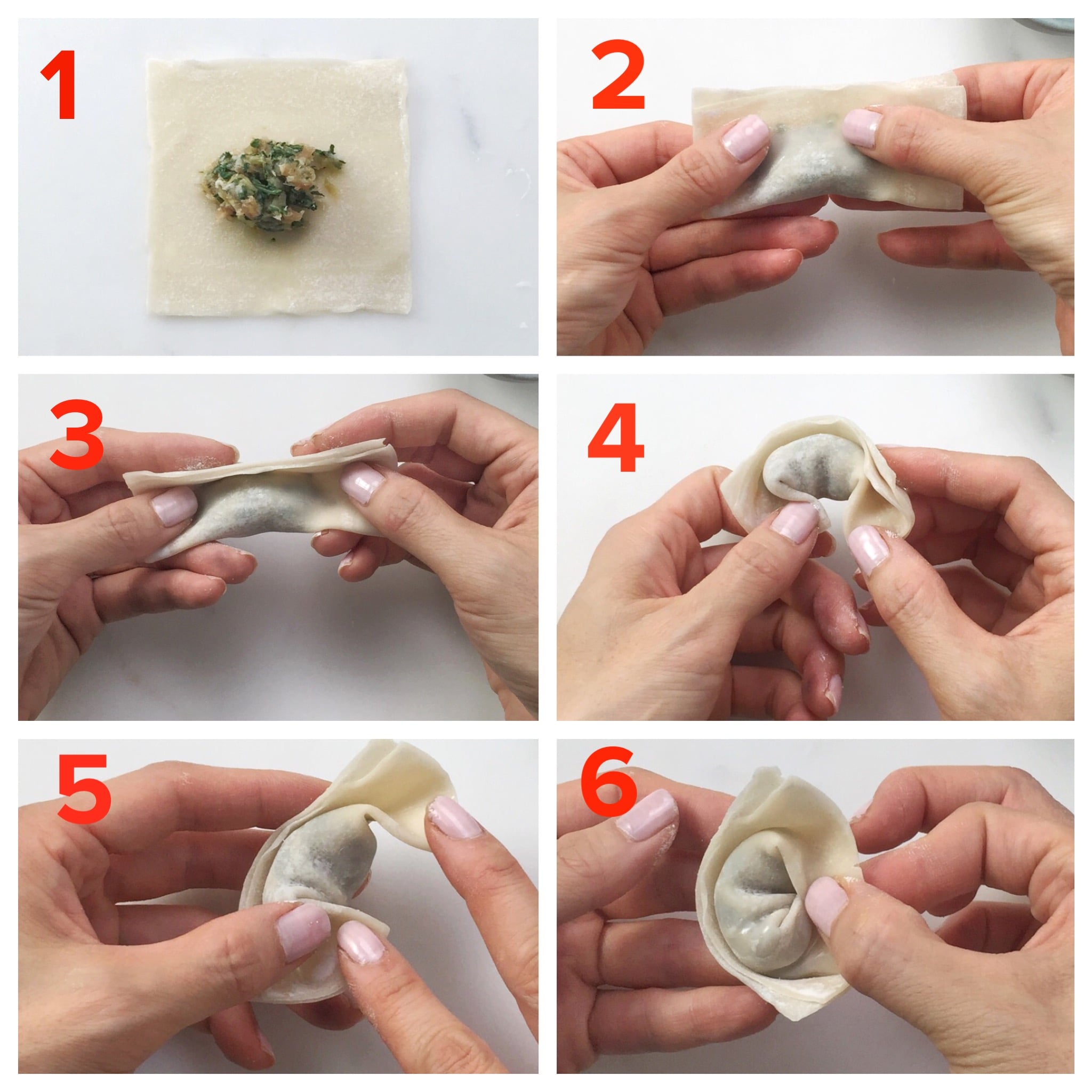
How to fold Wontons using 3" square wrappers:
1) Place filling in center of wrapper.
2) Fold in half horizontally.
3) Curl wrapper down halfway, almost as if to fold in half again.
4) Bring the left and right bottom corners together, one on top of the other
5) Dampen one of the overlapping corners with water. Press firmly to attach them together.
🎥 Watch video for How to fold a Wonton:

Tips and FAQs
How to properly wash bok choy (so many crevices for bugs and soil!)
Bok choy traps soil and insects between its stems, so wash it thoroughly. For regular-sized bok choy, trim the ends to separate the stems (skip this for baby bok choy). I like to soak them for 15 minutes in a clean sink filled with water and about 1 cup of white vinegar — this loosens trapped soil, which sinks to the bottom for easy draining (vinegar is optional, but I use it for all leafy greens). Make sure there's enough water for the bok choy to float freely, then rinse each piece individually under running water and drain in a colander.
Why par-cook the bok choy if the fillling is cooked later?
This is something my family does which I consider a critical step for the best Shanghai dumplings, for THREE REASONS: (1) to release some of the liquid because a wet filling is a no-no for dumplings of any kind, (2) to wilt them so the large volume is easier to handle and are easier to squeeze the liquid out of them and (3) removes grassy flavour of raw bok choy
“Wonton” versus “Dumpling”
"Dumpling" is the broader term, covering everything from square wontons to round wrappers (like the yellow ones used for Cantonese shrimp dumplings), which are slightly thicker and give a different mouth-feel. Round wrappers can be folded simply into half moons or pleated into fancier shapes like the kind my sister and I spent childhood hours pleating, usually to the soundtrack of my mom's favourite musicals, Phantom of the Opera and The Mikado. Very nostalgic!
Juicy dumplings need fat in the filling
Fat is what gives dumplings their signature juicy bite. For the best texture, use ground pork with around 20-30% fat — lean pork will leave the filling dry no matter how flavourful the seasoning is.
Option to add more ground meat to the filling
I intentionally go heavy on the bok choy because that’s how I like it — a 3:1 ratio of bok choy to pork. Sometimes I add another pound of meat to to make more dumplings. Depending on preference, you can go as much as 3 pounds of meat for a 1:1 ratio. Add more seasonings to taste.
Substitute for ground pork
Ground pork can be substituted with another ground meat such as ground chicken or turkey. I recommend adding some oil to the filling since ground poultry is typically leaner. Juicy dumplings need fat in the filling (#4 above).
Taste the filling and adjust seasoning before wrapping
This may seem like a small point but is one of the biggest tips. Microwave a teaspoon of the filling for 30 seconds and taste for seasoning. Add and adjust as needed. The rookie mistake is — after folding a hundred dumplings later — realizing upon first bite that the filling was not seasoned properly.
How to boil dumplings so wrapper stays bouncy
Use a large pot of boiling water and avoid overcrowding - you may need to cook in several batches. Bring water to a rolling boil and add dumplings. Boil until dumplings bob up to the top, about 1-2 minutes. Pour in 1 cup of cold tap water and wait for it to return to a rolling boil, about 45-60 seconds. For fresh (not frozen) dumplings, filling should be cooked by now. Drain or scoop out with a long-handled strainer to serve. See below for pan fry method and cooking from frozen.
How to pan fry
To panfry, drizzle 1 tbsp oil into 10-11” non-stick skillet (it’s important that it be non-stick for this). Arrange dumplings in concentric circles in the pan, not touching. Pour 1 cup cold tap water around the dumplings. Cover and turn heat to medium-high. Cook until water reaches a rolling boil and most of the water evaporates (6-7 minutes). Reduce heat to medium and continue cooking until dumpling bottoms are golden and crispy. This exact method works for fresh or frozen dumplings — see below for cooking from frozen.
Freezing wontons (and cooking from frozen):
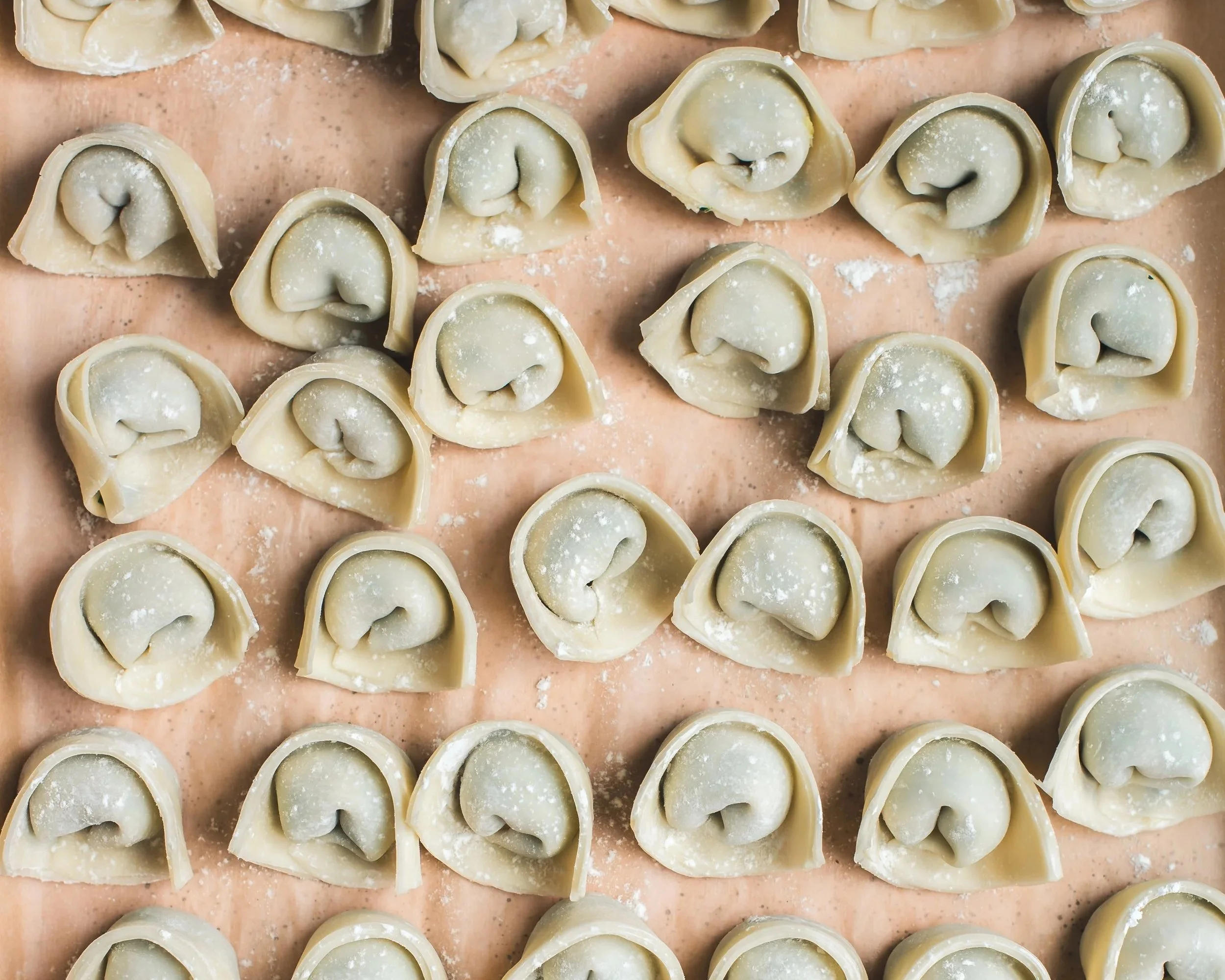
Wontons freeze well for up to a month. To freeze, lay them in a single layer not touching on a parchment-lined sheetpan. Freeze at least a couple of hours or until they are quite firm. Once firm, you can toss them into a freezer-safe container or freezer-safe zip top bag with the air squeezed out. To boil from frozen: Do not defrost. Place frozen wontons directly into boiling water and follow the same method as Cooking Wontons Right Away (see recipe card below). It will take a little longer for them to bob to the top. Add the cup of cold tap water and bring it back to a boil. Repeat with another cup of tap water and bring back to a boil. Dumplings should be done. To panfry from frozen: Follow the same instructions for cooking fresh dumplings, adding 2-3 more minutes to total cooking time. If unsure, cut one in half to check that filling is piping hot and meat is no longer pink.
How can I be sure dumplings are cooked through?
If you're ever unsure whether a dumpling is cooked, cut one in half to confirm raw meat is no longer pink OR insert an instant read thermometer into the centre of the filling to confirm it is at least 165°F (74°C).
Shanghai Pork and Bok Choy Wontons

Shanghai Pork and Bok Choy Wontons
This authentic Shanghai Wontons recipe was passed from my Shanghai-nese grandmother to my dad and to me. These dumplings filled with pork and bok choy are the ultimate comfort food. Hands down my favourite dumplings of them all!
Ingredients
Instructions
- Preheat large wok or heavy-bottom pot over medium to medium-high heat. Drizzle a tablespoon of neutral high heat oil. In batches, add bok choy and sauté 8-10 minutes or until wilted but not cooked all the way.
- Drain bok choy in a large colander and allow to cool while you continue with the rest. There may already be liquid draining out. But just wait, there’s gonna be a lot more liquid to remove!
- In batches, place bok choy into food processor. Pulse 20-25 times or until it’s broken down into small pieces. The pieces should be small enough that when combined with ground pork, the filling feels homogenous in your mouth, but don’t puree it into liquid! Look at the blog image for reference.
- Once again working in batches, place finely-chopped bok choy into a nutmilk or cheesecloth bag (or wrap securely inside a large doubled-up sheet of cheese cloth or kitchen towel). Squeeze most of the liquid out. This is a CRUCIAL step otherwise your filling will be too wet. If you don't have cheesecloth or bag, press bok choy against the edges of the colander to squeeze out the liquid, aiming to get 80-85% of the liquid out but don’t squeeze to bone-dry because we do want some of that moisture in the filling! As you can see in the website images, there is a lot of liquid in the sautéed bok choy. You’ll likely squeeze out ¾-1 cup of liquid per pound of bok choy.
- Add well-squeezed bok choy into a large mixing bowl along with the ground pork, salt, soy sauce, sugar and white pepper powder. Mix well to combine.
- Lastly, mix filling vigorously for 5 minutes. This step is to tenderize the meat and pull everything together to form a tighter, more paste-y consistency, which will yield a bouncier mouthfeel when you bite into a dumpling. Your arm will be very tired doing this but don't skip it!
- Always recommended for dumpling fillings - taste it! Put a small teaspoon on a dish and microwave it 30 seconds or when cooked through. Eat and adjust seasonings until it is right.
- Fill each 3" square wonton wrapper with a heaped 1 tsp to 1.5 teaspoon of filling. Resist the tendency to overfill. The ratio of filling-to-dough affects the overall mouth-feel. Furthermore, an overstuffed wonton will explode as soon as it hits the boiling water during cooking. If you’re using larger wonton wrappers (more than 3” square), place more filling while maintaining the approximate ratio as you see in the blog post images.
- STEPS 1-6 CORRESPOND TO STEP-BY-STEP PHOTOS ON THE SITE: (1) Place the filling in the center of the wonton wrapper (2) Fold halfway up, and very gently squeeze around the filling to secure it (3) Curl the wrapper horizontally halfway and (4) begin pulling the lower two corners towards each other (5) Dab a bit of cold water onto the corner parts that will touch (i.e. the bottom of the left corner + top of the right corner) and overlap them (6) Gently squeeze the overlapped corners to stick them together.
- Voila! One down, 99 more to go. There are other ways to fold wontons with square wrappers but this is how my family does it.
- To cook the fresh wontons, bring a large pot of water to a boil. Season it with salt the way you would when cooking pasta. Once at a rolling boil, slide the wontons into the pot carefully so as not to scald yourself. Do not overcrowd the pot - you may need to cook in several batches. Boil until the wontons bob up to the top, about 1-2 minutes. Pour about a cup of cold tap water into the pot and wait for it to come to a boil again, about 45 seconds. Drain and scoop out with a long-handled strainer.
- We enjoy them simply boiled like this, with a dipping sauce (see Dipping Sauce ingredients) or serve the boiled wontons in homemade chicken broth which is the ultimate cozy meal on a wintry night. OR when we haven’t gobbled them up too quickly, we let them stand 10-15 minutes after boiling to dry out slightly, then panfry on a skillet in a bit oil, until golden brown on the edges. I love any and all of these options!
- At this point the wontons can be frozen enjoy another day. Place them in a single layer, not touching, on a baking sheet lined with parchment and put into the freezer for an hour or so. Transfer them into a freezer bag or container. To cook, do not defrost. Place frozen wontons directly into boiling water and follow the same method as Cooking Wontons Right Away (above). It will take a little longer for them to bob to the top. Then add the cup of cold water and re-boil the same way.
Nutrition Facts
Calories
40Fat
1 gSat. Fat
0 gCarbs
5 gFiber
0 gNet carbs
5 gSugar
0 gProtein
2 gSodium
114 mgCholesterol
5 mgDisclaimer: nutritional information is auto-generated and should be used as an approximation.


