
Korean Army Stew (Budae Jjigae)
A savoury and slightly spicy stew loaded with Napa cabbage, mushrooms, tofu, spam and other goodies of choice. This meal never fails! It involves minimal actual cooking, always solicits delight from my family when it’s what’s for dinner and, it takes less time to cook than the pot of rice you serve it with!
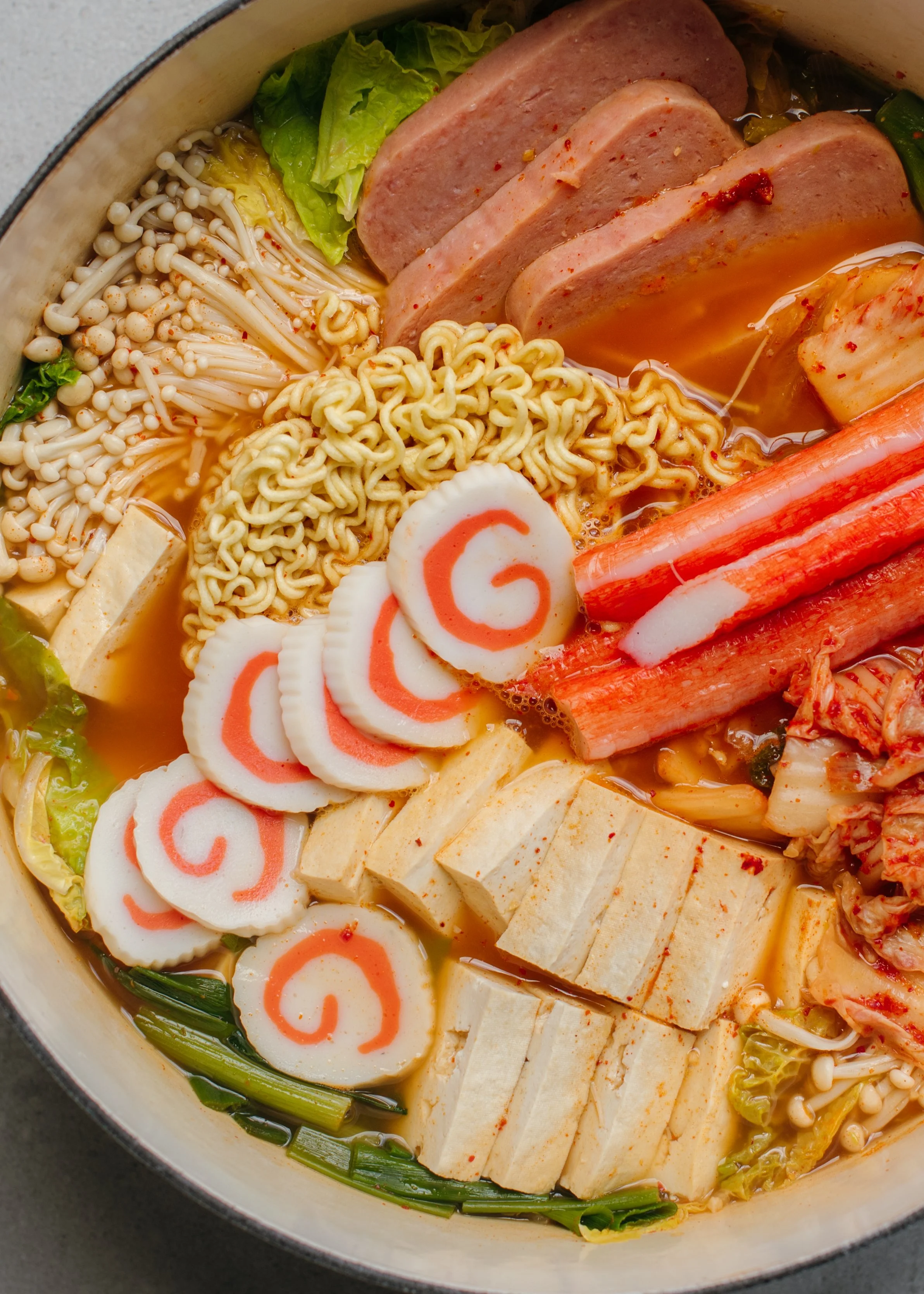
Korean Army Stew (Budae Jjigae) is a dish born after the Korean War when ingredients were limited and cooks mixed local staples with foods from nearby military bases like spam and canned sausages. In Korean, the word “budae” means army base and “jjigae” means soup. The dish grew popular because it used affordable pantry items and produced a filling meal. Over time, households and restaurants shaped their own versions with ramen, kimchi and tofu. It is now a well known comfort food in Korea and beyond.
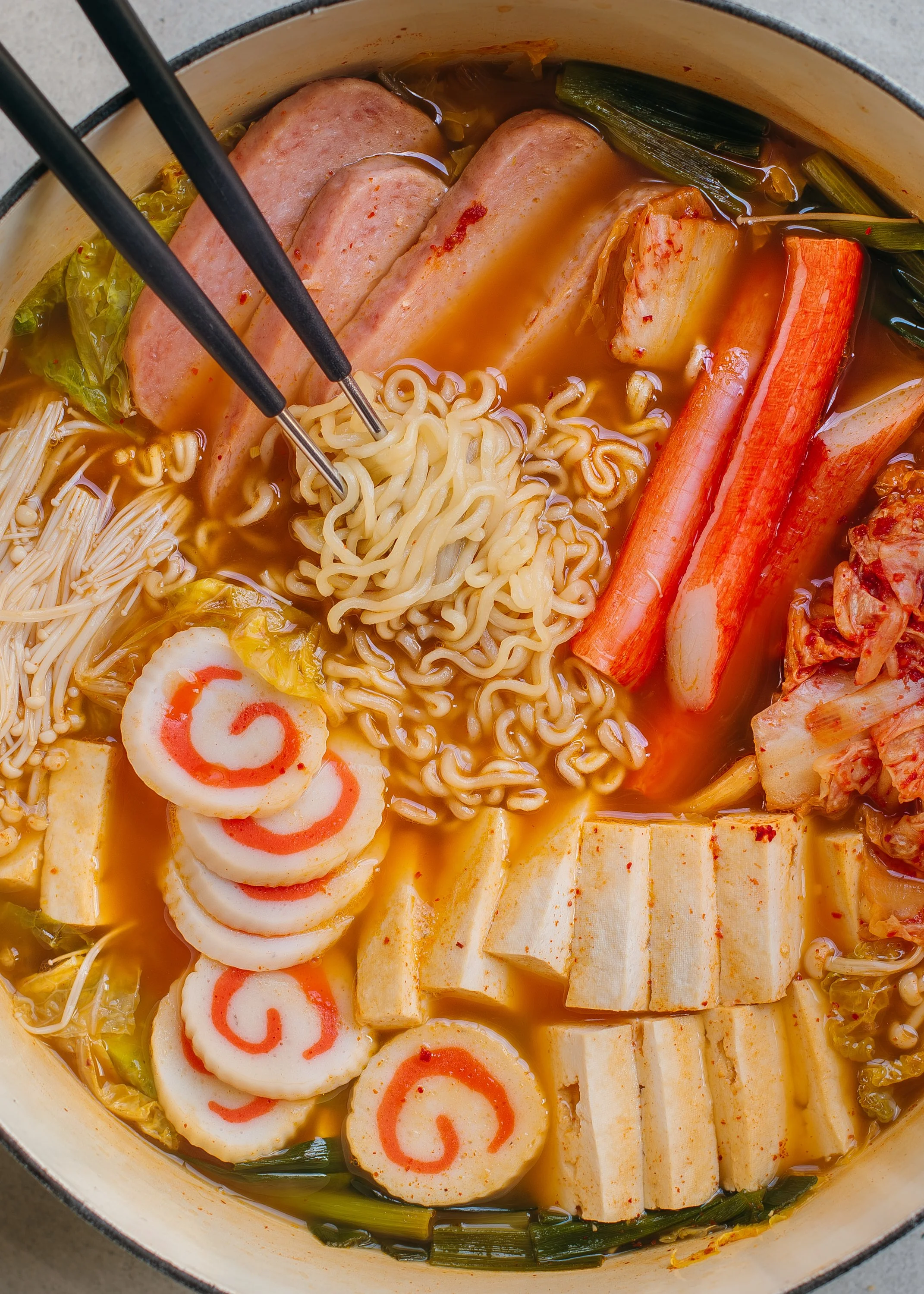
My version is heavy on Napa cabbage which cooks down soft and contributes natural sweetness that flavours the broth. Tofu adds healthy plant protein and enoki mushrooms add earthiness and more nutrition. Sometimes I add other mushrooms in addition or instead, such as shiitake or oyster mushrooms. All of these ingredients contribute to a quick one-pot meal that is well-balanced and wholesome — in spite of the spam and instant noodles?! I looked back at my handwritten recipe notes for this and must shout out My Korean Kitchen‘s Budae Jjigae recipe, the first recipe I tried when I began making this for my family. Over the years, I’ve tweaked the soup base and adapted the various components to suit our tastes. I encourage you to do the same!
🎥 Watch video for Korean Army Stew (Budae Jjigae)
Let me know what you think about this recipe or let me know if you have any questions about it. The comments section is always open and I’m happy to help and happy to hear from you.
Eat well and be well,
Sonia x
what you’ll need:
Ingredients for Korean Army Stew (Budae Jjigae)
(scroll down to recipe card for full printable recipe)
Gochugaru — Korean chili pepper powder. See Tips and FAQs for more info.
Gochujang — Korean fermented chili paste. See Tips and FAQs for more info.
Soy sauce — adds umami and depth
Mirin — optional ingredient to add flavour with a hint of sweetness. See Tips and FAQs for more info.
Napa cabbage — every one pot meal needs some leafy greens! Napa cabbage cooks quickly and adds a natural sweetness to the dish.
Soft tofu — adds healthy plant-based protein and makes this a more wholesome meal
Enoki mushrooms — quick cooking and adds heartiness; use any mushrooms you have.
Spam — a quintessential ingredient in this dish
Kimchi — adds spicy umami flavours and brightens the broth with a touch of acidity. Usually older (or “aged”) kimchi that is more sour is used for stews and soups. Fresher kimchi is for eating straight up as a side dish.
Garlic and scallions — adds aromatic flavour to the dish
Chicken broth (or water with instant ramen soup seasoning) — forms the base of the soup. I provide a range between 4 to 6 cups of liquid depending on how much liquid cooks out of the cabbage, and how “soupy” you like it.
Instant ramen — just hits different when there’s this satisfying noodle element! Take the dry ramen disc out of the packet to use in this dish. You may discard the seasoning packets that come with it, or use it in the soup in particular if you’re using water instead of broth.
Naruto fish cake and imitation crab sticks (optional) — fun and tasty toppings in a stew like this
steps at a glance:
How to make Korean Army Stew (Budae Jjigae)
(scroll down to recipe card for full printable recipe)
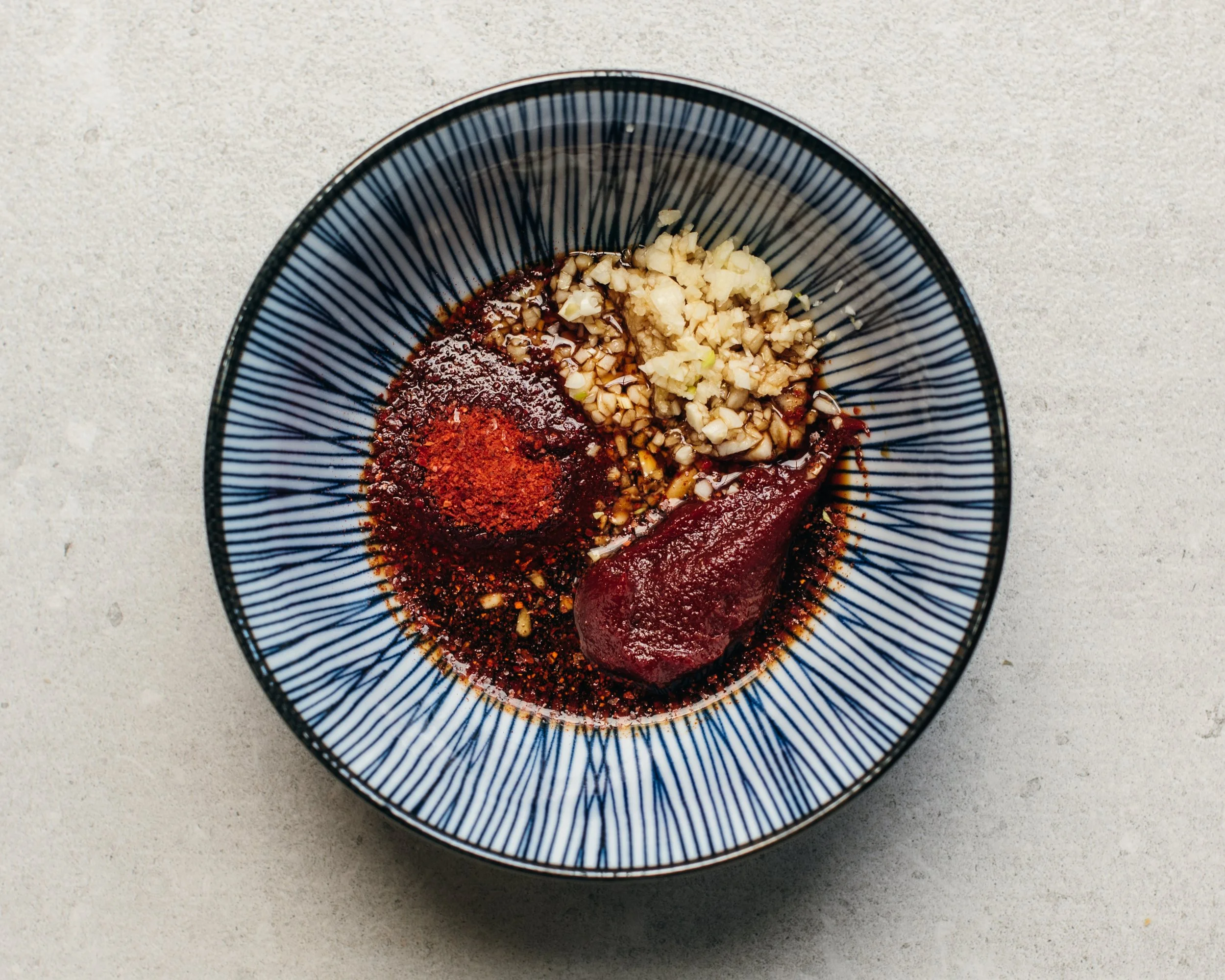
Mix the soup base ingredients and set aside.
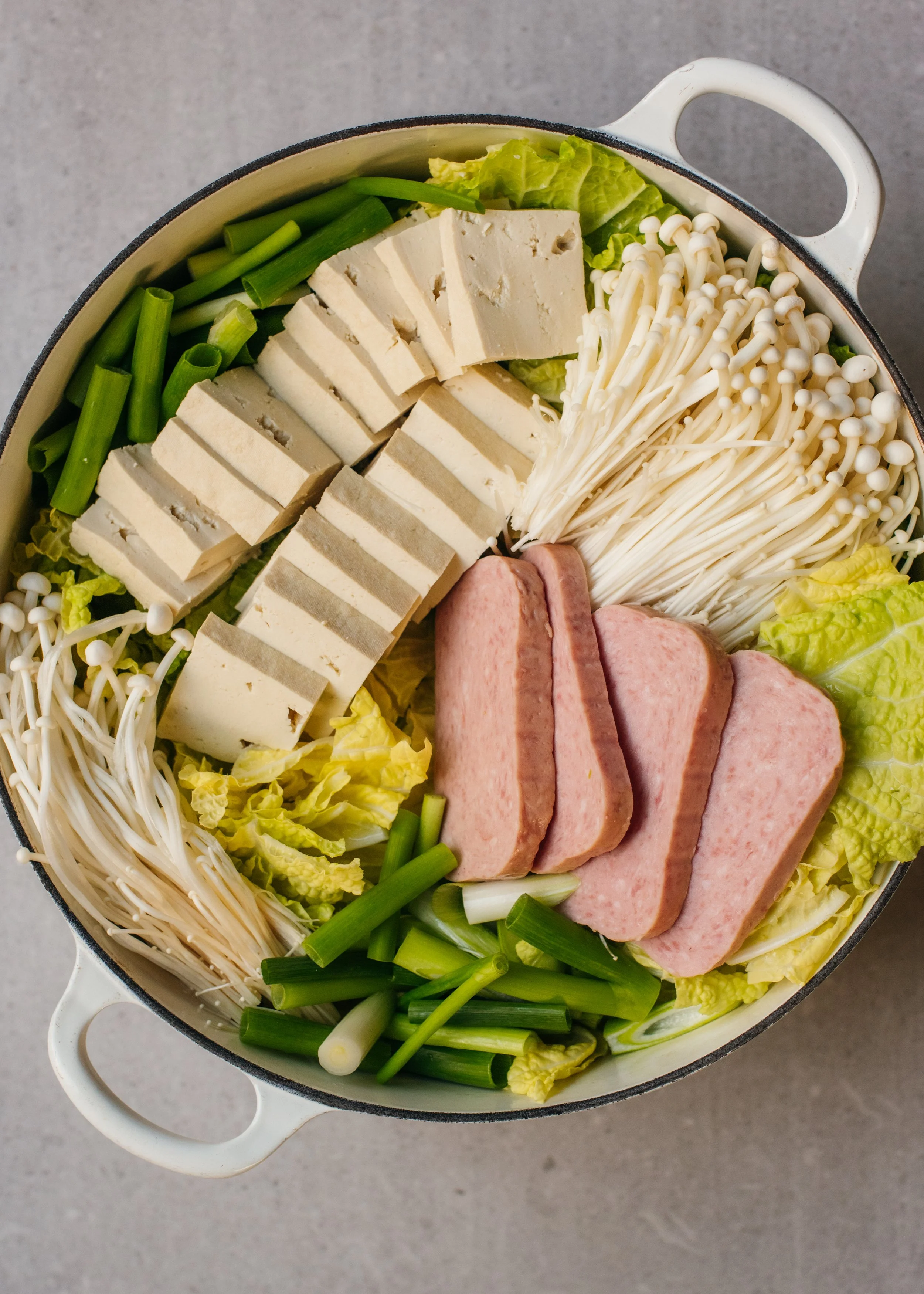
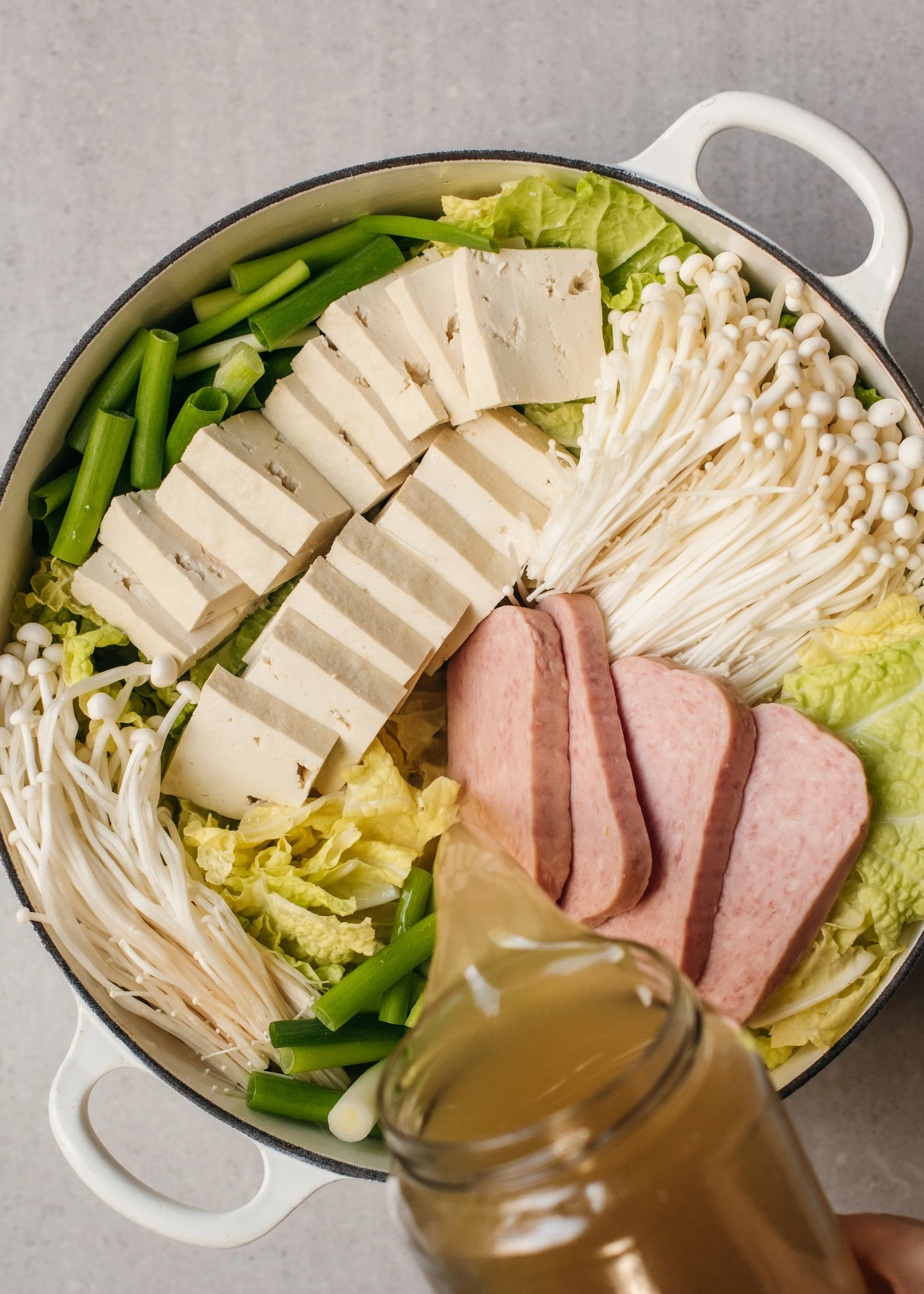
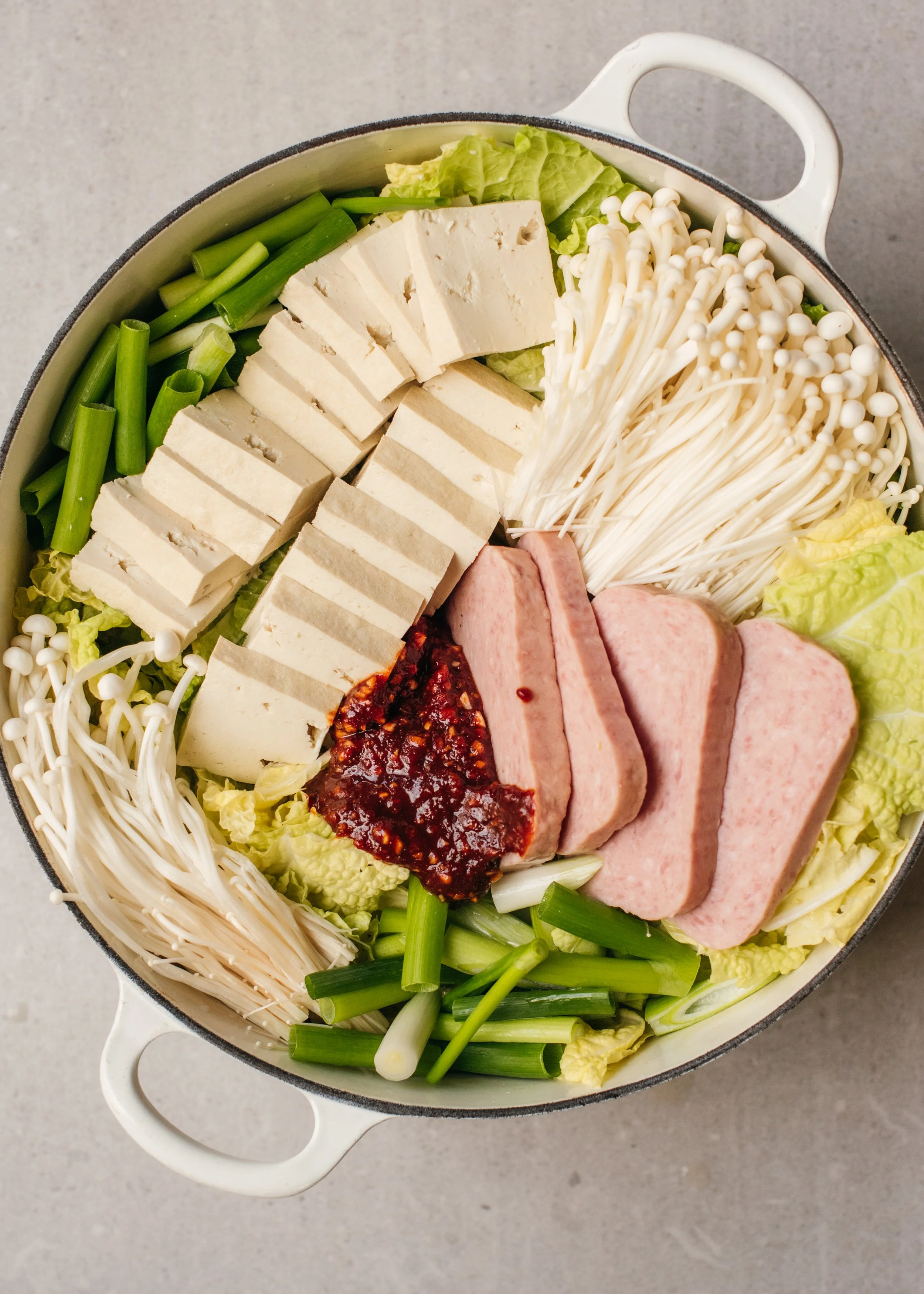
Layer cabbage, tofu, enoki, spam, kimchi, and scallions in a pot.
Add the soup base to the center and pour in the broth. Note — I did this in wrong order in the photos - it’s still fine but pouring liquid on top of soup base helps to distribute it :)
Add kimchi, cover and simmer until Napa cabbage is tender.
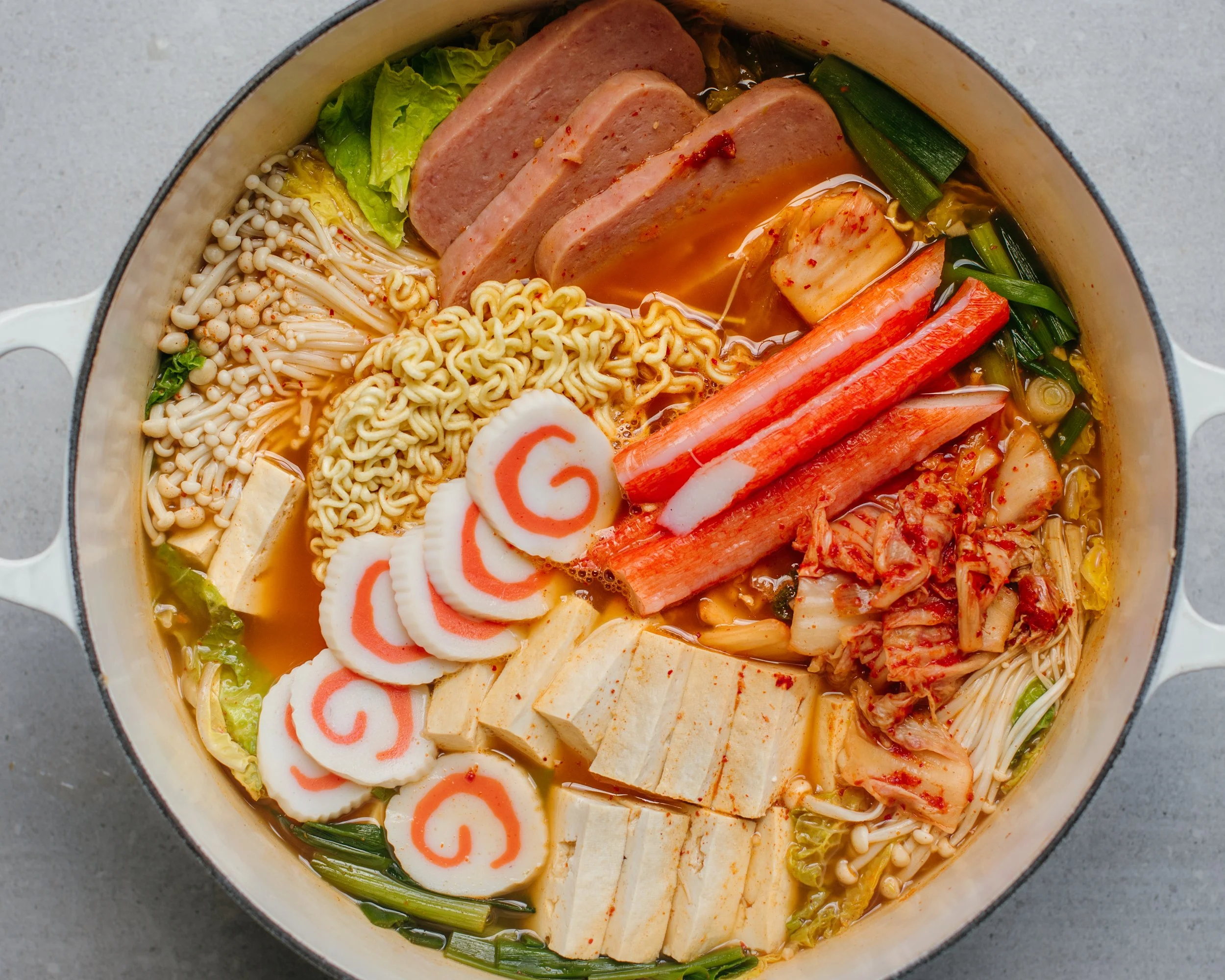
Add instant ramen, fish cake and crab sticks.
Simmer a few minutes more until ramen is cooked to your liking. Serve with rice (or not)!
Tips & FAQs
What is gochugaru?
A dried Korean red pepper chili powder with a moderate heat level. Look for sun-dried gochugaru (labeled "taeyang gochugaru" or “taeyangcho”) imported from Korea, considered the best in terms of flavour and spiciness. I store mine in the freezer to extend freshness. The amount of gochugaru in this recipe depends on taste preference and intensity of your gochugaru. For example, sun-dried versus machine-dried, how long it’s been on the store shelf, etc. will impact that so be sure to adjust accordingly.
What is gochujang?
A Korean fermented red chili paste that is spicy, sweet and umami packed. “It is made from gochugaru, glutinous rice, meju powder, yeotgireum, and salt. The sweetness comes from the starch of cooked glutinous rice, cultured with saccharifying enzymes during the fermentation process (source: wikipedia)”. As with so many food stuffs, store-bought gochujang vary in quality. Look for a short ingredient list with minimal additives, with the first being gochugaru (may be listed as “red pepper powder”), rice syrup instead of sugar or corn syrup, and meju (may be listed as “fermented soybean powder”). These are going to be pricier than the inferior versions but they are the traditionally made gochujang.
What is mirin?
Mirin is a Japanese seasoning similar to sake in that it is a rice wine but with higher sugar and less alcohol. The real deal mirin is made from sweet rice and rice koji. That is what you should look for in the ingredients list, along with water and sea salt. Ideally, avoid the imitation version (aji-mirin) containing added sugar, glucose syrup and/or corn syrup. You can find mirin at Japanese/East Asian grocery stores, at Whole Foods, online (e.g. Amazon) and at certain health food stores. I’ve had a harder time finding proper mirin in the international aisle of well-stocked grocery stores which tend to stock aji-mirin. Eden Foods (an American company) and Koyo Foods (a Canadian company) both make organic mirin available in the U.S. and Canada. If you can’t find mirin, just omit it from this recipe. It isn’t in a quantity that will make a big difference.
You may also be interested in these one-pot recipes:
Korean Army Stew (Budae Jjigae)

Korean Army Stew (Budae Jjigae)
A savoury and slightly spicy stew loaded with Napa cabbage, mushrooms, tofu, spam and other goodies of choice. This meal never fails! It involves minimal actual cooking, always solicits delight from my family when it’s what’s for dinner and, it takes less time to cook than the pot of rice you serve it with.
Ingredients
Instructions
- In a small bowl, mix soup base ingredients together and set aside.
- In a large Dutch oven or stock pot, add napa cabbage and top with tofu pieces, enoki, spam, kimchi and scallions. Add soup base paste in the middle. Pour broth over the sauce paste to help distribute it. If you’re using some or all of the instant ramen soup seasoning packet(s), add that in now. Cover and bring to a boil. Simmer around 10 minutes or whenever cabbage stems are tender and everything else is heated through.
- Taste the soup and adjust seasoning as needed. This depends on how salty your broth is and whether you used any instant ramen seasoning. Also bear in mind the spam is salty too.
- Once soup is seasoned to taste, add instant ramen disc(s), pushing down to mostly submerge in the soup. Top with fish cake slices and crab sticks. Cover and simmer 3 to 4 minutes, making sure not to overcook the ramen which should be bouncy, not mushy. Serve stew with a bit of everything, along with a bowl of rice.
Nutrition Facts
Calories
471Fat
23 gSat. Fat
8 gCarbs
43 gFiber
8 gNet carbs
35 gSugar
8 gProtein
28 gSodium
2968 mgCholesterol
42 mgDisclaimer: Nutritional information is auto-generated and may not be 100% accurate. Use as an approximate guide.


Did you make this recipe? Please consider leaving a comment below or star rating on the recipe card to let me and other readers know how it went. I really appreciate it!





Hi, I’m Sonia
I share recipes inspired by my food cravings and what I make for my family. My role as a working mom of two girls, my life in Toronto Canada and my background as a Chinese immigrant from Hong Kong all inform the things I love, crave and create. This means an emphasis on wholesome recipes that are approachable for busy weeknights and fun recipes to make on weekends and for friends!
homemade food to nourish and indulge …
More about Sonia >