
Taiwanese Beef Noodle Soup
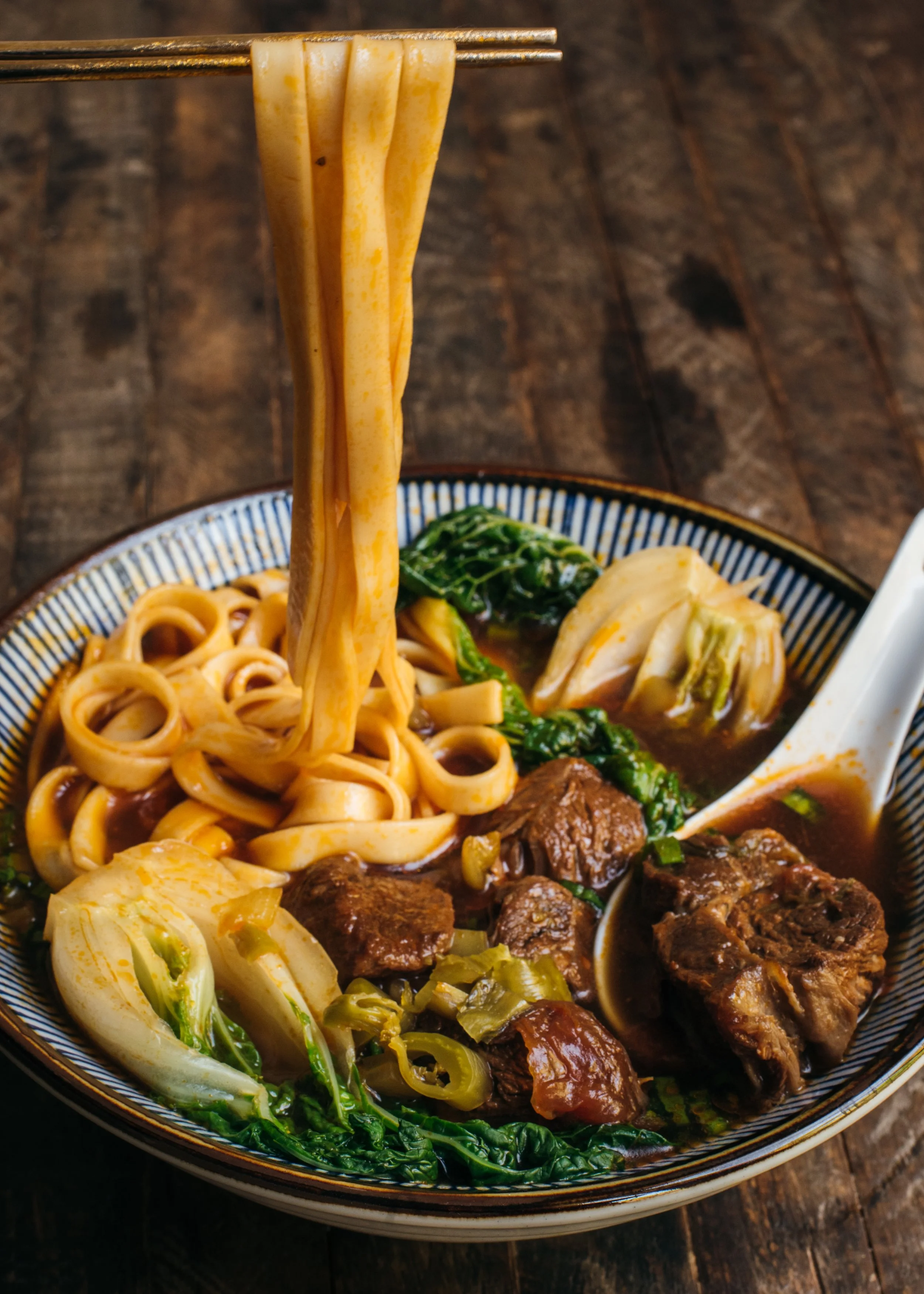
Taiwanese Beef Noodle Soup is an iconic dish with bouncy noodles and tender beef in a rich, earthy and aromatic broth. You'll be amazed this hearty and deeply flavourful dish is not at all difficult to make.
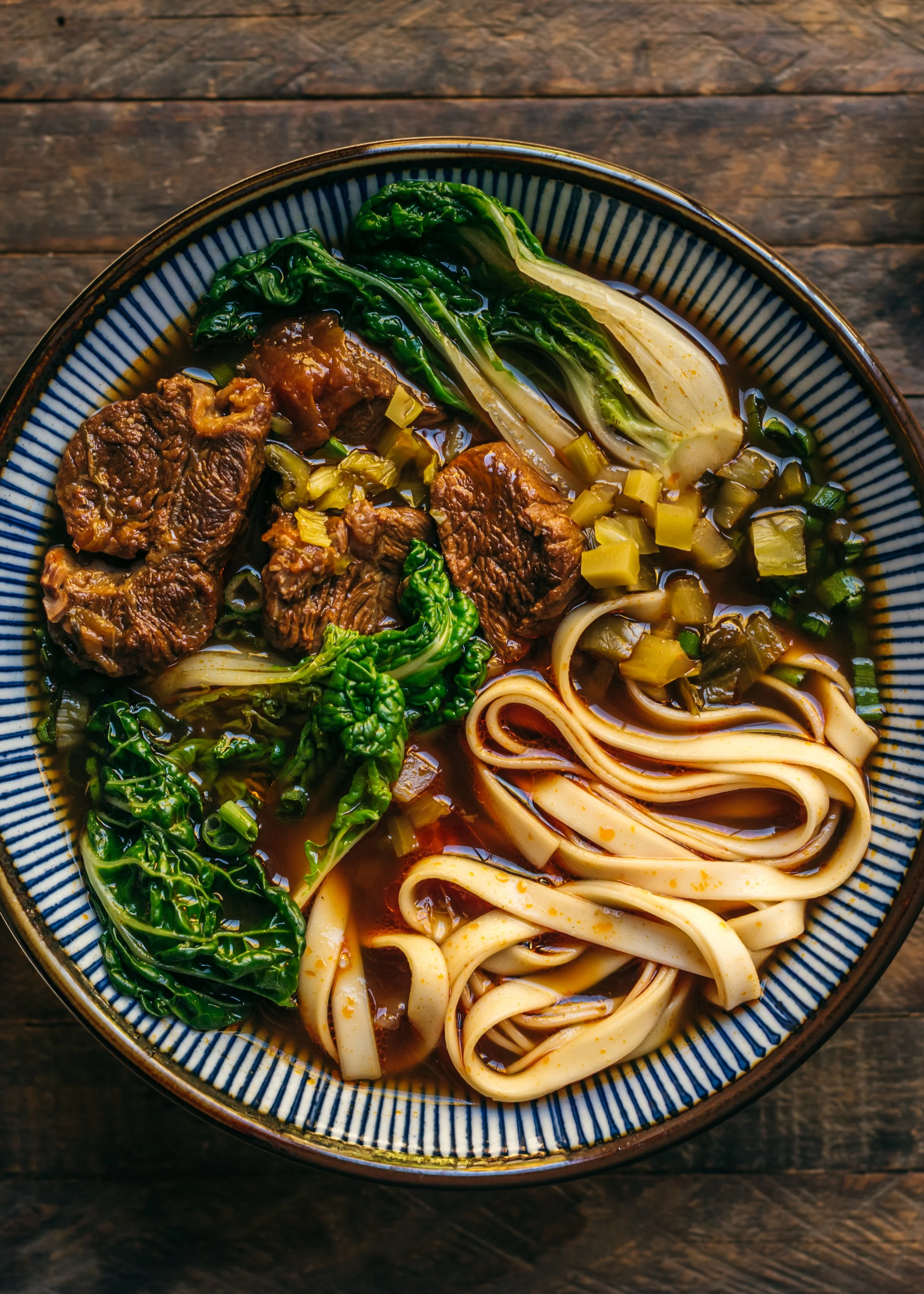
It’s safe to say this is a universally loved dish! My recipe is adapted from a hand-written recipe in a yellowing notebook titled “Silvia’s Cook Book” in her charming letters. Silvia is one of my dearest childhood besties. We both immigrated to Canada in elementary school (my family from Hong Kong, hers from Taiwan) when we met and have been friends ever since and to this day! It is so special that Silvia shared her mom’s recipe with me.
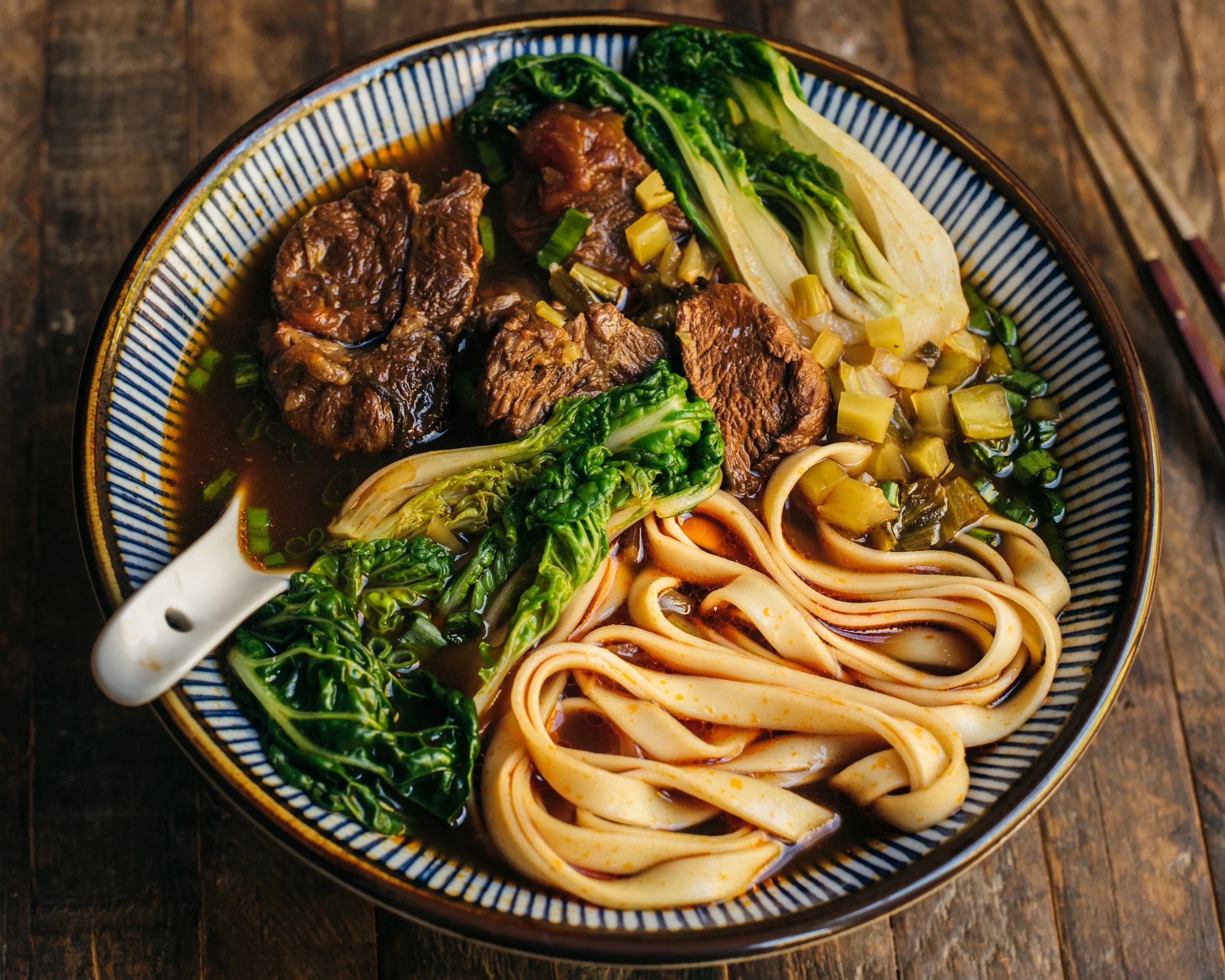
Beef Noodles (Niú Ròu Miàn or 牛肉麵) is widely considered the national dish of Taiwan. Variations of this dish also exist in China, for example Langzhao Hand-Pulled Noodles (Lánzhōu lāmiàn or 兰州拉面) and Red Braised Beef Noodles (Hóng Shāo Niú Ròu Miàn or 红烧牛肉面). My recipe is the Taiwan version!
The two most notable ingredients to seek out for this dish are Chinese fermented soy and broad bean paste (dòubànjiàng or 豆瓣醬) and Shaoxing wine (shào xīng jiǔ or 紹興酒). Both of these ingredients are quintessential for authentic flavour. Scroll down to Tips & FAQs section below for more info on them. If you really can’t get your hands on them, you can still make a very, very tasty bowl of noodle soup albeit the flavour would not be exactly the same.
🎥 Watch video for Taiwanese Beef Noodle Soup
Let me know what you think about this recipe or let me know if you have any questions about it. I’m happy to help and happy to hear from you.
Eat well and be well,
Sonia x
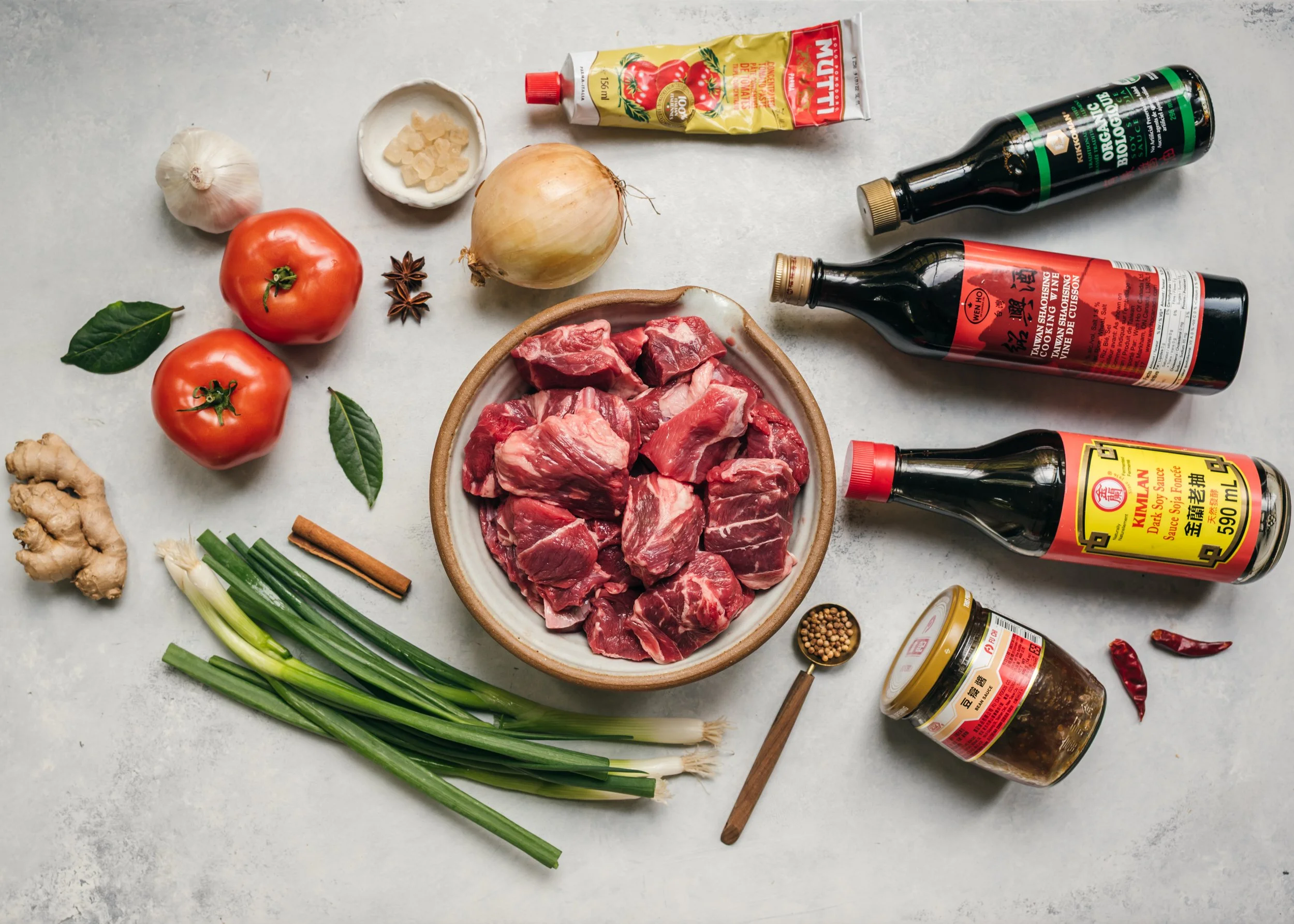
what you’ll need:
Ingredients for Taiwanese Beef Noodle Soup (scroll down to recipe card for full printable recipe)
Wheat noodles — any Chinese or East Asian (Japanese/Korean) wheat noodles, dry or fresh.
Beef — Beef shank (aka shin) is the traditional cut in this dish (pictured above) but you can use any other cut with connective tissues that do well with long and slow cooking including boneless short ribs and brisket.
Tomatoes — adds acidity to balance the richness of beef, and adds body and depth of flavour to the soup base. It is an ingredient that sets it apart from other variants of beef noodle dishes (in China).
Star anise, bay leaves, coriander seeds, Cassia cinnamon — impart the characteristic flavours of the broth.
Onion, garlic, scallions, ginger — adds aromatic flavours to the broth. Fresh ginger slices are also used to counter any “meaty smell” when blanching the beef.
Dried red chili peppers — optional to add heat
Doubanjiang (豆瓣醬) — Chinese fermented soy and broad bean paste. See Tips and FAQs for more info.
Shaoxing wine (紹興酒) — Chinese cooking wine that adds a wonderful nuanced and complex flavour. See Tips and FAQs.
Soy sauce — adds umami, salinity and depth to the broth.
Dark soy sauce — adds a slightly sweet, mellow flavour and appetizing colour. See Tips and FAQs for more info.
Tomato paste — adds umami to the soup. Make sure to cook it until it deepens in colour to extract all of its umami.
Rock sugar or brown sugar — adds a hint of sweetness to balance all the other flavours.
Water — forms the base of the soup. There is loads of flavour without the need for broth.
Chinese leafy green vegetable of choice (for serving) — choose quick-cooking dark greens such as baby bok choy, gai lan, yu choy, etc.
Pickled mustard greens (optional topping) — see Tips and FAQs for info.
At a glance:
How to make Taiwanese Beef Noodle Soup (scroll down to recipe card for full printable recipe)
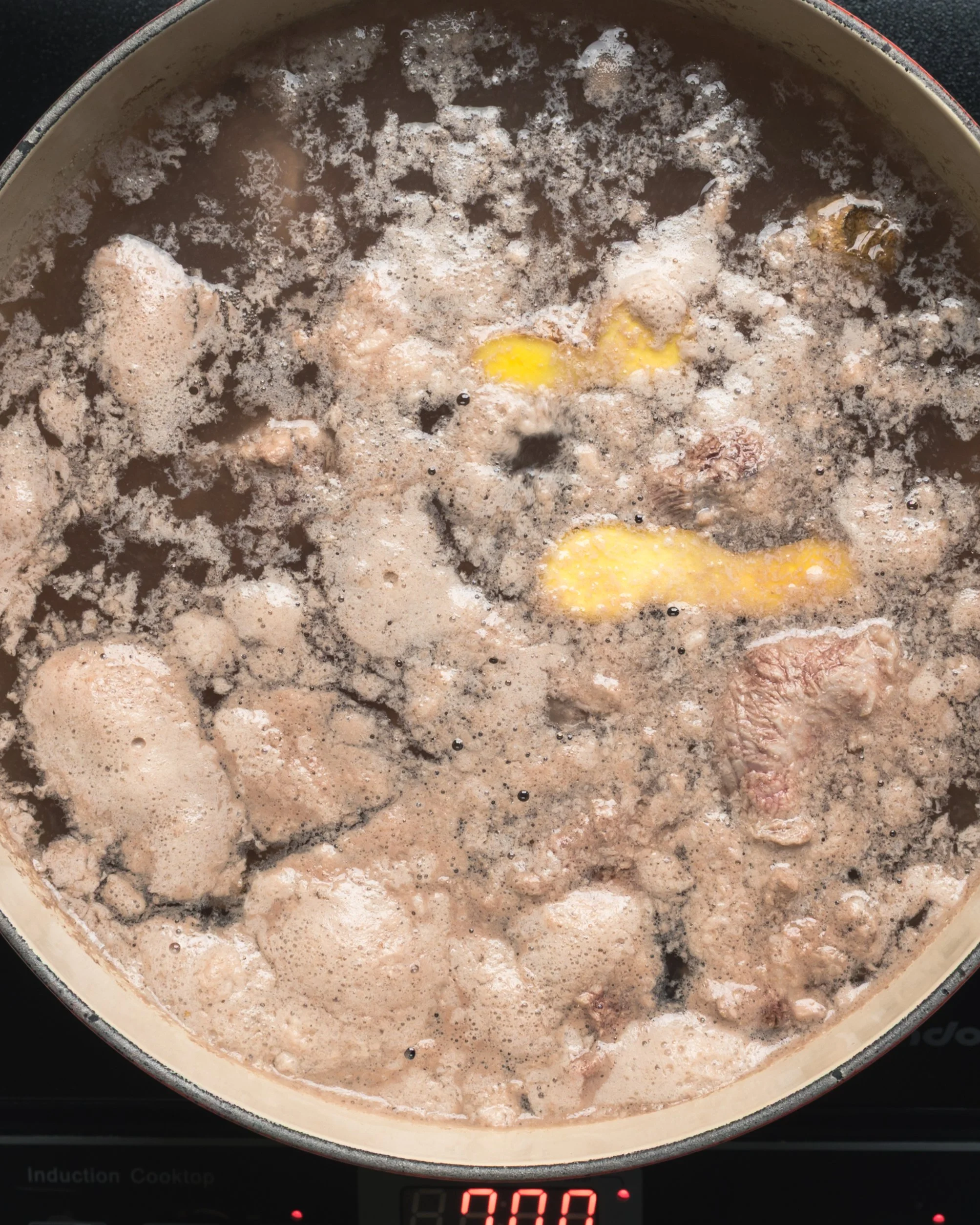
Blanch beef in water with ginger slices to rid the scum. Drain and rinse beef well.
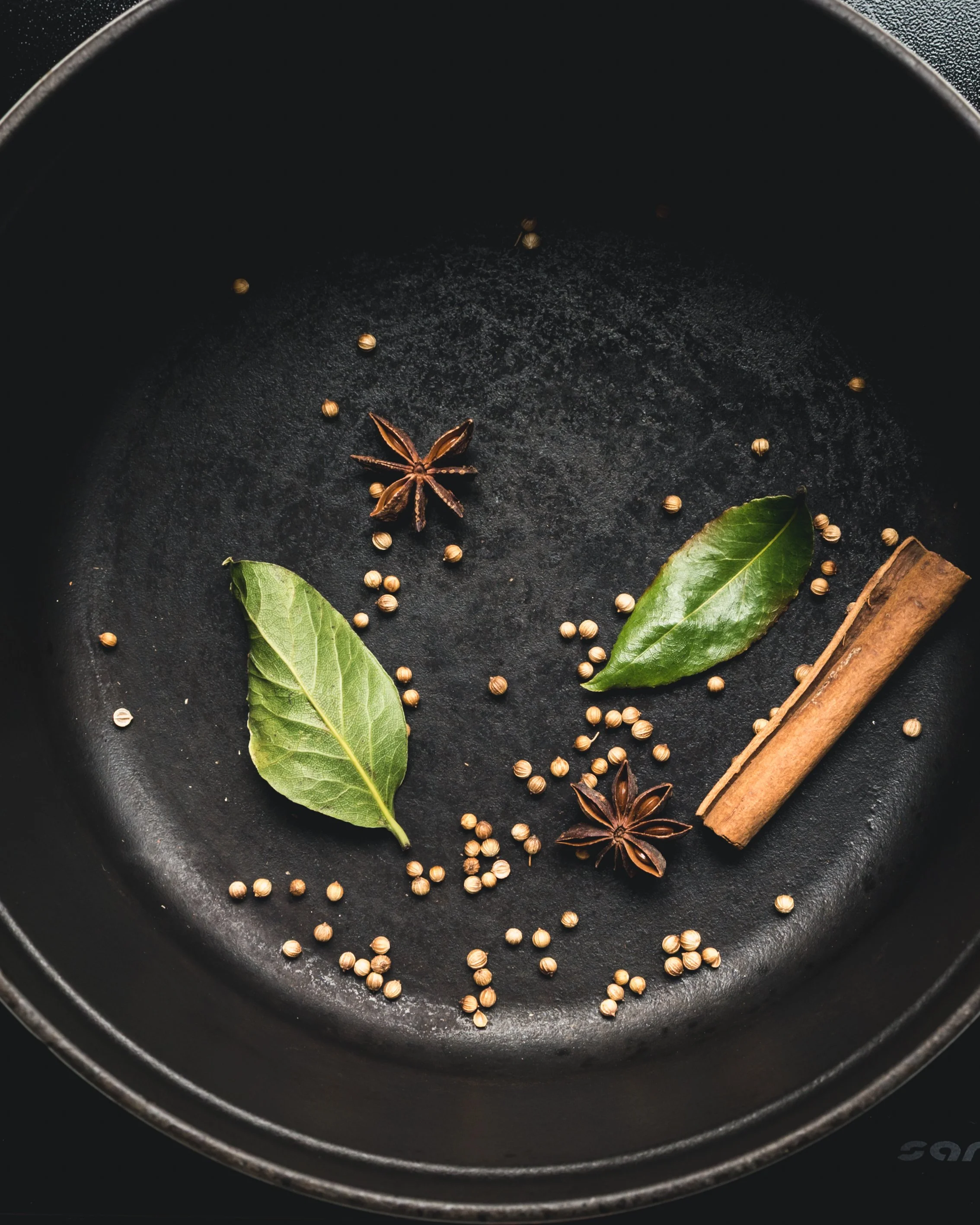
Toast star anise, bay leaves, coriander seeds and cinnamon stick. Wrap star anise and coriander seeds a small piece of cheesecloth to make a spice sachet.
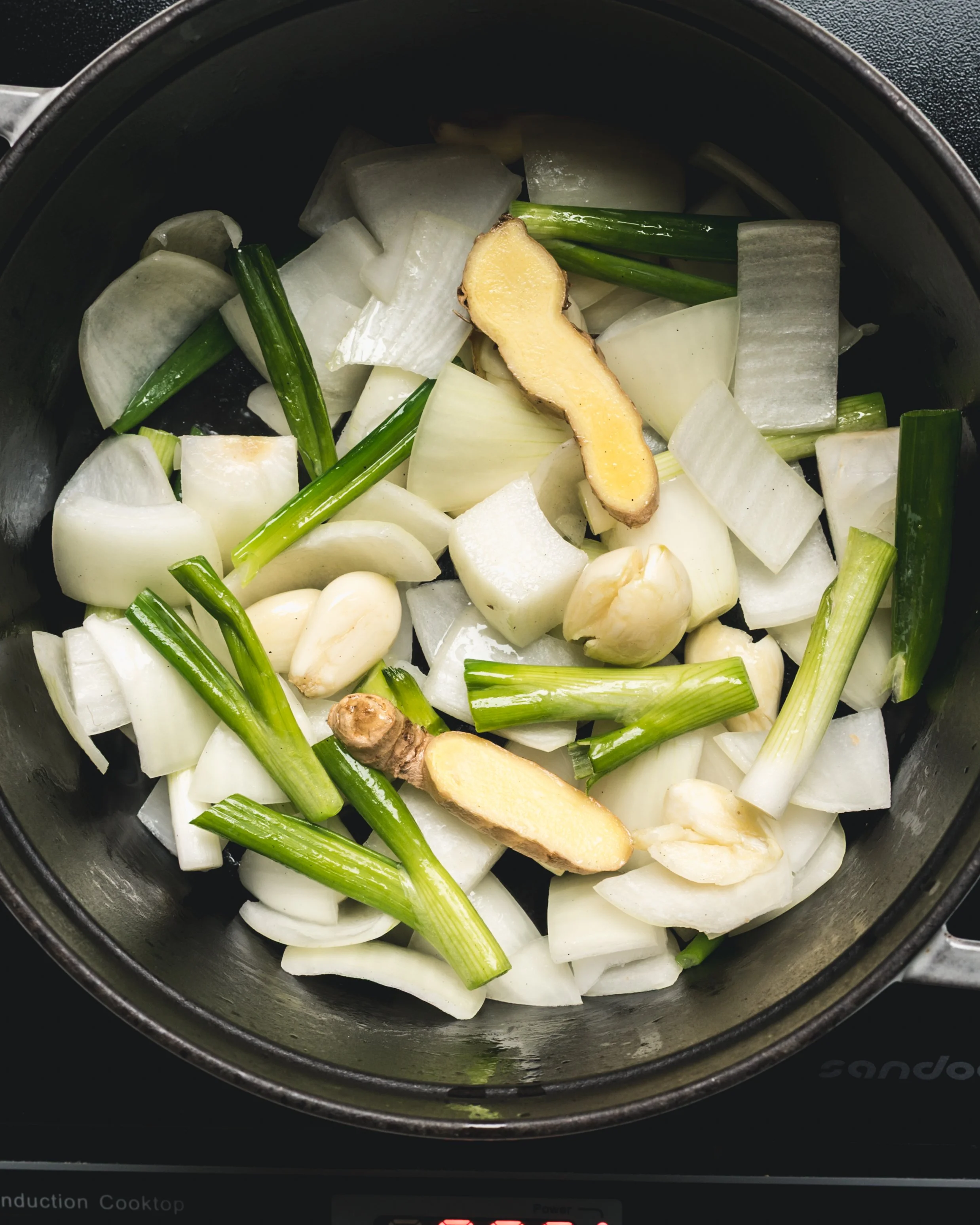
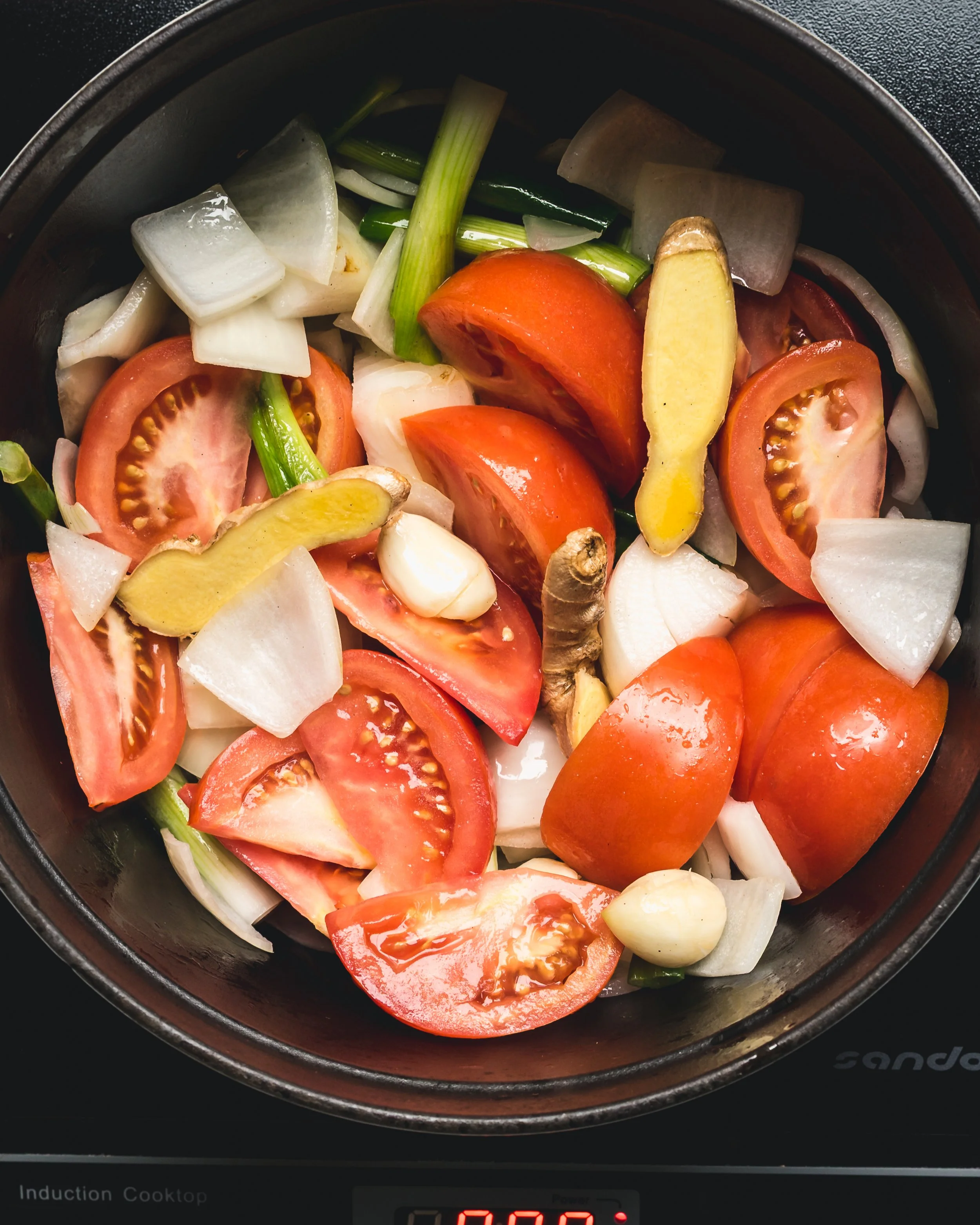
Sauté onions, scallion (white parts), garlic, ginger and tomatoes. Add dried chili peppers too if using. Cook until onions and tomatoes are slightly softened.
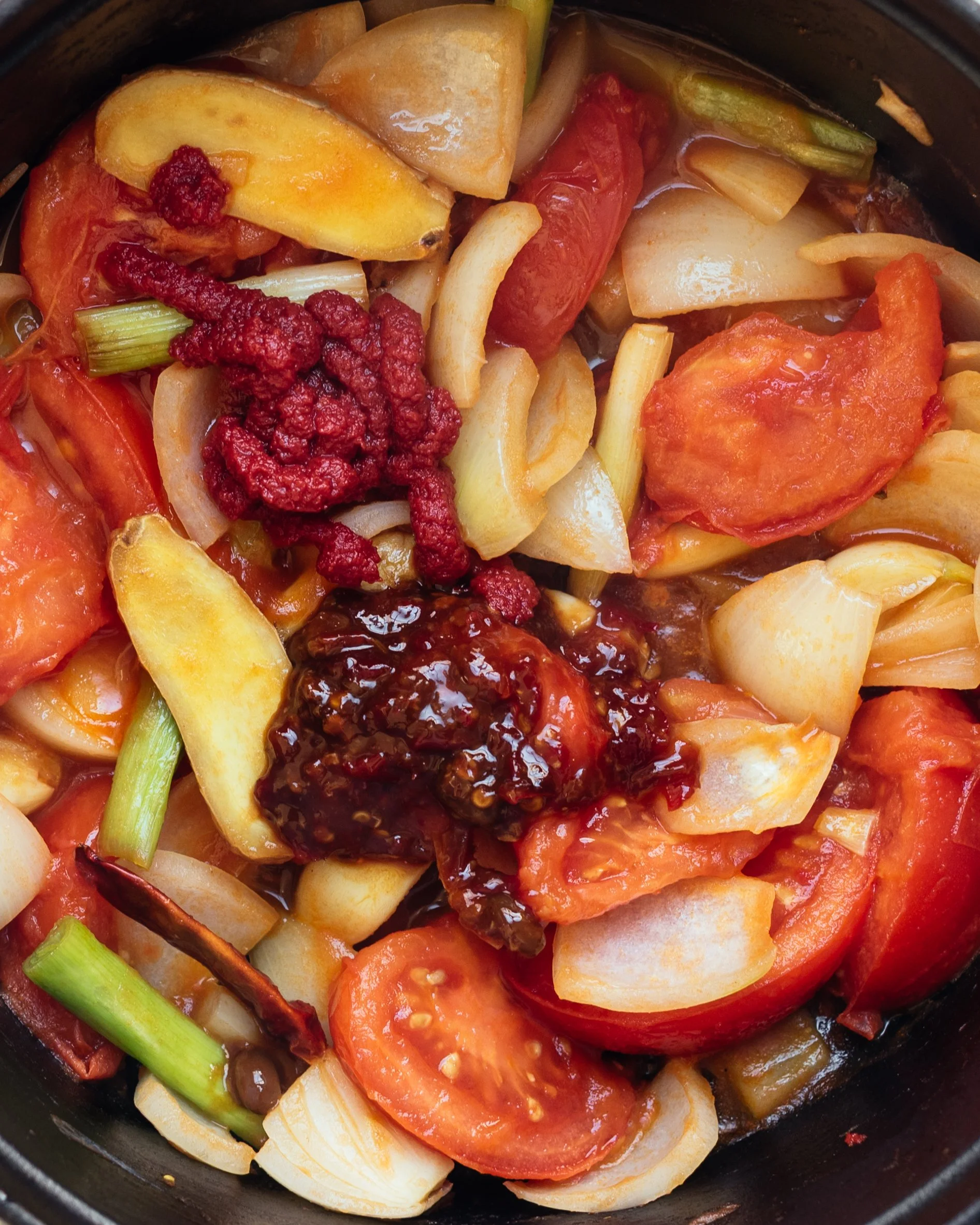
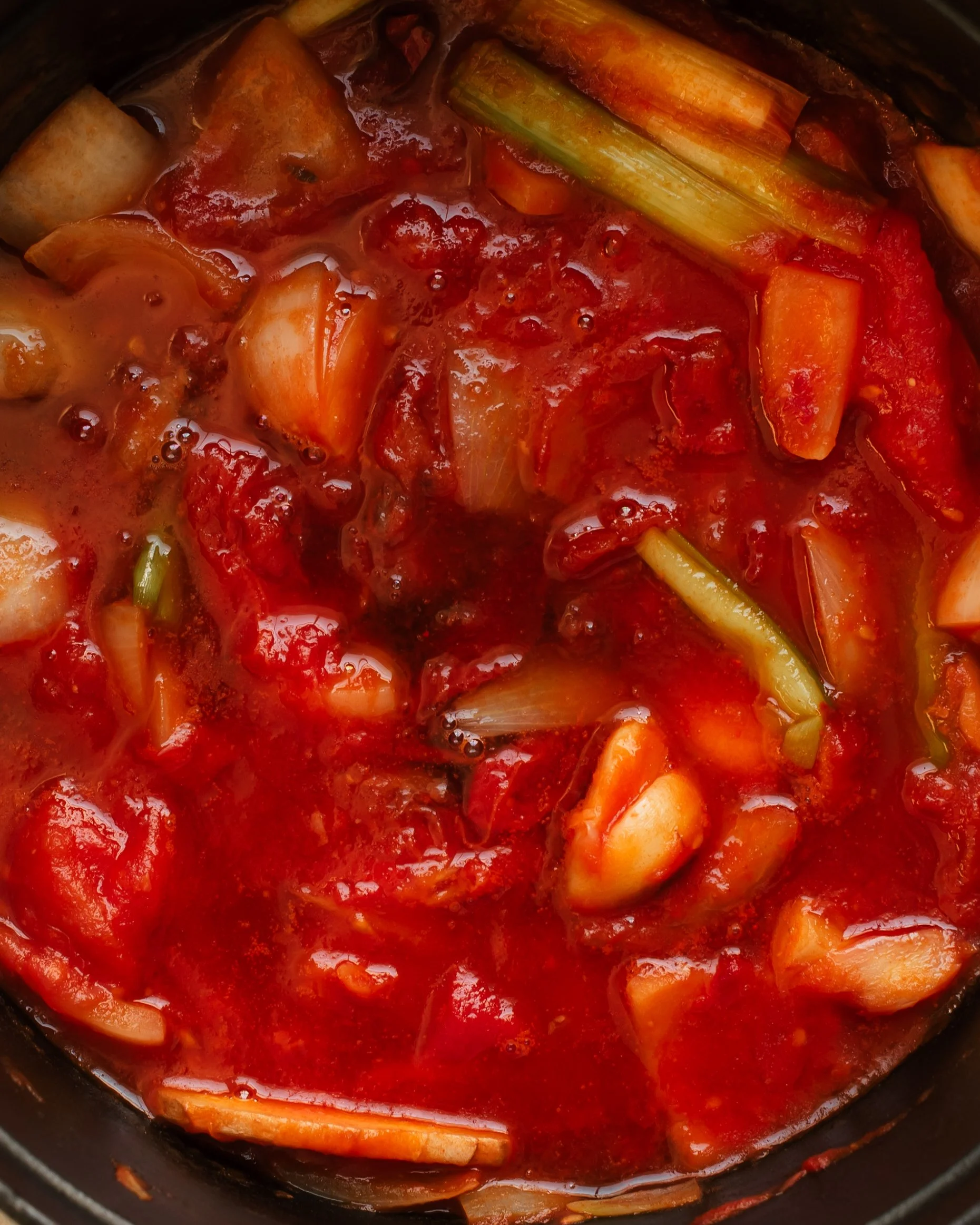
Add doubanjiang and tomato paste. Cook until tomato paste deepens in colour, 3 minutes.
Add Shaoxing wine and simmer 8 minutes until the sharp smell of alcohol mellows out.
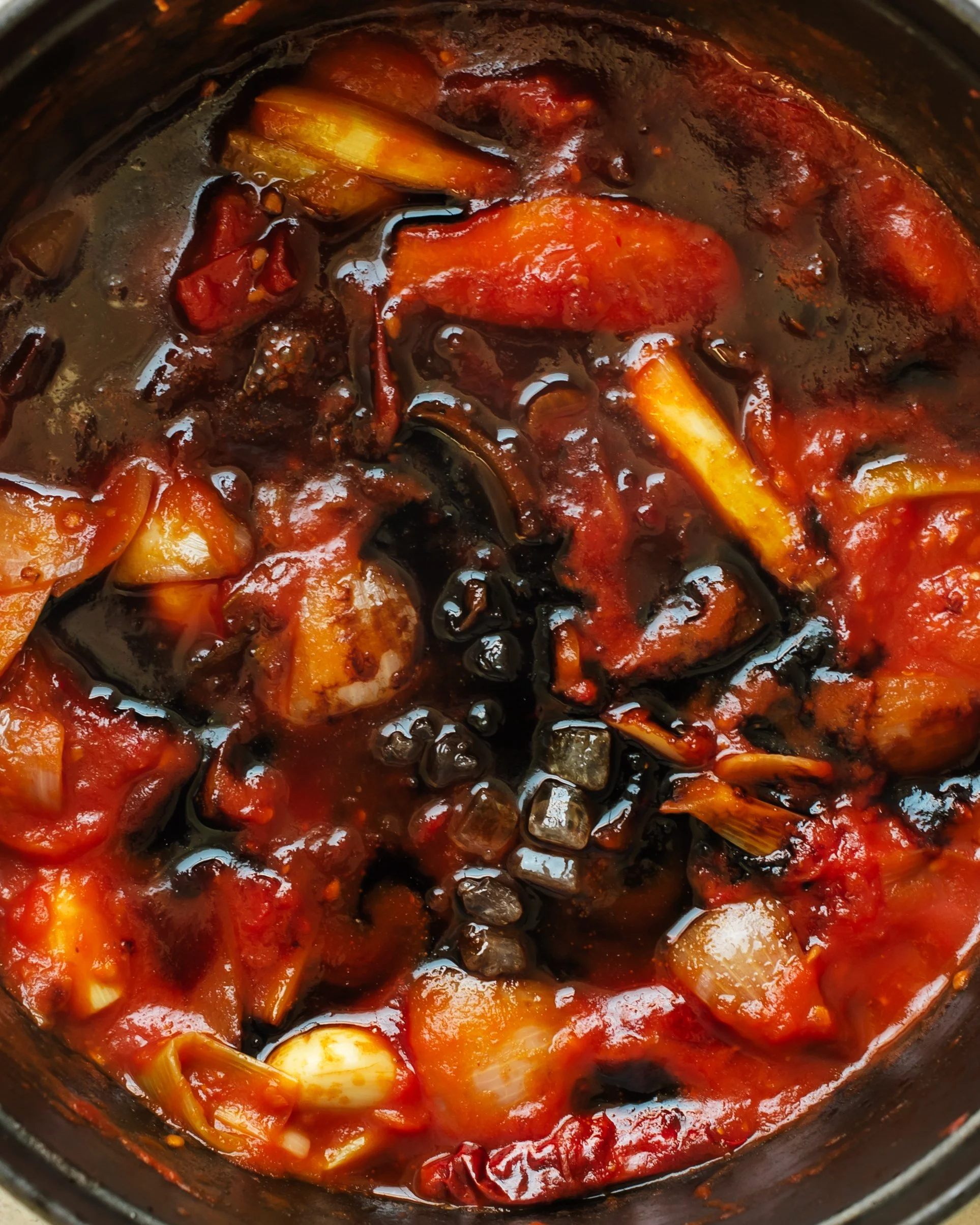
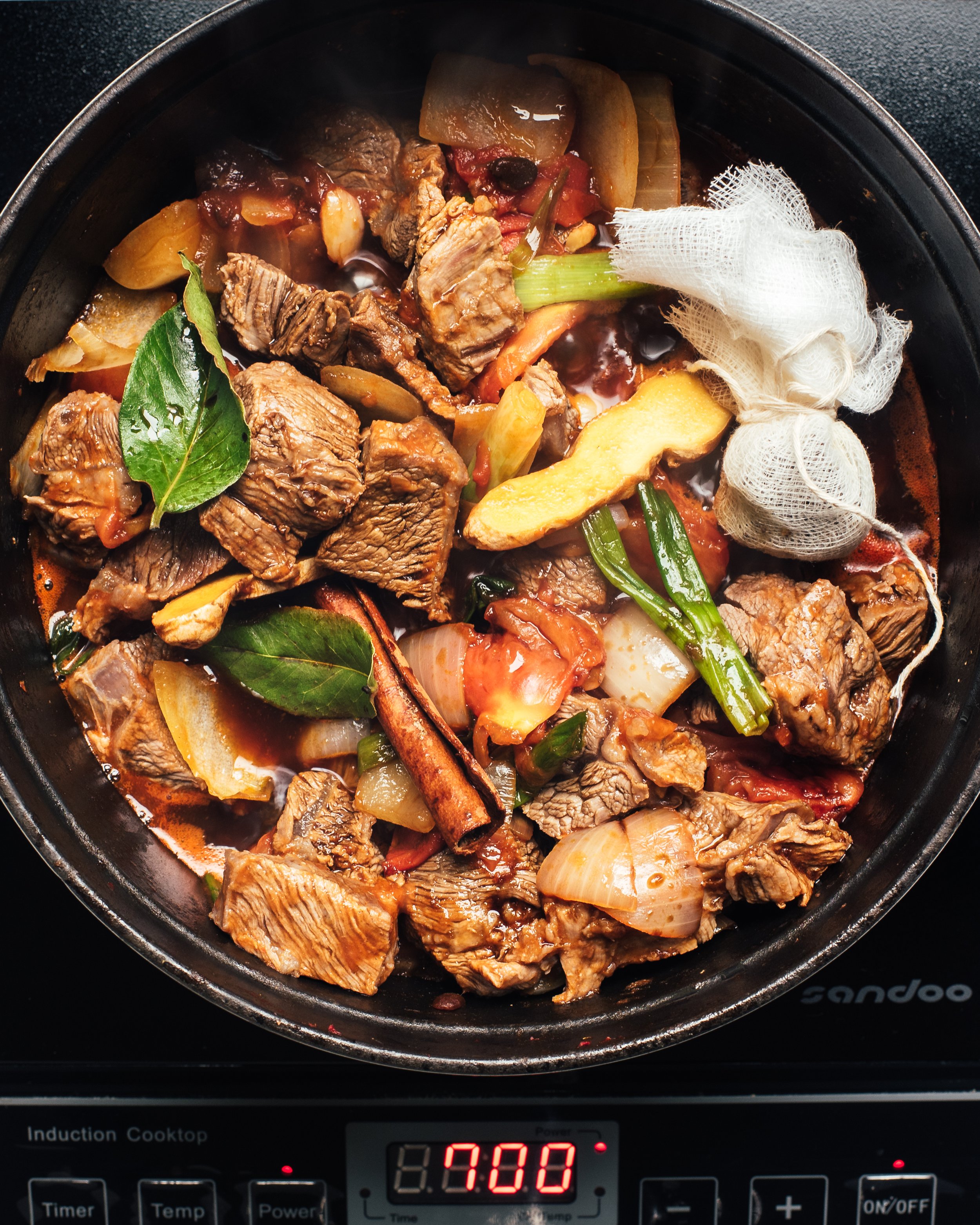
Add soy sauce, dark soy sauce, sugar, blanched beef, spice sachet, bay leaves and cinnamon stick.
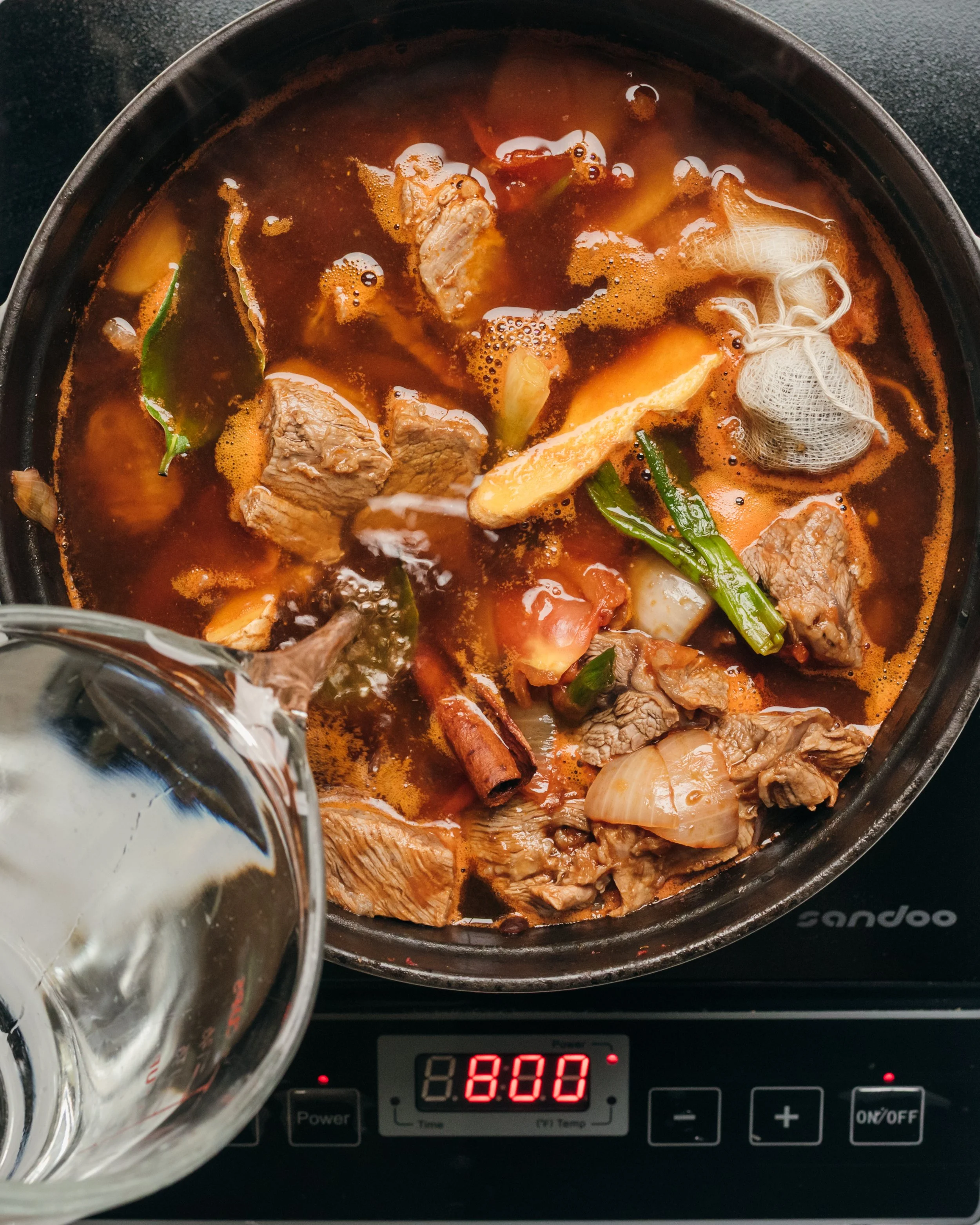
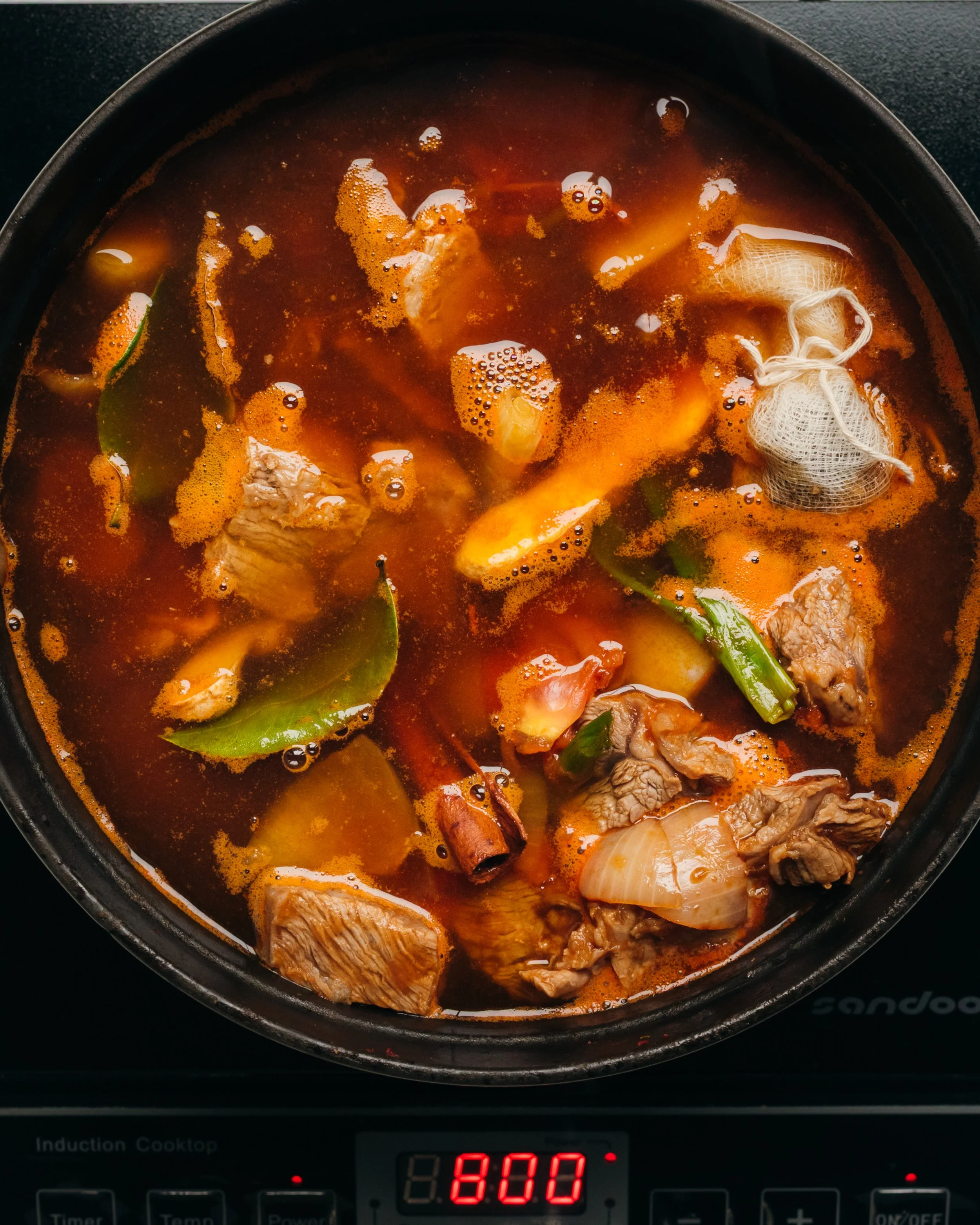
Add water to bring liquid level to 1” above everything. Bring to a simmer. Skim the skim. Cover on low simmer for 2 hours or whenever beef is fork-tender. Exact time depends on the cut of beef - start checking at 1.5 hour mark.
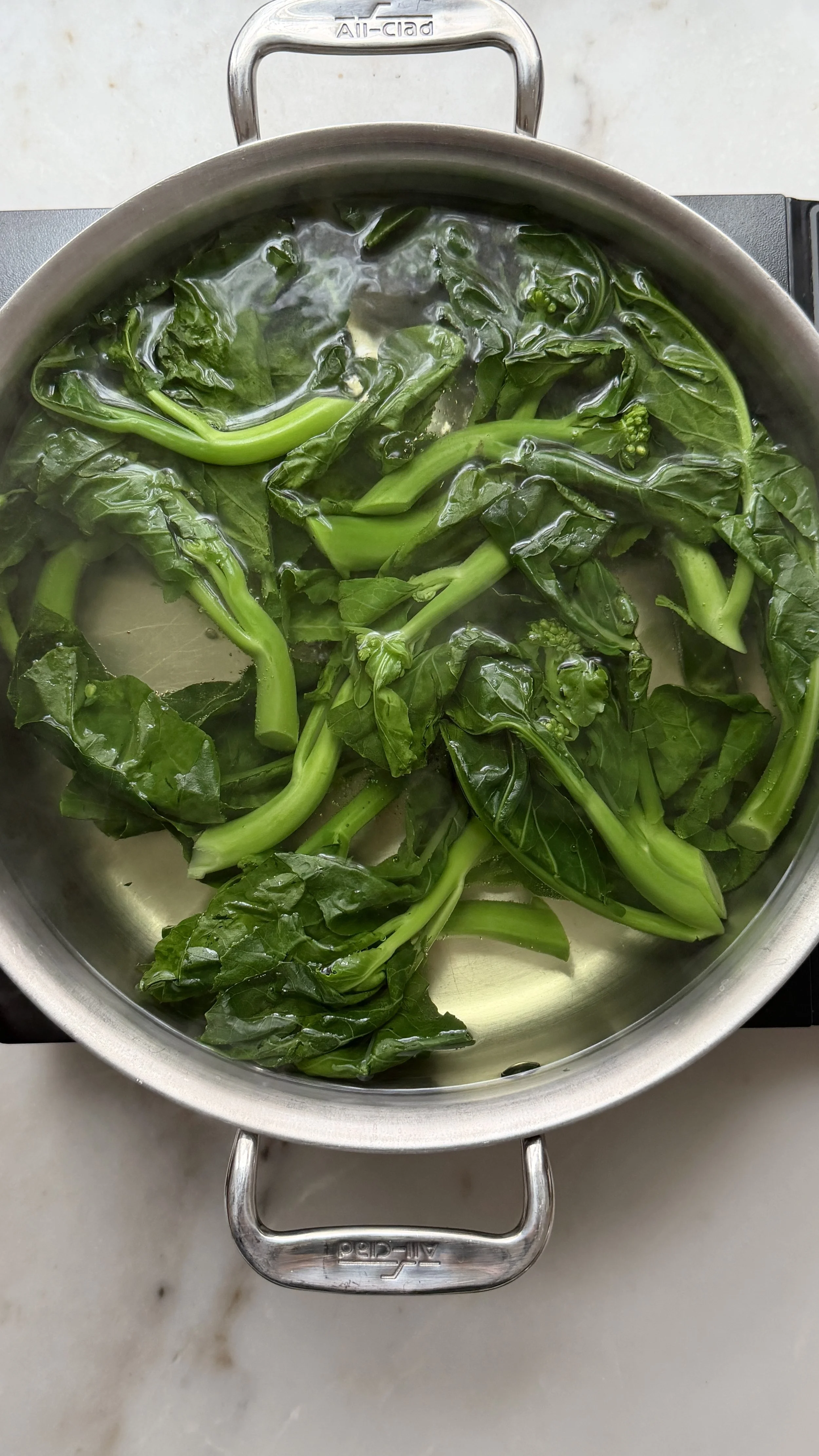
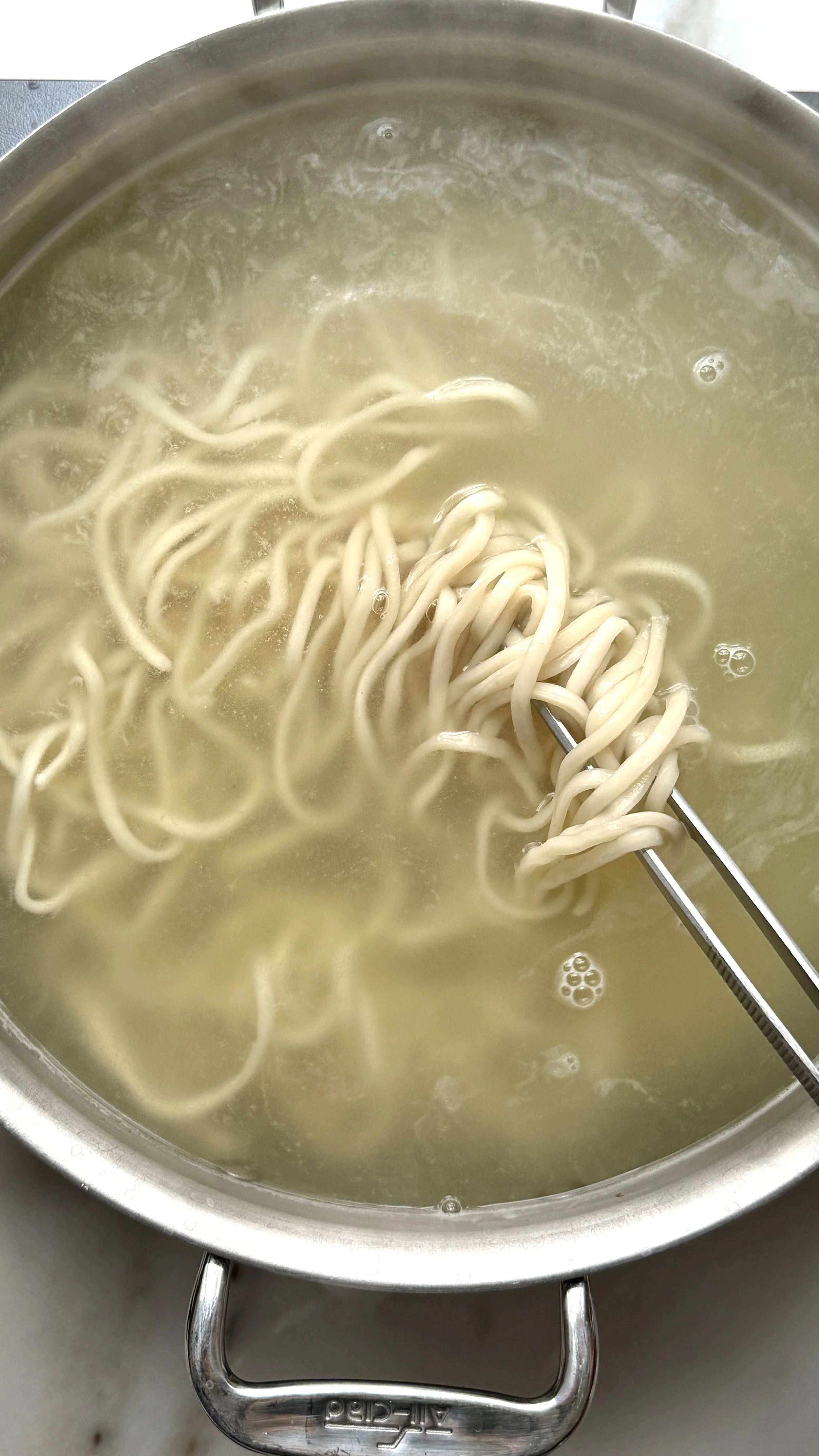
About 10 minutes before serving, blanch leafy greens until tender crisp (typically 3-4 minutes) and cook noodles according to package directions (typically 3 to 6 minutes depending on type). (Use the same pot of water).
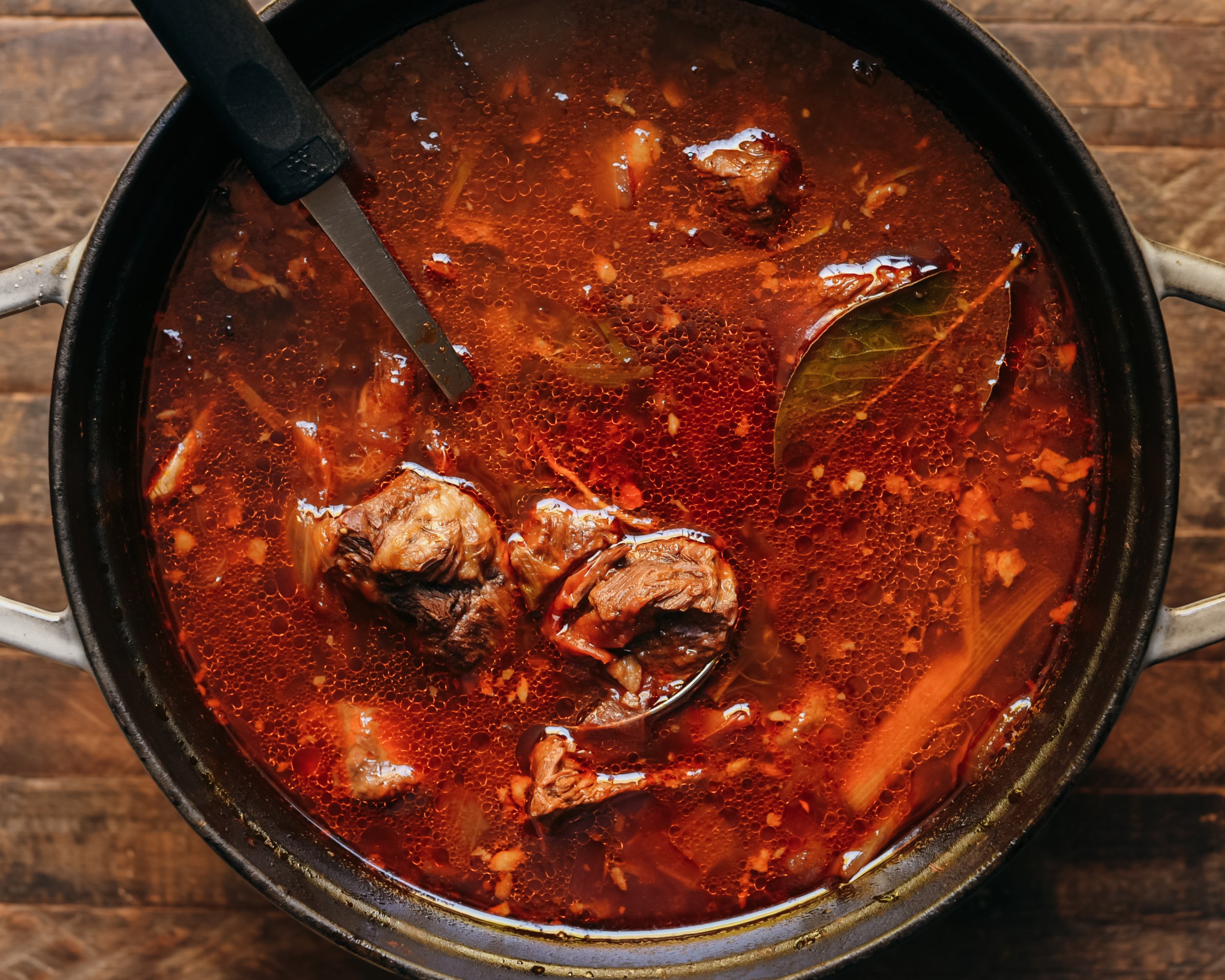
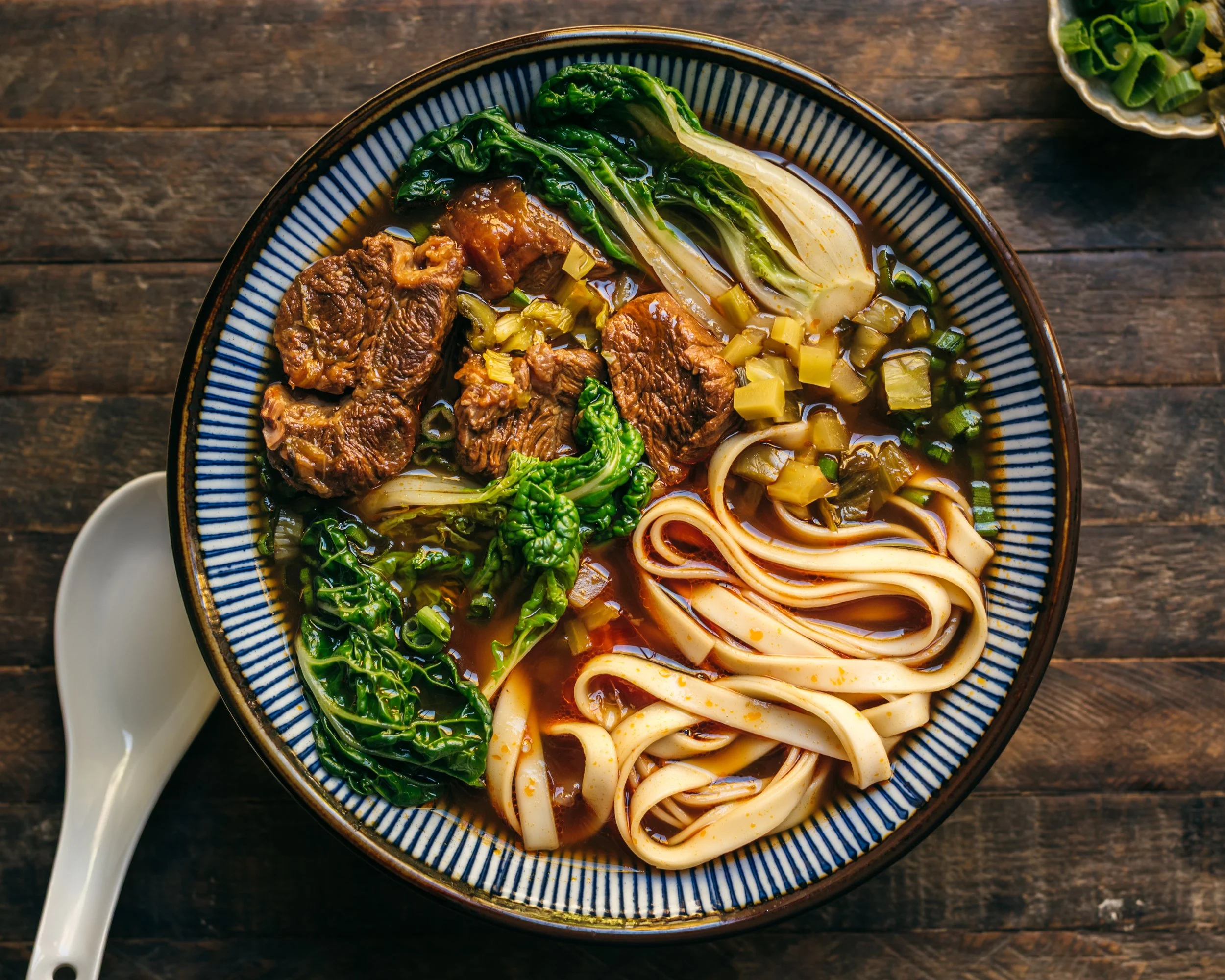
Discard spice sachet, bay leaves, cinnamon stick and ginger slices. Taste one more time and adjust with seasoning if needed. Ladle beef and broth over noodles and leafy greens.
Serve with reserved scallions, chili oil and/or pickled mustard greens.
Tips & FAQs
Cuts of beef to use in this dish
Traditionally this dish uses beef shank or shin (lower leg muscle). This cut is very common in Chinese cuisine and therefore readily available at Chinese supermarkets. But it is uncommon at Western supermarkets or even at the butchers where you would likely need to special order it. Not a problem! Since the beef is cooked 2 to 2.5 hours, any cut with a lot of connective tissues that do well with long and slow cooking work well in this recipe. Substitute with cuts such as boneless beef rib ‘finger’, short ribs and brisket. Beef chuck or ‘stewing beef’ are definitely in the same category but in my experience, are less fatty hence drier when cooked. If the meat is very fatty, trim the fat off before using. Note: Even with trimming, there may still be a lot of fat on the surface of the broth at the end of braising. Use an oil skimmer to remove that fat to avoid a greasy broth!
What is doubanjiang?

Doubanjiang (豆瓣醬) is a Chinese fermented soy and broad bean paste that is quintessential to this dish and worthy of seeking out at a Chinese supermarket or online to make this dish. It may be either plain or spicy. The one pictured here is a spicy version as denoted by the Chinese character for spicy “辣” in front of 豆瓣醬.
What is Shoaxing wine?
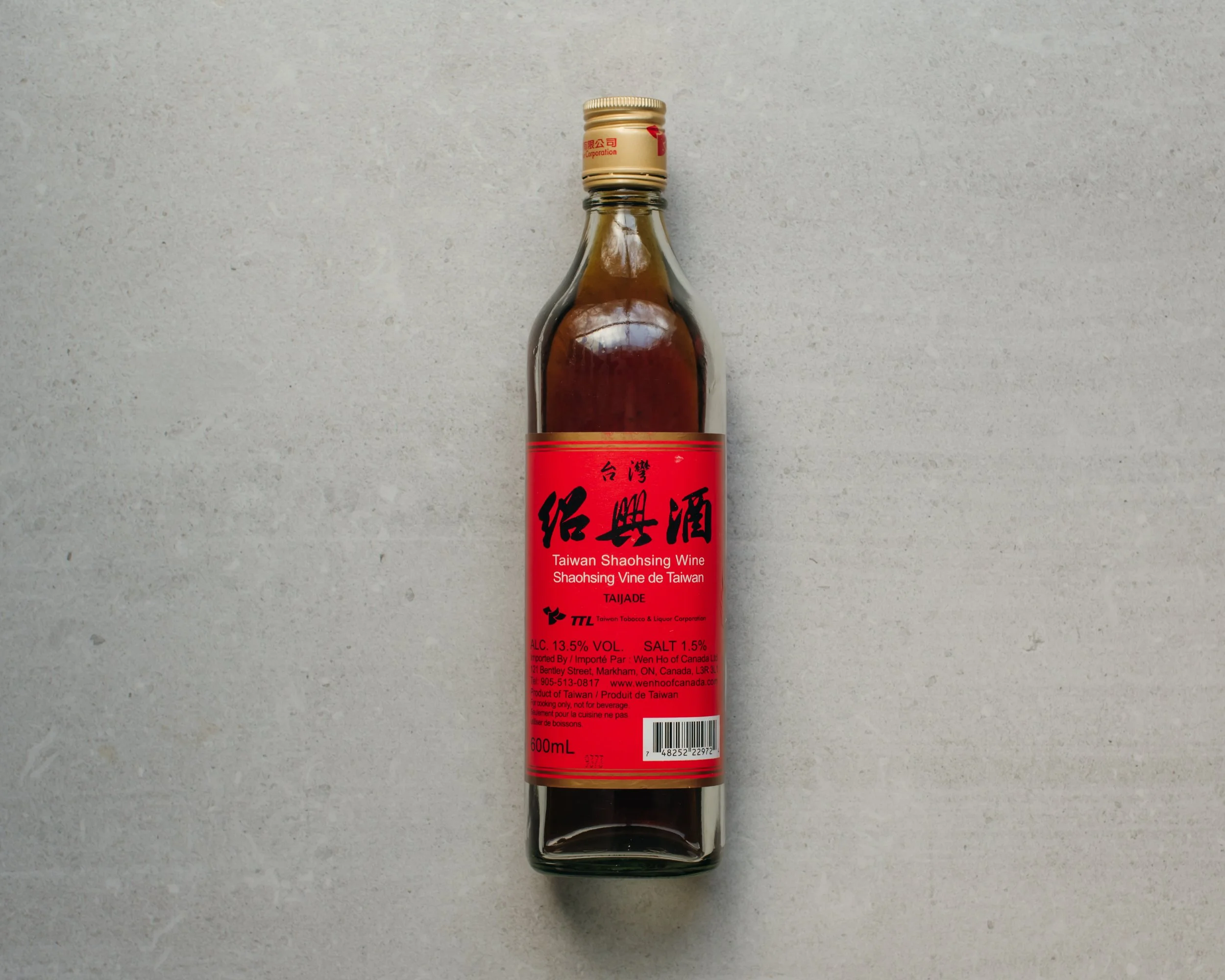
Shaoxing wine (紹興酒) is a clear, medium brown rice-based cooking wine that is aromatic, slightly sweet and fragrant. It is used in Chinese/Taiwanese cooking to add a wonderful nuanced, complex flavour. It is famously from Shaoxing, China, but there are versions made outside Shaoxing that is also good. For example, I often get a Taiwan “Shaohsing Wine” (pictured). If you can’t find Shaoxing wine (or a variant of it), it can be substituted with dry cooking sherry or omit. It’s best to buy it at a Chinese grocery store. They are generally inexpensive ($10 give or take) so choose the most expensive bottle in the aisle and you should be good.
What is ‘dark’ soy sauce?
Everyone knows soy sauce well but many may not be as familiar wth dark soy sauce (aka Lo Chou, 老抽) since it isn’t used as ubiquitously outside of Chinese cooking. Dark Soy Sauce is aged longer than regular soy sauce and typically mixed with molasses and caramel colour. Even though it is darker and thicker, it is actually less salty than soy sauce, with a touch of sweetness. If you can’t get it, omit it from this recipe — the broth will have plenty of flavour from the regular soy sauce but the colour of your broth will not be as dark. Popular brands – Kam Lan, Lee Kum Kee, Pearl River Bridge.
What is “cassia” cinnamon?
It is the most common cinnamon sold in North America with a dark reddish brown colour and a bold, spicy flavour. It differs from Ceylon cinnamon from Sri Lanka which has a lighter colour, thinner bark and a softer, sweeter flavour. In most recipes, you can use cassia and other cinnamons interchangeably. Flavour will differ a bit with cassia giving a sharper cinnamon taste and Ceylon a gentler one.
Why is the meat blanched separately?
Rather than browning the meat, many Chinese braises start by briefly blanching the meat to rid impurities so the resulting broth is ‘clean’. The slices of ginger in the blanching water counters ‘meaty’ smell. You won’t lose flavour from the beef in the short time.
Types of noodles to use in this dish
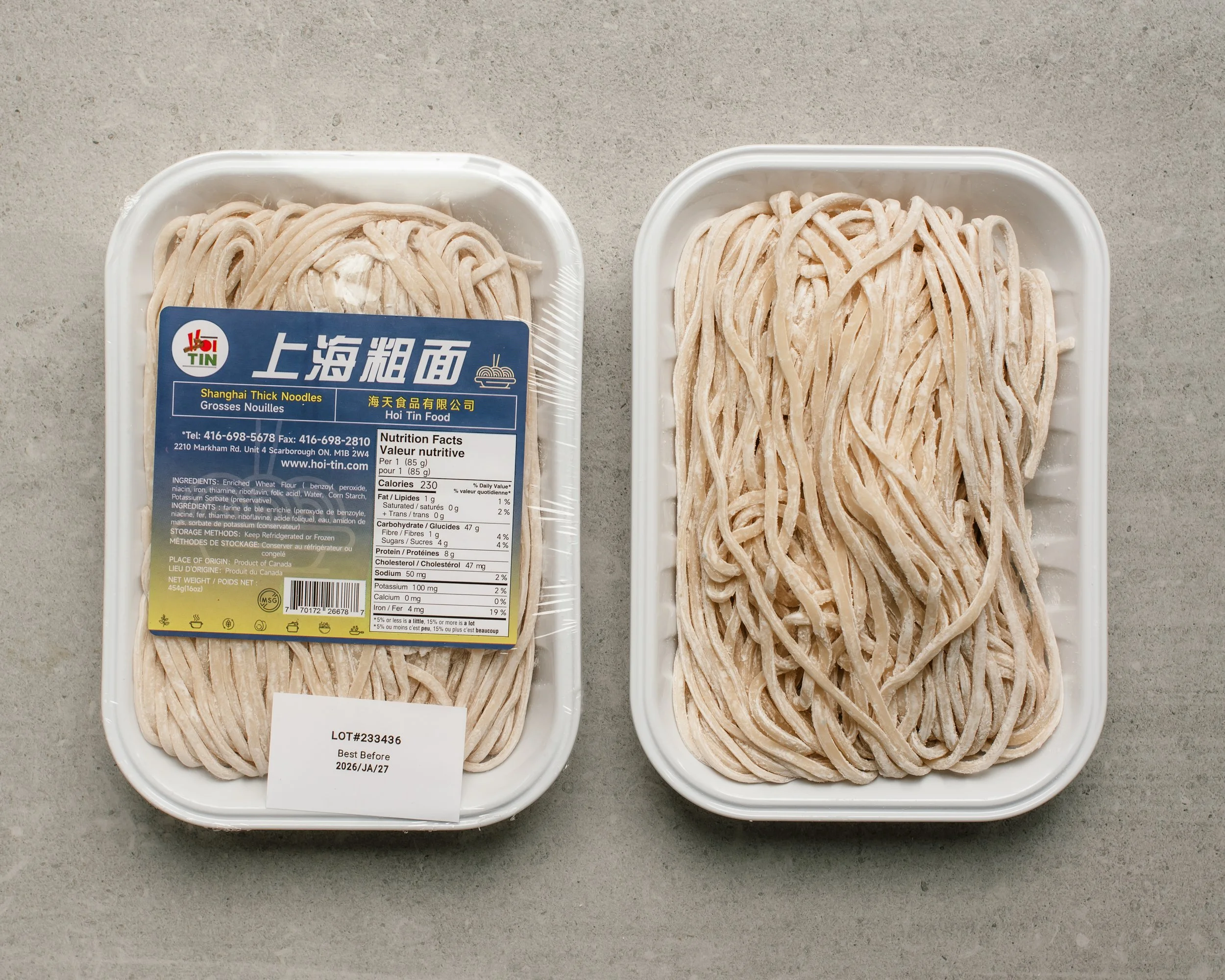
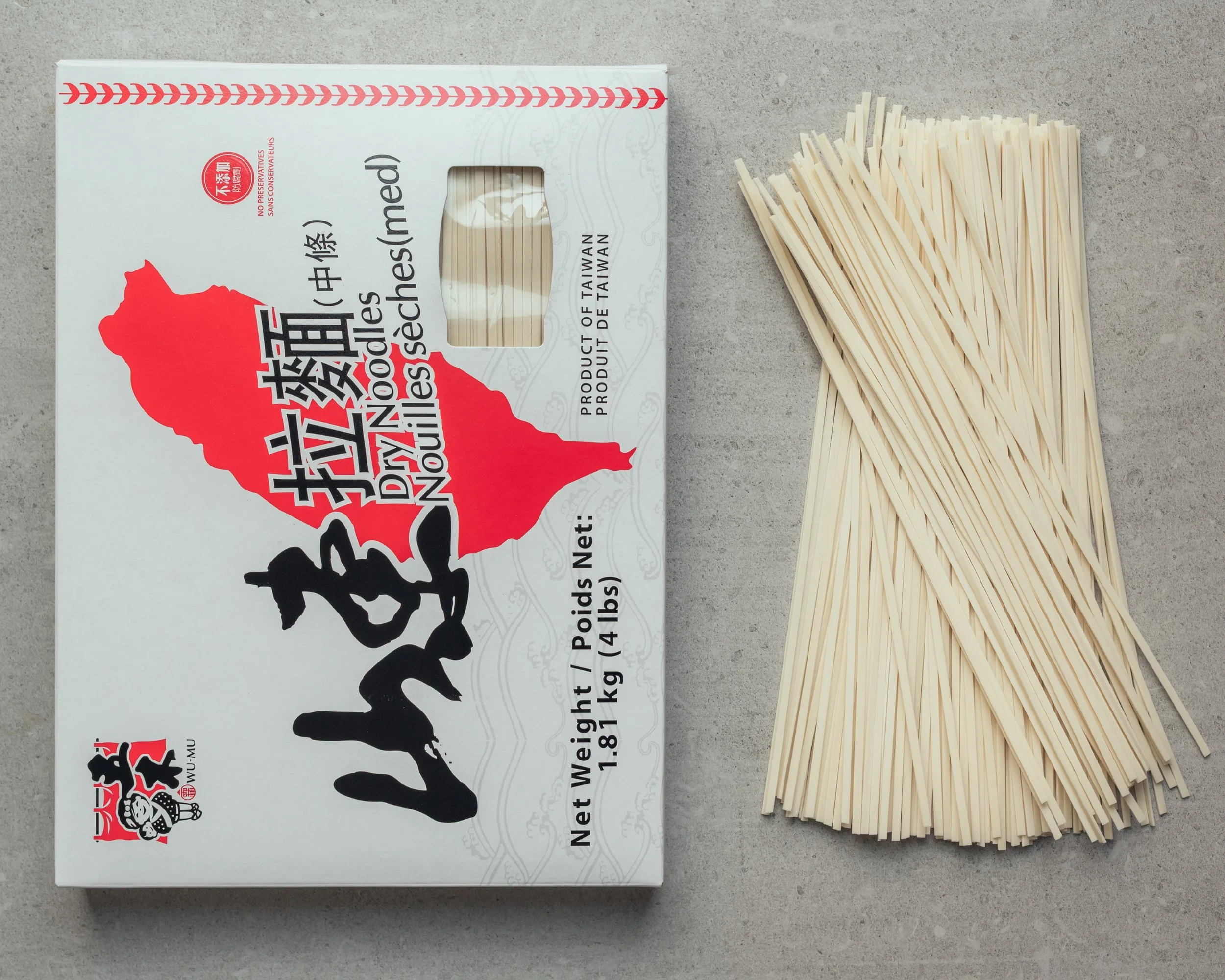
Any East Asian wheat noodles, either fresh from the refrigerator (Left) or dry noodles (Right). Fresh noodles like the ones pictured have a chewiness that resembles hand-pulled noodles. Dry noodles like the ones pictured have a bouncy slurpiness to them. Both are excellent!
What is Chinese pickled mustard greens?
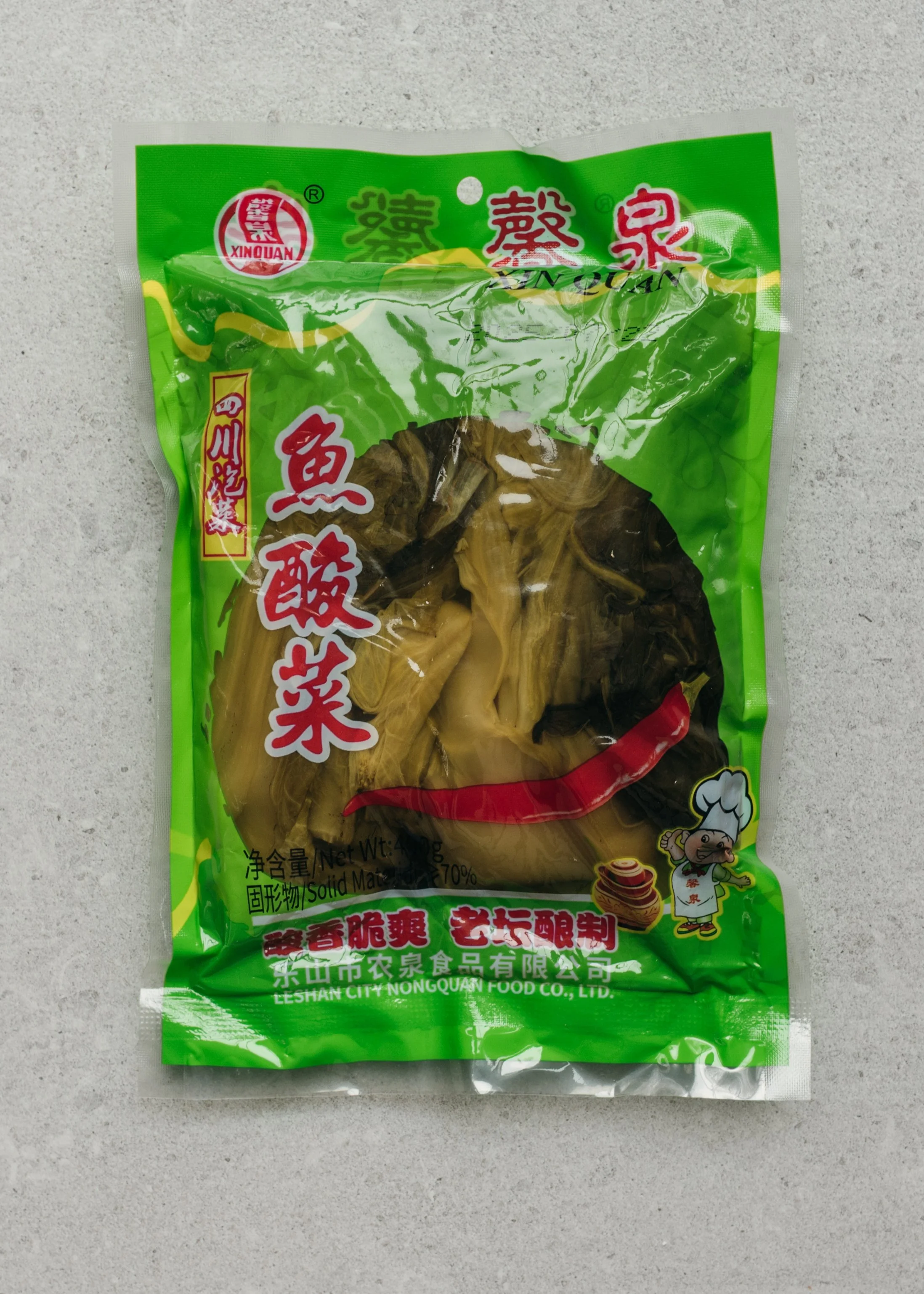
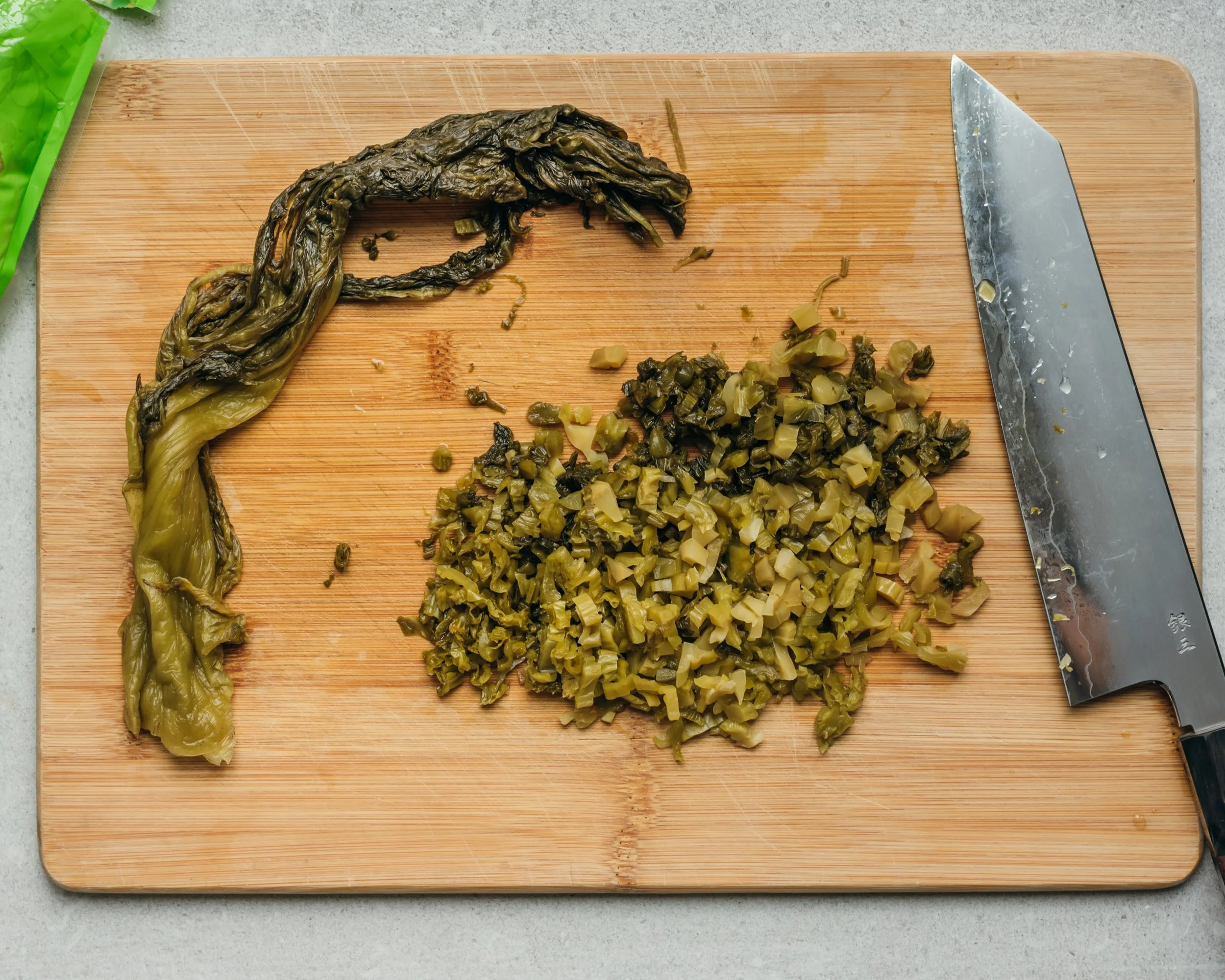
Mustard greens (aka Gai Choy, 芥菜) is a leafy green vegetable with a pleasantly peppery and earthy flavour. The pickled version is used as a garnish for various dishes including Taiwanese Beef Noodles. Buy them vacuum-packed usually sold in an (unrefrigerated) aisle alongside other pickled veggies in Chinese grocery stores. Pull it out of the package, rinse, pat dry and chop finely to use.
Final adjustment of broth before serving
The broth is intentionally concentrated! Purely based on anecdotal intel (asking friends and family), it seems that some people like the broth super intense for flavouring the noodles but don’t drink all of the broth, while other people prefer the broth lighter so they can drink all of it. Depending on your preference, adjust the broth with additional splashes of hot water to taste.
You may also like these recipes:
Taiwanese Beef Noodle Soup

Taiwanese Beef Noodle Soup
Taiwanese Beef Noodle Soup is an iconic dish with bouncy noodles and tender beef in a rich and deeply earthy broth.
Ingredients
Instructions
- Blanch beef to rid the scum: Into a large pot, place beef cubes, ginger slices and 10 cups of cold water. Bring to a rolling boil. Boil for 5 minutes until the scum floats to the top. Place a colander in the sink drain. Give the beef a quick rinse. Discard ginger slices. Drain well. (3 lbs beef, 4 slices ginger, 10 cups water)
- Toast spices and make sachet: Lay out a 5” square piece of cheesecloth. Set a pot over medium heat. Toast star anise, bay leaves, coriander seeds and cinnamon stick in the dry pot briefly until fragrant and darkened slightly, ensuring not to burn them. Set cinnamon stick aside. Scoop star anise, coriander seeds and bay leaves onto cheesecloth and tie with twine. (3 star anise, 2 bay leaves, 1 tsp coriander seeds, 1 cassia cinnamon stick)
- Make soup base: Increase heat to medium-high. Add 2 tbsp of oil and add tomatoes, onion, garlic, ginger, white parts of scallion and dried chili peppers if using. Season with salt and sauté until tomatoes and onions are softened, about 3 minutes. Add doubanjiang, tomato paste and sugar. (2 tomatoes, 1 white onion, 6 garlic cloves, 3 ginger slices, 6 scallion white parts, 2 dried red chilis, 1 tbsp doubanjiang, 1 tbsp tomato paste, 15g rock sugar OR 1 tbsp brown sugar)
- Add the drained beef. Add beef into pot. Stir well and cook a couple of minutes. (Beef from above)
- Add the spice sachet and remaining ingredients: Add spice sachet, cinnamon stick, Shaoxing wine, soy sauce, dark soy sauce and water. Bring to a boil and reduce to a simmer for 5 minutes. Skim and discard the scum. Cover, ensuing liquid is at a gentle simmer rather than a vigorous boil. Braise 2 hours or until beef is fork-tender. (Toasted spice sachet and cinnamon stick from above, ½ cup Shoaxing wine, ¼ cup soy sauce, 3 tbsp dark soy sauce, 5 cups water)
- Cook noodles and leafy greens: Bring a large pot of water to a boil. Cook noodles and leafy greens at the same time (time their additions based on noodles package cooking directions and estimate bok choy cooking time 3-4 minutes for tender stems and bright green leaves). Drain, set bok choy aside and rinse noodles under cold water to rid excess starch. Divide noodles and bok choy among serving bowls. (4 portions noodles, 1 lb Chinese leafy greens)
- Serve: Bring beef and broth to a strong simmer to ensure everything is piping hot. Taste broth and adjust seasoning if needed (salt, soy sauces, sugar). Ladle beef and broth over the noodles and leafy greens. Serve immediately with reserved scallions, chili oil and/or pickled mustard greens.
Nutrition Facts
Calories
586Fat
13 gSat. Fat
3 gCarbs
62 gFiber
5 gNet carbs
57 gSugar
10 gProtein
59 gSodium
1893 mgCholesterol
80 mgDisclaimer: nutritional information is auto-generated and should only be used as an approximation.


Did you make this recipe? Please consider leaving a comment below or star rating on the recipe card to let me and other readers know how it went. I appreciate it!