
You might not guess from miso's intense brininess and gochujang's spicy pungency, that they would mellow out to result in a tender braised pork dish that is rich and deeply savoury yet well-balanced.
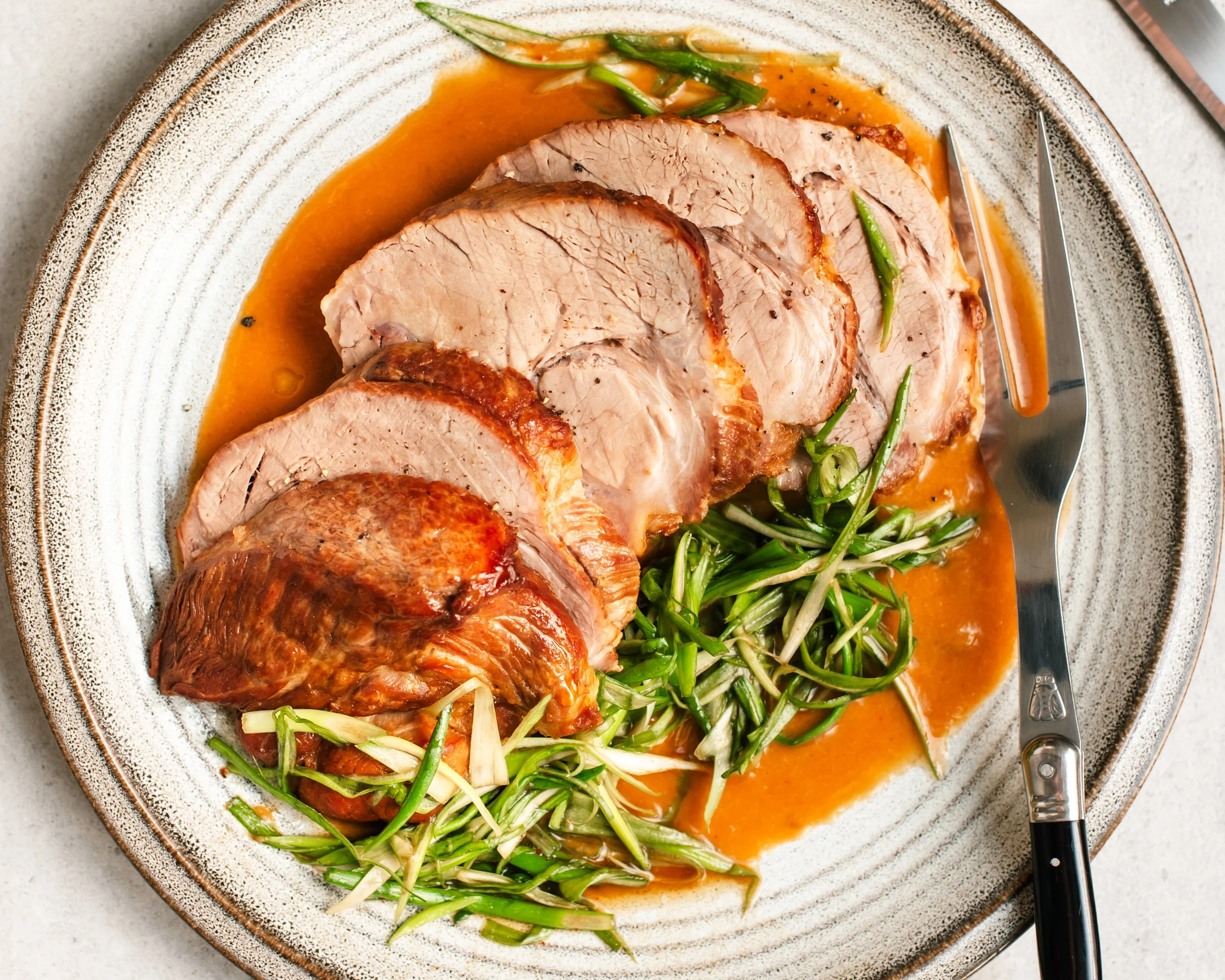
I’ve been looking forward to sharing this Miso Gochujang Braised Pork Roast with you. It’s a gold star recipe, if I do say so myself! There's a bit of a cultural mash-up where the miso hails from Japan and the gochujang from Korea. They are both fermented condiments involving soybeans and rice and completely different from each other. But they come together harmoniously in this recipe! The saké imparts a subtle floral note that adds another level of nuance. I adore these flavours.
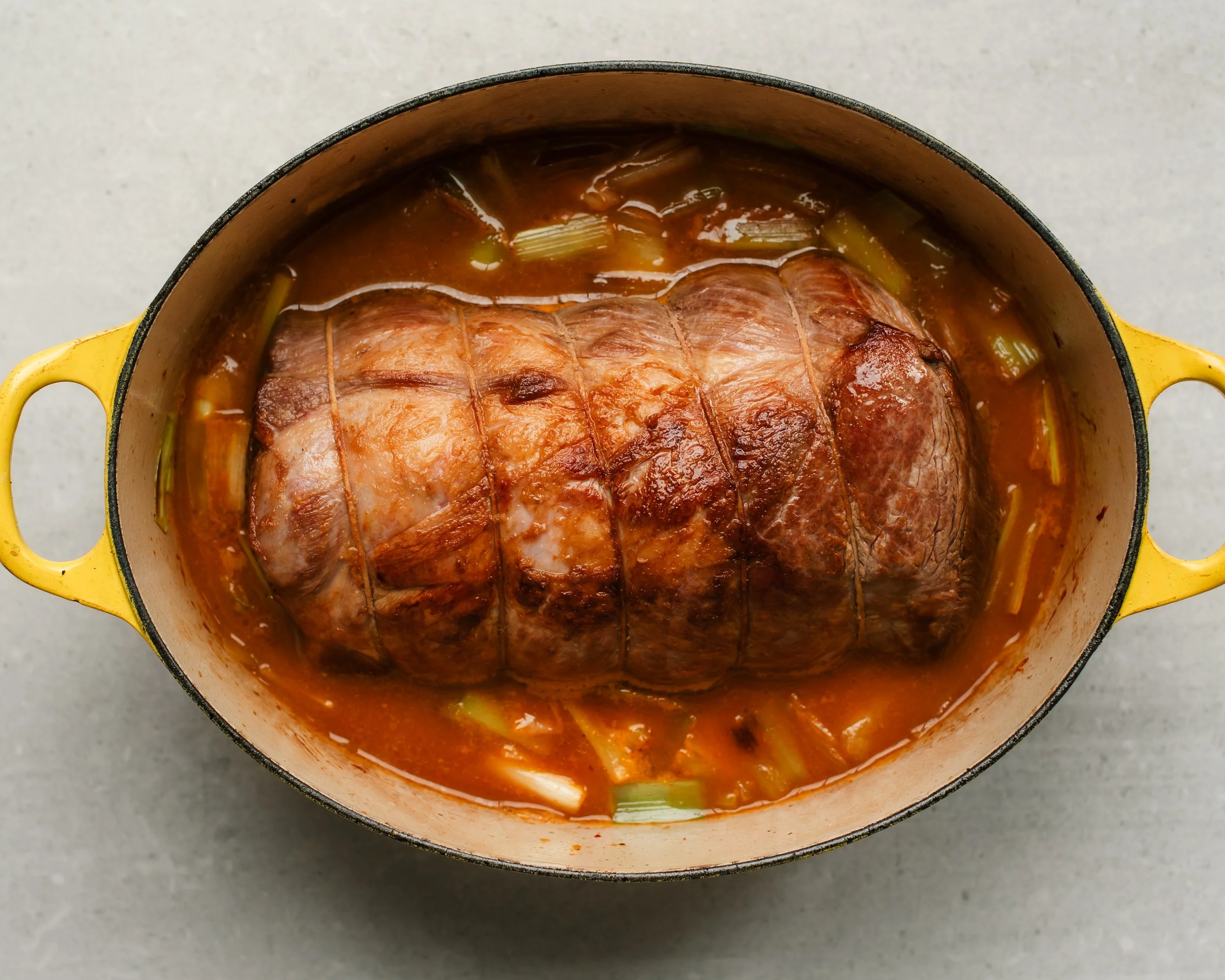
A 4-pound pork roast technically feeds 8 adults but don't hesitate for a second to make it even if you have a smaller number of people to feed. I always want leftovers to eat for lunch the next day or reinvent into another dinner. There are many ways to stretch the leftover pork into another meal. I've done it by shredding or cubing the pork, and putting it into pastas, tacos and fried rice. I posted some ideas in this post for Simple Beer Braised Pork Roast. Have a look at Pulled Pork & Brussels Sprouts Fried Rice and Pappardelle with Pulled Pork & Wilted Spinach for inspiration (forgive the terrible photos but they are yum).
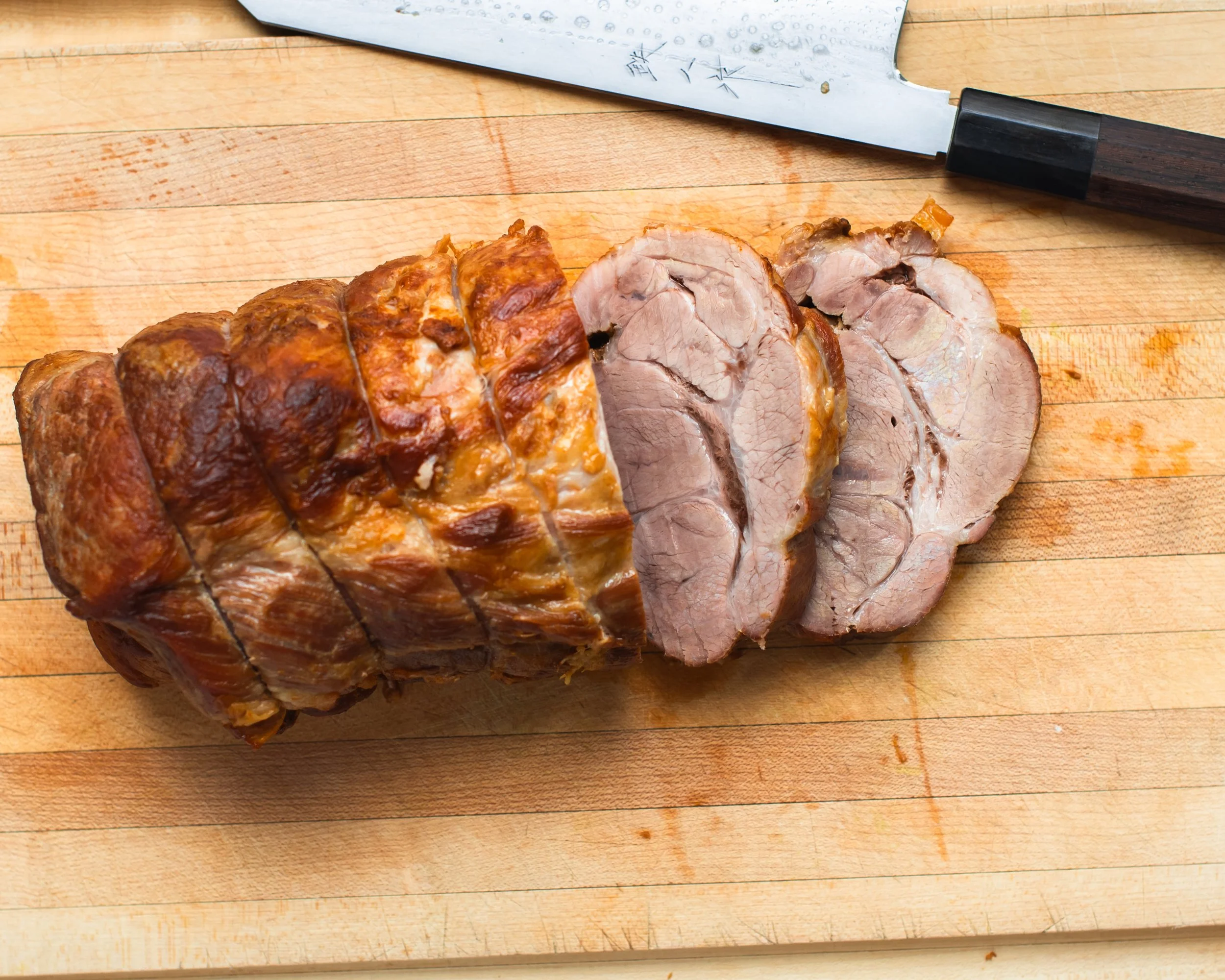
For a pork roast, I always ask my butcher for “capicola” or “capicollo”, a very well-marbled part from pork butt. But even when that is unavailable, ask to see a few pieces and select one based on the visible marbling. A pork butt has more marbling than pork shoulder, so if given an option, choose pork butt as the next best cut. More marbling means more intramuscular fat which means more tender, juicy roasts. See “Tips & FAQs” section for more info about this cut.
🎥 Watch video for Miso Gochujang Braised Pork Roast
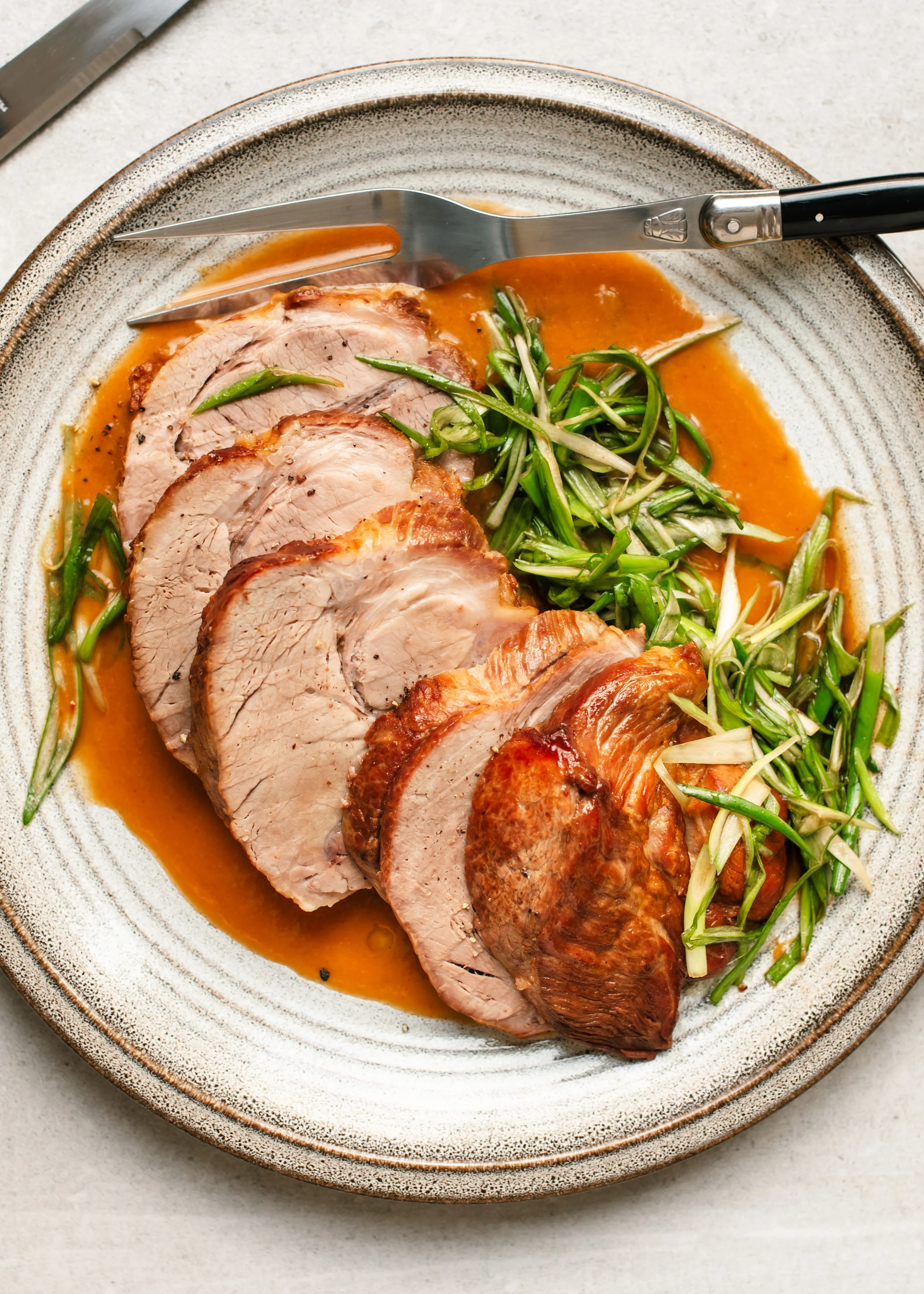
I updated this recipe with a quick and easy shredded scallion salad for a touch of freshness and acidity to finish. It’s basically Korean green onion salad or Pamuchim (파무침). I got the idea in the middle of a KBBQ dinner one night 😀
If you're looking to switch up your been-there-done-that roast, try this recipe! Remember to serve with rice, pasta or other carb-y side of choice to enjoy the saucy goodness.
Eat well and be well,
Sonia x

What you’ll need:
Ingredients forMiso Gochujang Braised Pork Roast (scroll down torecipe cardfor full printable recipe)
4 lb boneless pork butt or pork shoulder - I typically ask my butcher for “capicola” aka “capicollo” which is a more marbled part of the area. Even if you don’t have access to that specific cut, choose a piece that has the nicest visible marbling and the low and slow braise is going to take care of the rest in creating a tender roast. See Tips & FAQs for more info about this cut of meat.
Leeks (or white onions), garlic — aromatics for the braise
Miso paste - White or yellow miso provides a nutty, slightly sweet umami that anchors the sauce. See Tips and FAQs for more info.
Gochujang - Korean fermented soy bean paste. See Tips and FAQs for more info.
Japanese sake — to deglaze and bring flavour and acidity to the braising liquid. I usually use moderately-priced sakes for cooking i.e. something I would drink but never a Junmai Daiginjo (highest grade). (Substitutions: dry white wine, Chinese clear cooking wine (“michu”) or dry sherry. For non-alcoholic cooking, use water or broth with a tiny splash of rice or white vinegar.)
Soy sauce — adds umami, salinity and depth
Honey or sugar — to balance all the other flavours
Chicken broth — make sure to use no sodium or low sodium broth, otherwise dilute the broth with water. The miso, gochujang and soy sauce all contribute saltiness so we need to control the salt level in the broth to ensure the braising liquid is not too salty when used as the sauce.
Scallions — two bunches, shredded into long strands for a quick and easy scallion salad
Rice vinegar — added to the scallion salad for acidity to cut through the heaviness of the roast
Gochugaru (or dried red pepper flakes) — a little kick for the scallion salad. See Tips and FAQs for more info.
Salt and pepper, oil for cooking
To serve: A carb-side like rice, pasta, egg noodles, farro, couscous, etc to enjoy with the tasty sauce
At a glance:
How to makeMiso Gochujang Braised Pork Roast (scroll down to recipe card for full printable recipe)
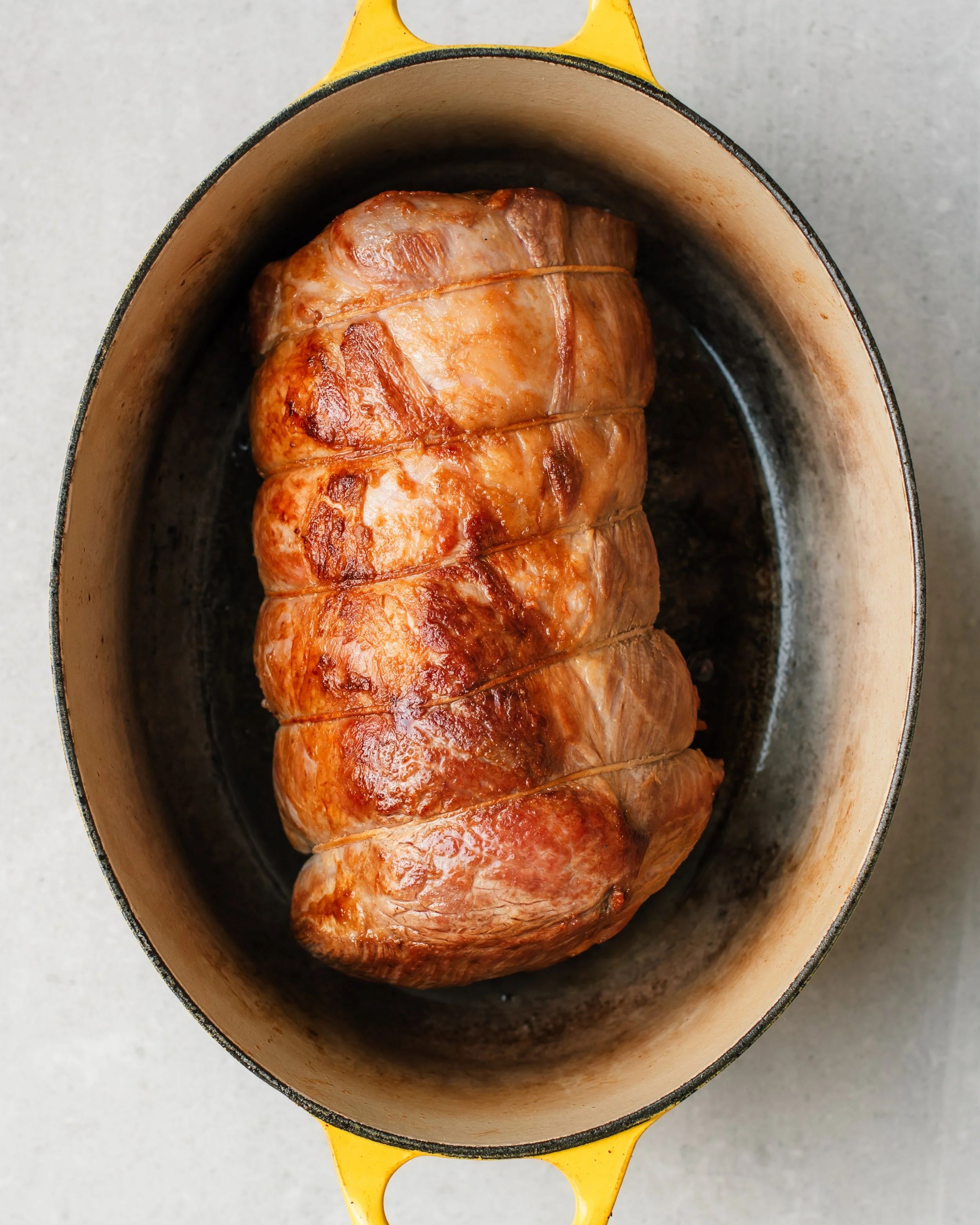
Season entire pork liberallywith salt and sear on all sides including the two ends until golden. Set aside.
Lightly sauté leeks and garlic cloves with black pepper (no salt).
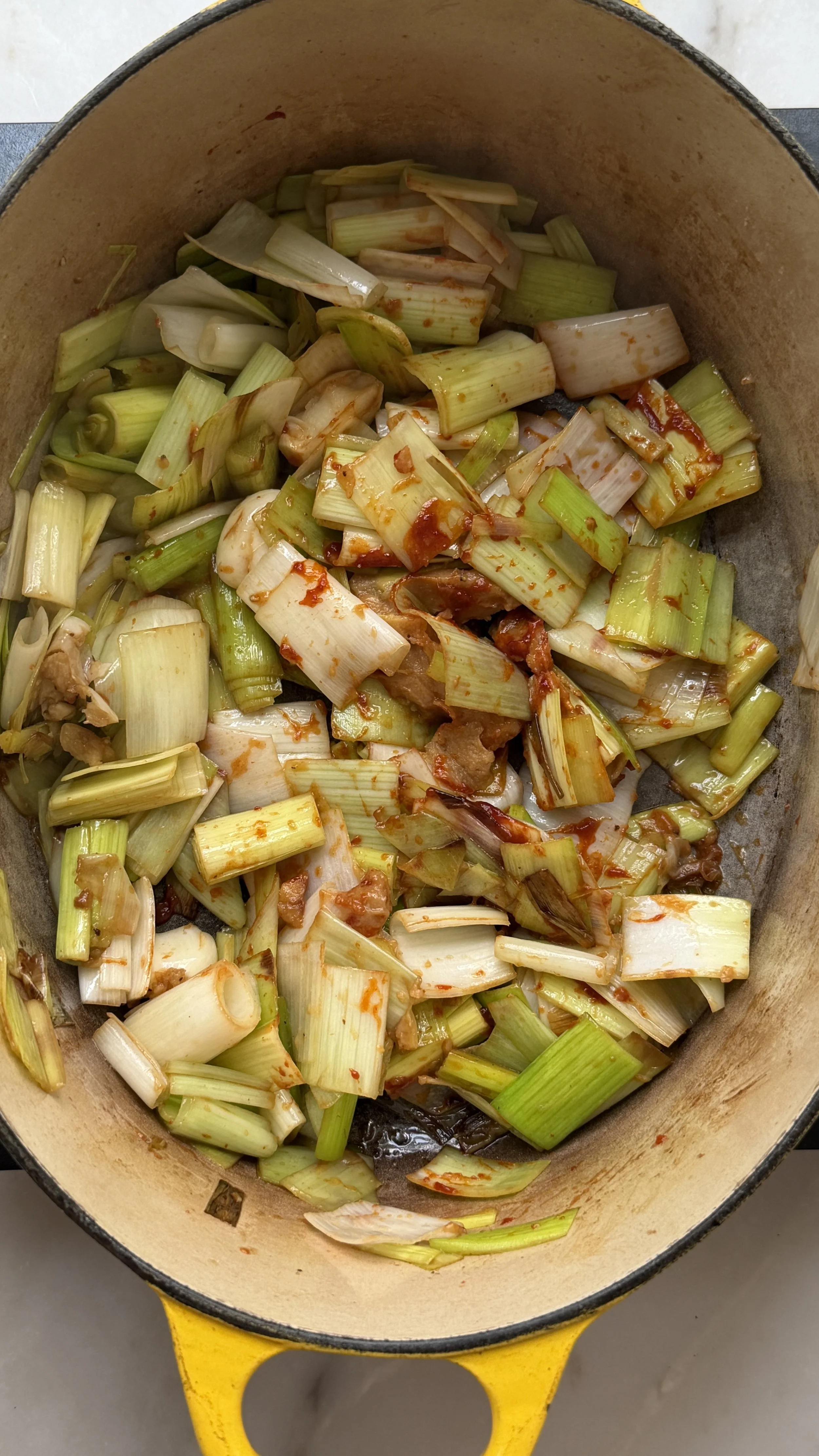
Add miso paste and gochujang. Cook them to develop flavours, 1 minute.
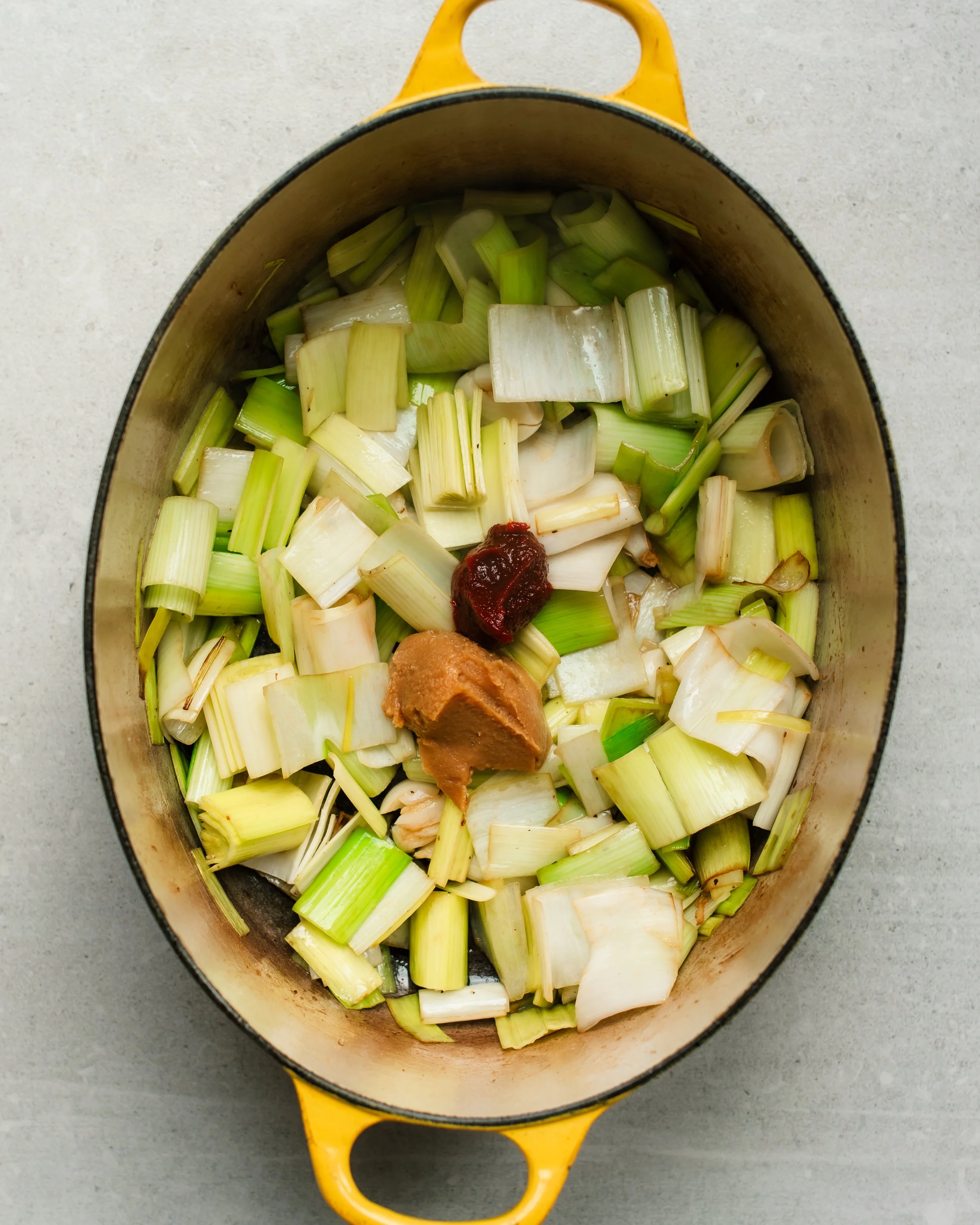
Deglaze with sake and simmer until sharp alcohol smell diffuses, 5 minutes.
Stir in honey and soy sauce.
Return pork roast to the pot and broth. Top up with water as needed until liquid is between halfway to three-quarter up the sides of the roast. Cover and bring to a simmer.
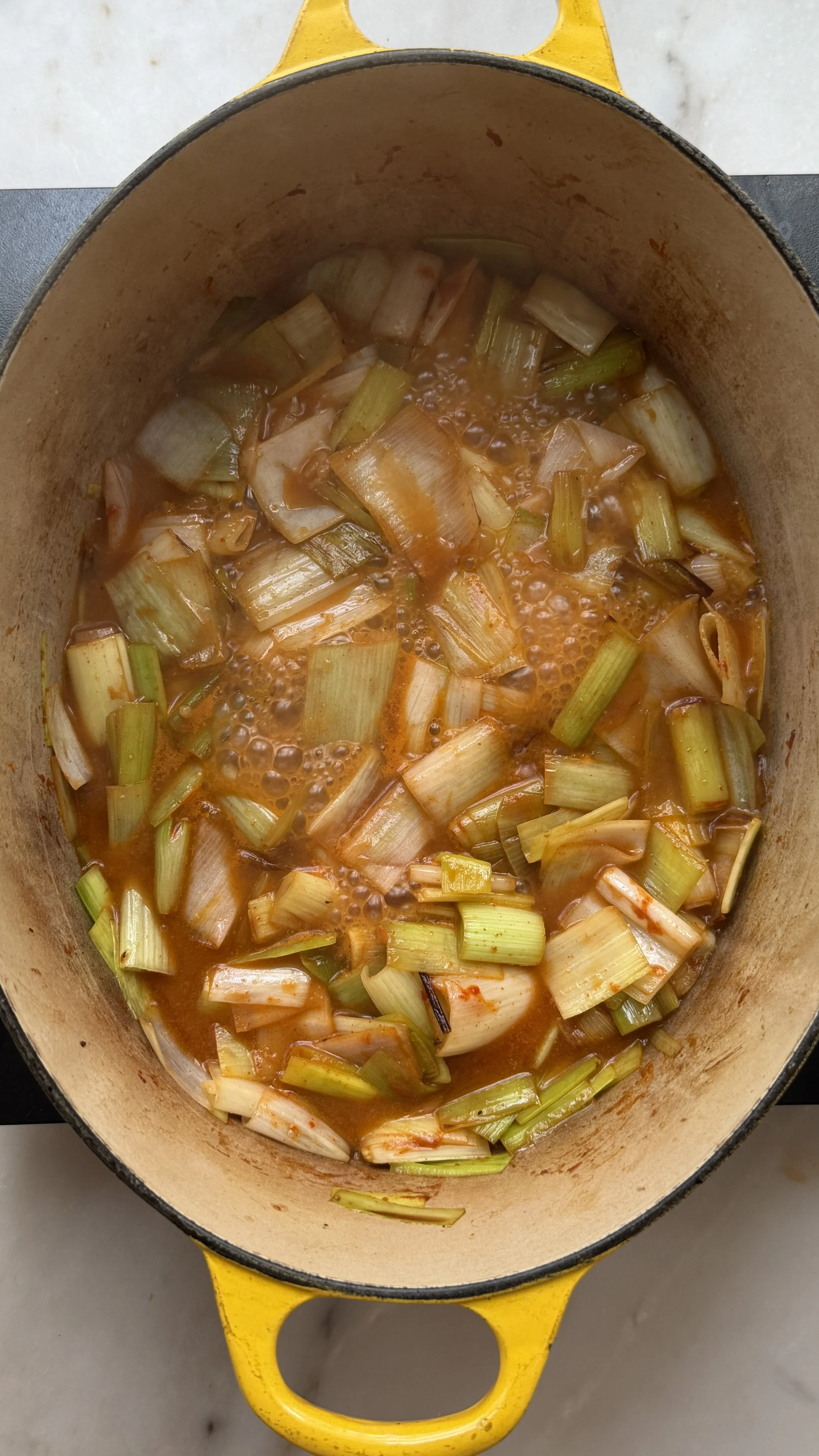
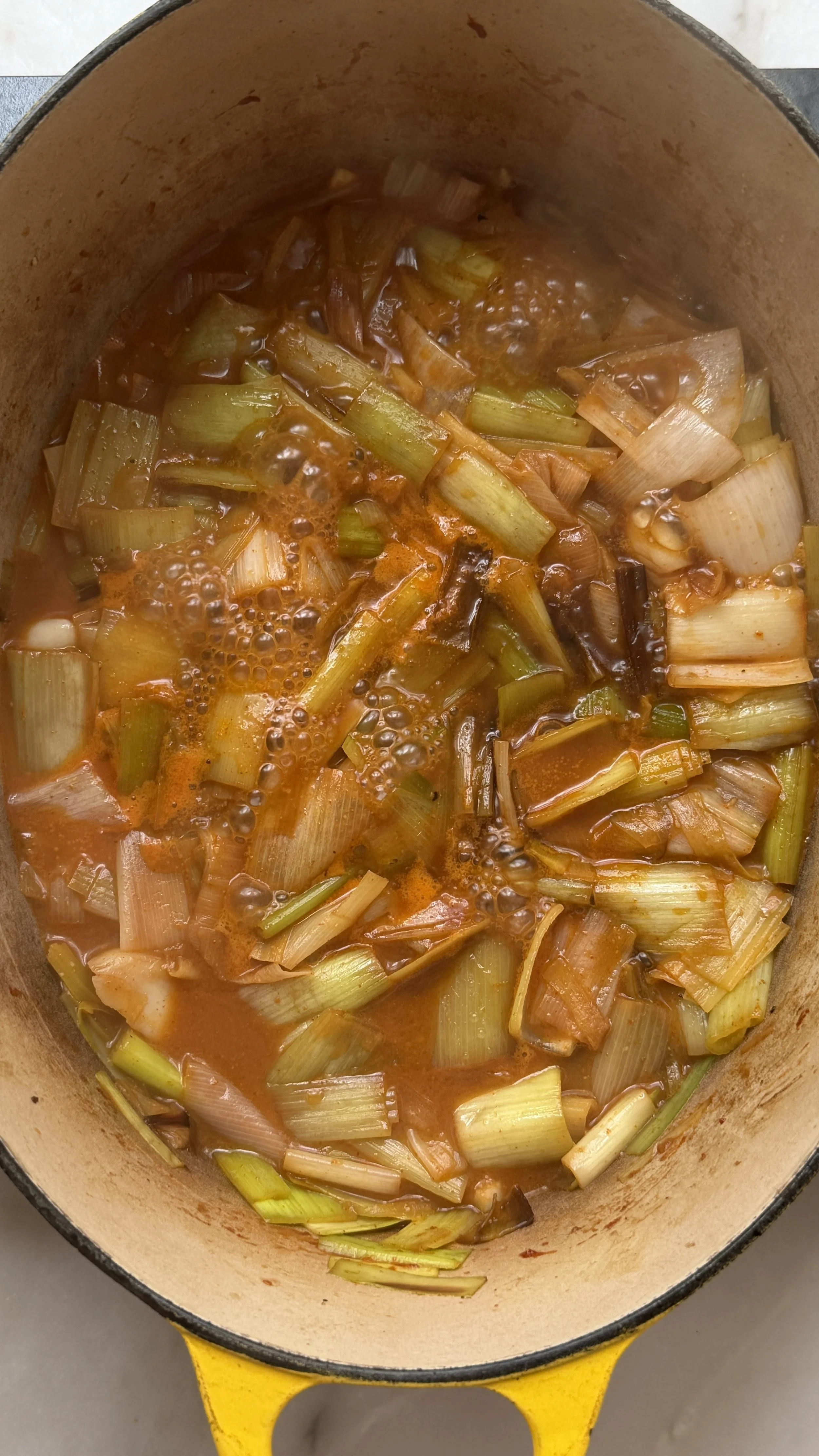
Braise covered in 325°F (160°C) oven until meat thermometer inserted in the thickest part reaches 175°F (80°C), about 2 to 2½ hours. This gets the pork to the point where it is tender but sliceable. [Alternative stove top method: Braise covered on a low simmer until meat thermometer inserted in the thickest part reaches 175°F (80°C), about 2 hours.]
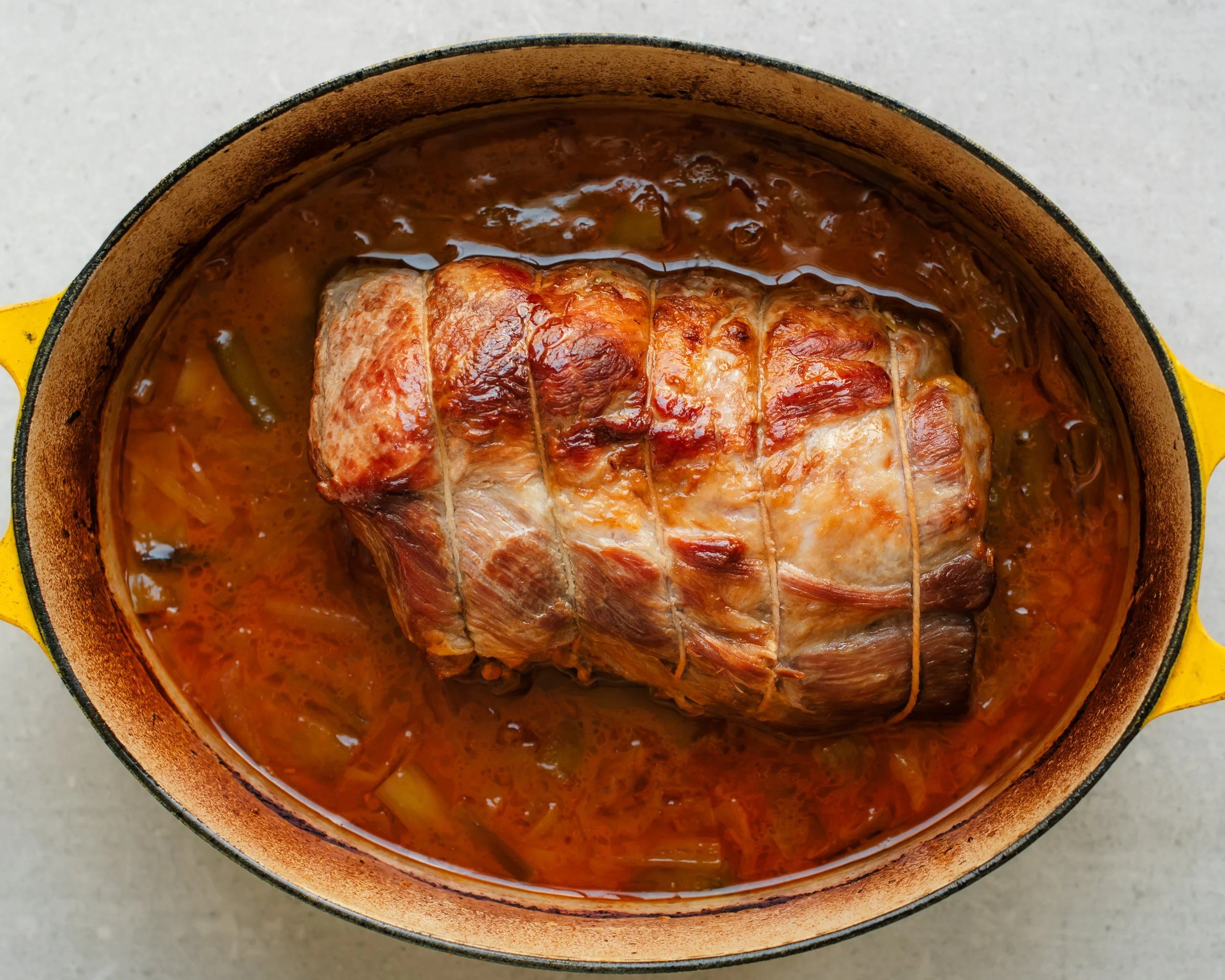
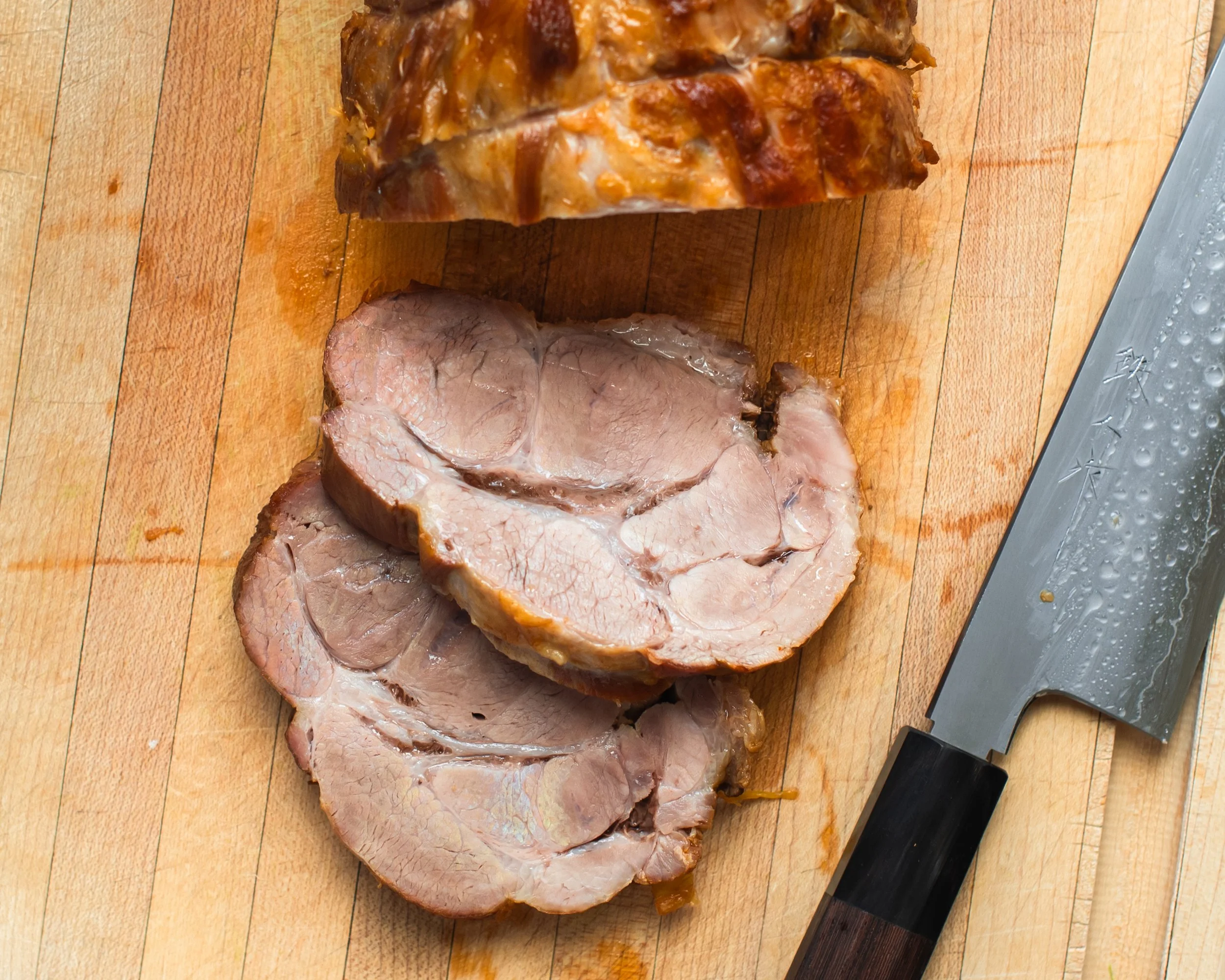
Transfer pork to a cutting board to rest, at least 15 to 20 minutes to reabsorb the juices.
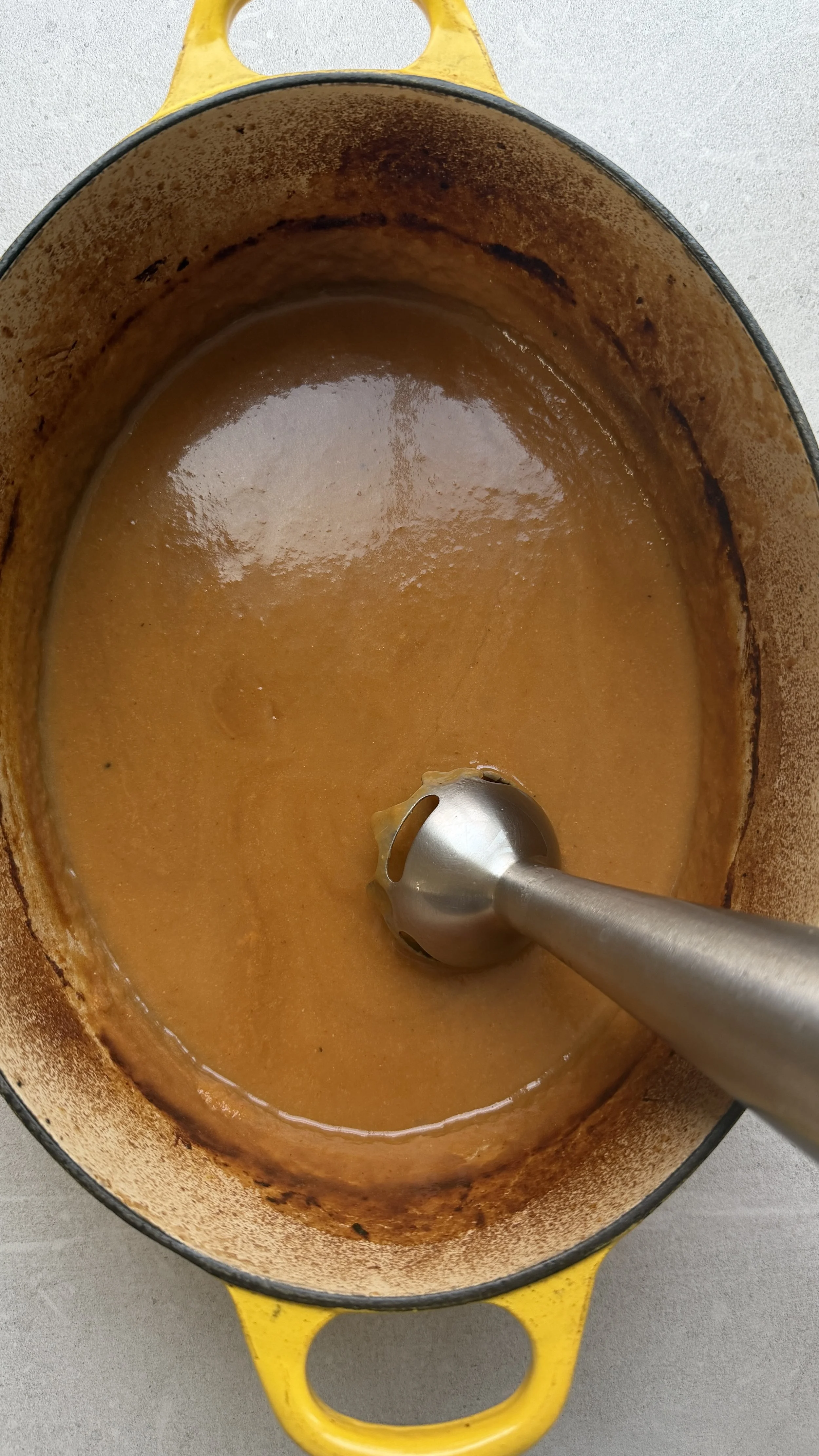
While pork rests, use an immersion blender to blend the sauce until smooth. Taste and adjust seasoning as needed with black pepper, salt or soy sauce.
Make shredded scallion salad
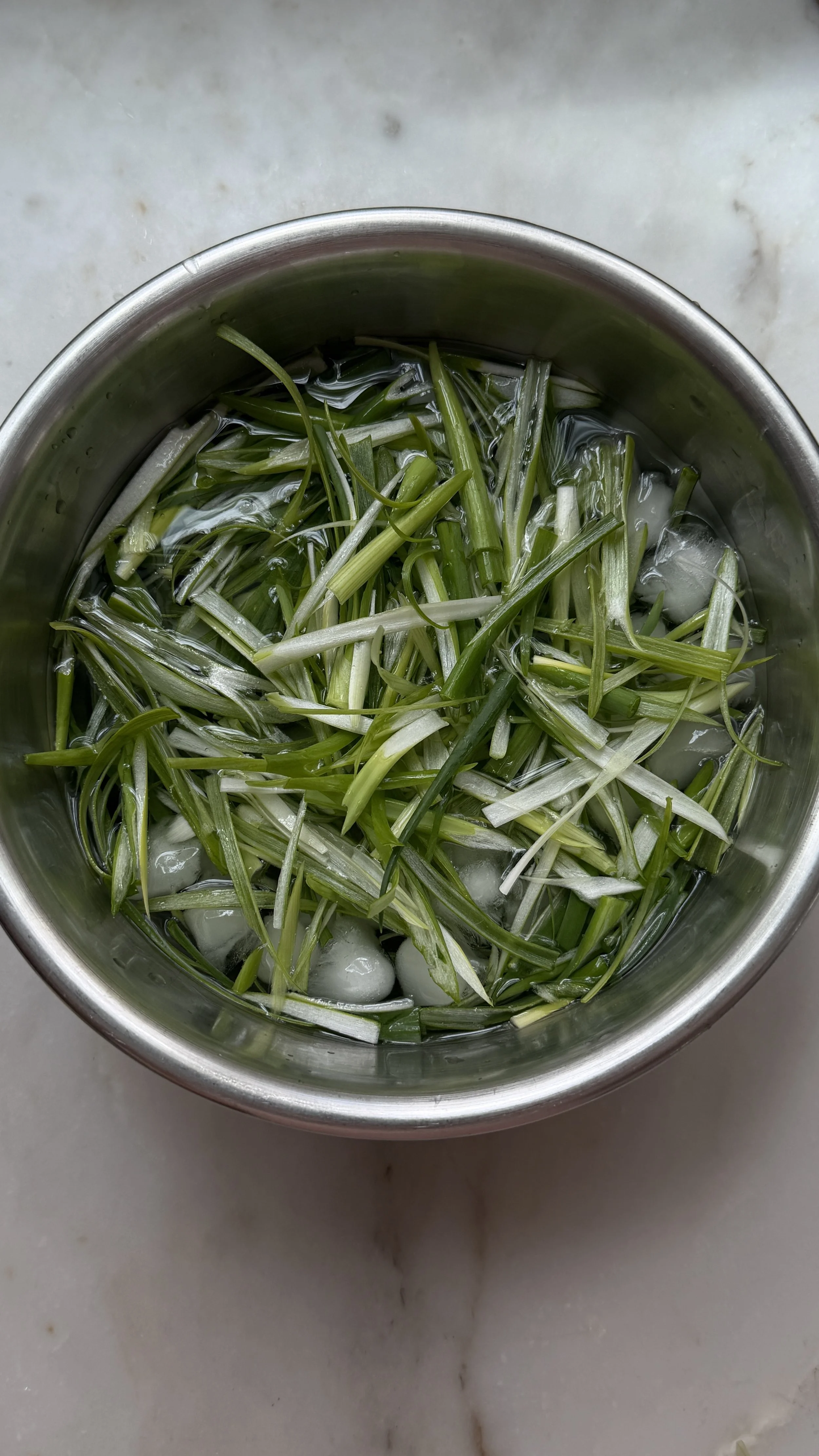
Shred scallions into long strands.
Place in ice bath for 15 minutes to curl. Rinse well under water to wash off the slimy substance. Drain well and lightly pat with paper towels to dry.
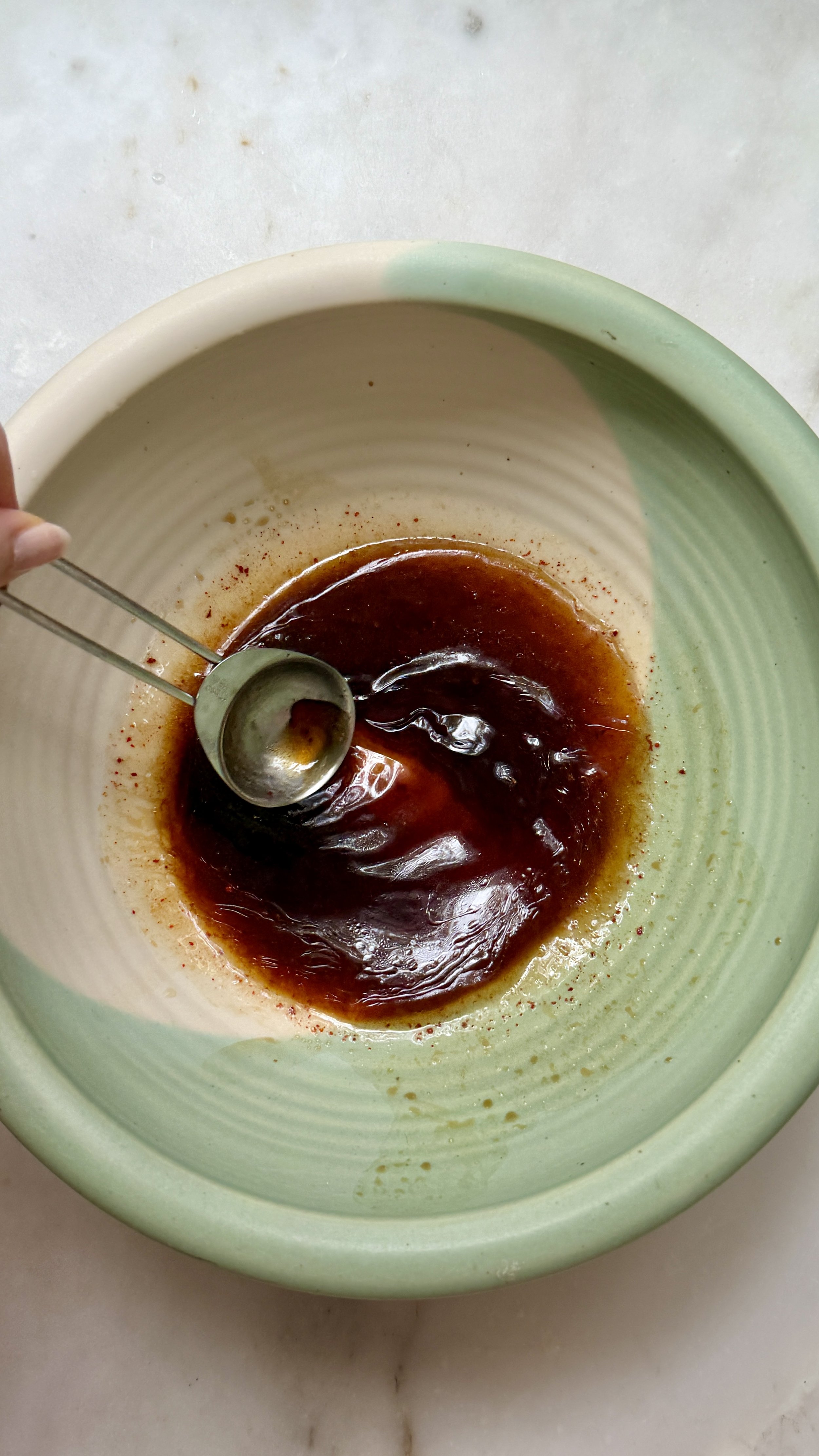
Mix scallion dressing ingredients together — rice vinegar, soy sauce, honey, sesame oil, gochugaru.
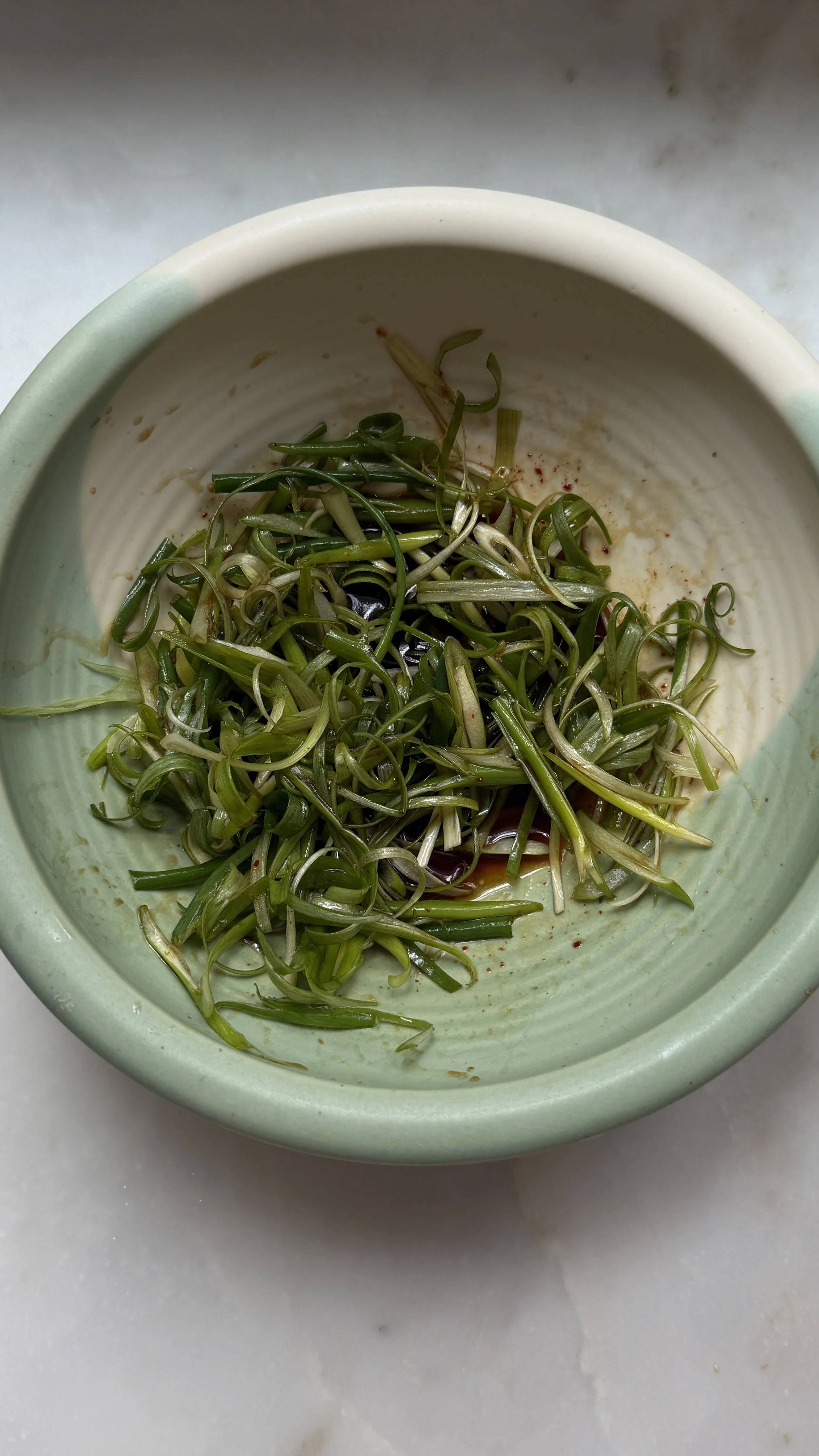
Just before serving, toss scallions to coat in the dressing.
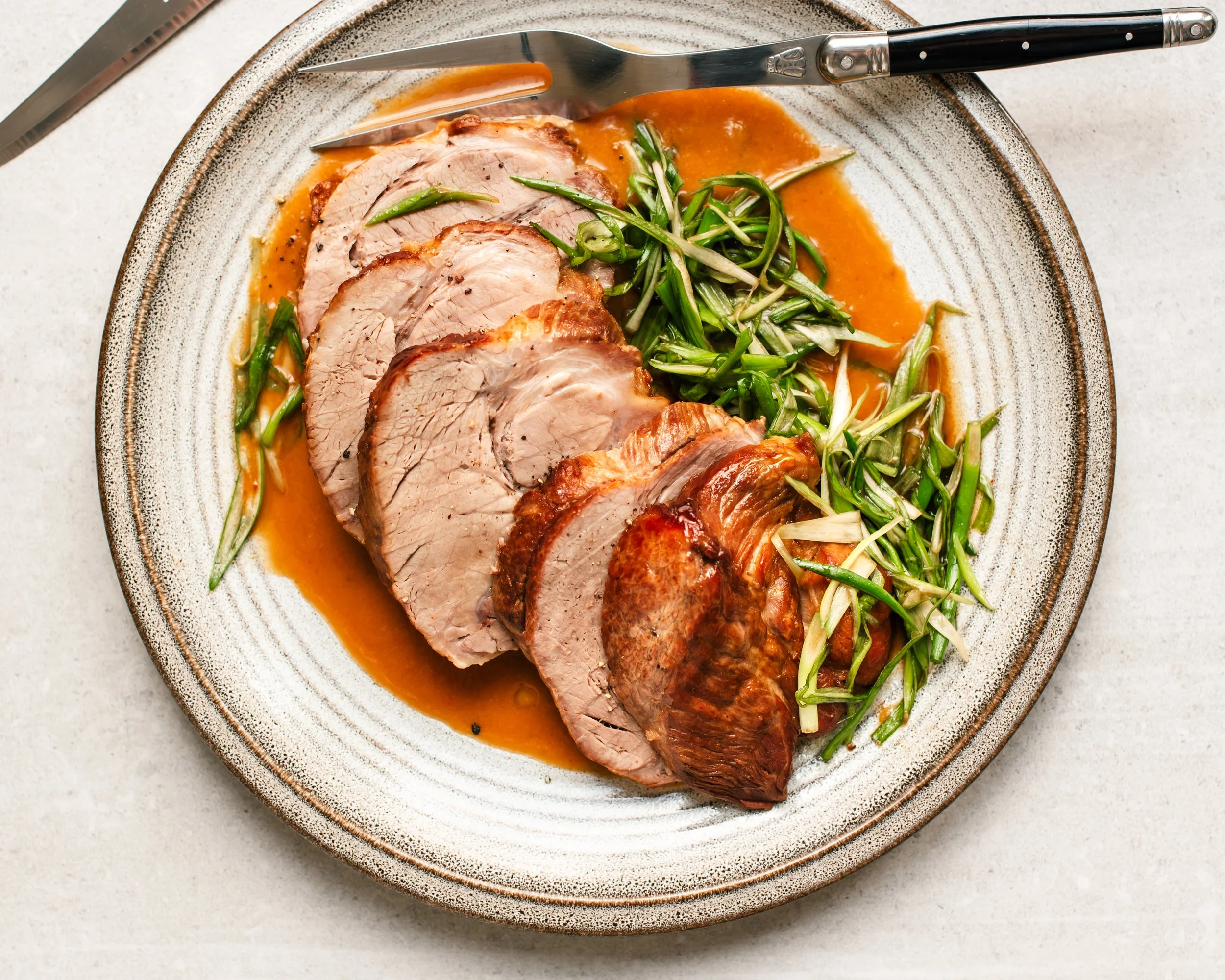
Serve pork thickly sliced with sauce, the scallion salad and a bit of carb on the side to soak up all the saucy goodness.
Tips & FAQs
On seasoning (with salt)
When seasoning a large piece of meat with salt, my rule of thumb with Diamond Crystal kosher salt is just a little less than 1 tsp per pound of meat i.e. about 3½ tsp for 4 lb pork roast. This may seem like a lot but think of it as seasoning the entire thickness of the roast, not just its surface. If using a different brand of kosher salt, reduce the volume by half to a little less than ½ tsp per pound. Adjust rule of thumb based on your dietary needs or taste preference!
On the other hand, I recommend being very conservative with the use of salt in the rest of the recipe primarily because the miso and soy sauce contributes a lot of salinity to the dish. I recommend using a low-sodium (or no sodium) chicken broth to have more control. You can always add more salt or soy sauce at the end if needed.
Pork Butt vs Pork Shoulder vs Capicola/Capicollo
Pork Butt and Pork Shoulder are often listed as interchangeable in recipes. Pork Butt (aka "“Boston Butt” or “blade”) and pork shoulder (aka “picnic shoulder” or “picnic roast”) both come from the shoulder area, but pork butt comes from the area higher and pork shoulder is further down. They are both tough and fatty cuts ideal for low and slow cooking like braises, stews, roasts, and pulled pork. Relatively speaking, pork butt has more marbling and is more uniform and rectangularly shaped than pork shoulder. The Capicola is a specific cut in the area that is extremely well-marbled and uniformly shaped, boneless cut that is my favourite cut for juicy pork roast every time. To add a little further confusion, Capicola/Capicollo/Coppa are also the names for a ready-to-eat, Italian dry-cured meat product but obviously that’s not what we’re referring to here. (sources: America’s Test Kitchen, Ontario Pork).
What is Miso
A staple in Japanese cuisine, made through a process of fermenting soy beans with salt, koji and often other ingredients such as rice. There is white, yellow and red miso paste. For this recipe, use white or yellow miso paste. Red miso paste will be too strong. You will find miso paste at all East Asian supermarkets and increasingly at conventional supermarkets as well. They tend to be next to the tofu in a refrigerated section close to produce.
What is Gochujang
A Korean fermented red chili paste that is spicy, sweet and umami packed. “It is made from gochu-garu, glutinous rice, meju powder, yeotgireum, and salt. The sweetness comes from the starch of cooked glutinous rice, cultured with saccharifying enzymes during the fermentation process (wikipedia)”. As with so many food stuffs, store-bought gochujang vary in quality. Look for a short ingredient list with minimal additives, with the first being gochugaru (may be listed as red pepper powder), and rice syrup instead of sugar or corn syrup, and meju (may be listed as fermented soybean powder). These are going to be pricier than the inferior versions.
What is Gochugaru
A dried Korean red pepper chili powder. Look for sun-dried gochugaru (labeled "taeyang gochugaru" or “taeyangcho”) imported from Korea, considered the best in terms of flavour and spiciness. I store mine in the freezer to extend freshness. The amount of gochugaru in this recipe depends on taste preference and intensity of your gochugaru (sun-dried versus machine-dried, how long it’s been on the store shelf, etc.) so be sure to adjust accordingly. I consider the spice level in this recipe mild with just a little kick.
Can I braise the pork roast on the stove instead of in the oven?
Yes! Place the pot on the stove top over a low simmer, covered, until meat thermometer inserted in the thickest part reaches somewhere between 160°F (70°C) and 175°F (80°C) depending on doneness preference, about 2 hours but check earlier because ovens vary.
Miso Gochujang Braised Pork Roast

Miso Gochujang Braised Pork Roast
You might not guess from miso's intense brininess and gochujang's savory spicy pungency, that using both of these together in this recipe results in a tender, braised pork roast that is deeply flavourful, yet wonderfully mellow.
Ingredients
Instructions
- Place a large Dutch oven or roasting pan (with lid) on the stove over medium-high heat.
- While that heats, season entire pork liberally with kosher salt. As a guideline, you may use about ½ teaspoon kosher salt for each pound of roast. However if using Diamond Crystal brand of kosher salt, increase to 1 teaspoon per pound of roast. This may seem like a lot but you are seasoning the entire thickness of the roast, not just the surface.
- Add a drizzle of oil to the heated Dutch oven/ pan and immediately put in pork shoulder, fat cap side down if there is a fat side. The fat will render into oil. Continue to brown the pork on all sides. Add oil as needed, if pork roast is not fatty. Sear all sides including ends until golden brown. Set roast aside.
- If there is a lot of oil rendered into the pot, use a pair of kitchen tongs holding a paper towel to mop excess oil, leaving 2 to 3 tablespoons of fat for the next step.
- Add leeks, carrots and smashed garlic cloves to the oil. Season lightly with salt and pepper. Sauté until veggies start to soften. Add gochujang and miso paste, stirring to break them down a bit and to heat through to develop flavor. Deglaze pot with saké. Simmer for a minute to dissipate the alcohol. Once the sharp alcohol smell diffuses, stir in honey and soy sauce.
- Place the pork roast back in the Dutch oven/ pan. Add chicken broth, and top up with water as needed so liquid is ¾ way up the sides of the roast.
- Bring to a boil. Cover and braise either (1) ON THE STOVE at a low simmer for about 1.5 hours or (2) IN THE OVEN with the lid on at 325°F (165°C) for 2 to 2.5 hours. When roasting large pieces of meat like this, it's helpful to have a meat thermometer to take the guessing out of whether the meat is done or not. For pork roast, a thermometer inserted into the thickest part should read ~170°F (75°C) and it will cook a further 10 degrees or so as it rests. This gets the roast to a tender stage but still firm enough to slice into ¾" thick pieces for serving, which is our favourite way to enjoy it. Braise longer if you prefer it to be "fork tender" aka you can pull the meat apart with two forks, which is when the meat's internal temperature reaches ~180°F (82°C) and again, it will cook further 10 degrees or so as it rests. Once done, pull the roast out to rest on a cutting board, tented lightly with foil, for about 20 minutes to allow the juices to re-absorb into the meat. This ensures juicy pork roast every time.
- While the roast rests on the cutting board, check the liquid in your pot and decide whether you want to thicken it or not. I typically whisk 1 to 2 tablespoon of arrowroot powder (or cornstarch) and simmer on low on the stovetop for a minute until thickened. Turn off heat, and keep warm on residual heat until ready to serve.
- To serve Miso Gochujang Pork Roast, slice into ¾" thick slices and serve along with the thickened sauce.
Nutrition Facts
Calories
383Fat
8 gSat. Fat
3 gCarbs
10 gFiber
1 gNet carbs
9 gSugar
4 gProtein
54 gSodium
474 mgCholesterol
136 mgDisclaimer: nutritional information is auto-generated and should only be used as an approximation.


Did you make this recipe? Please consider leaving a star rating and feedback in the comments section. I appreciate it!